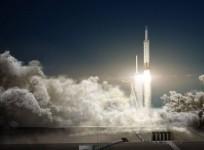
Animated video by Nasas Marshall Center depicts the agencys Space Launch System, the worlds most powerful rocket for deep space exploration.Nov 8, 2017
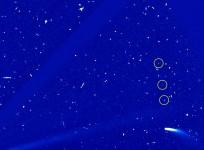
It's very rare to observe comets from two different spots in space, so far these have been the most in-depth observations of comet 96P that has been made.Nov 6, 2017
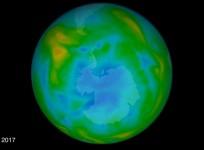
The hole in the ozone layer is at its smallest since 1988 and warmer climates could be the reason behind reduced depletion of the protective layer in the Earths atmosphere. In spite of this recovery, Nasa mentions that there is enough ozone depleting material in the atmosphere to cause significant damage. That is why the current hole, though small by records, is actually large by 1980s standards.Nov 3, 2017
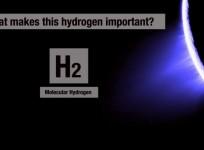
Nasas Cassini spacecraft discovered hydrogen in the plume of gas and icy particles spraying from Saturns moon Enceladus. The discovery means the small, icy moon — which has a global ocean under its surface — has a source of chemical energy that could be useful for microbes, if any exist there.Nov 3, 2017
In 2019 Nasa plans to launch the first test of the Space Launch System and the new Orion spacecraft as part of Nasas plans to send people to the Moon, Mars, and beyond. A human test mission is scheduled for 2023.Nov 3, 2017
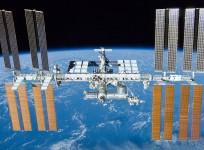
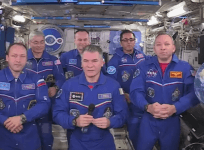
Pope Francis made a phone call to the International Space Station today (Oct. 26) to ask its six occupants deep questions about humanitys place in the universe.Oct 28, 2017
Pope Francis made a phone call to the International Space Station today (Oct. 26) to ask its six occupants deep questions about humanitys place in the universe.Oct 28, 2017
Antonio Cassano is a retired footballer for Italy. He is known for his sudden mood swings and exclamatory statements throughout his career, besides football acumen.Oct 23, 2017
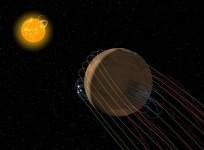
Red Planet's "magnetotail" comprises of highly charged particles which have originated from solar wind that was connecting with the magnetic fields on the Mars' surface.Oct 20, 2017
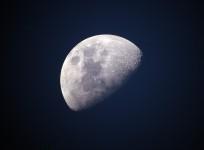
This discovery was made by using the data from Japan's SELENE lunar orbiter, also nicknamed Kaguya, which is the second Japanese lunar orbiter following the Hiten probe.Oct 20, 2017
NASA plans to launch a new satellite, the Ionospheric Connection Explorer, or ICON, on 8 December. Orbiting above the upper atmosphere, through the bottom edge of near-Earth space, ICON will observes both the upper atmosphere and a layer of charged particles called the ionosphere, which extends from about 50 to 360 miles above the surface of Earth. ICON will observe how interactions between Earths weather and the ionosphere create bright swaths of color in the sky, known as airglow, as well as other changes in the space environment.Oct 19, 2017