
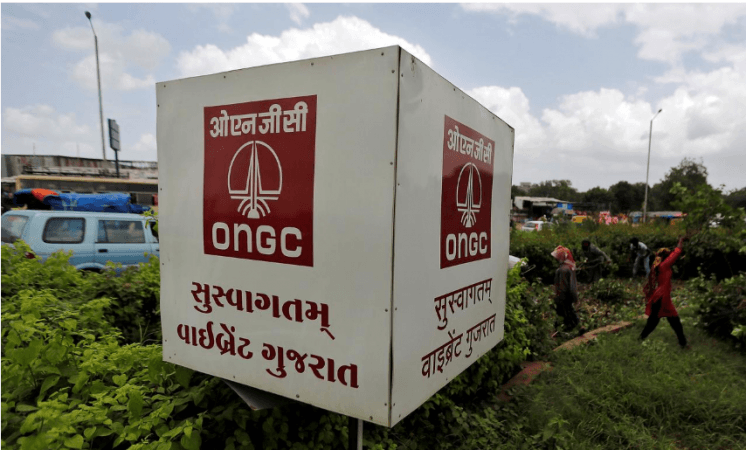
When the Bombay High Court issued notice to Reliance Industries in a gas migration dispute now valued at approximately ₹23,000 crore, it was not merely reviving an old commercial disagreement. It was reopening one of the largest unresolved questions in India's energy governance: who ultimately bears responsibility when public natural resources migrate, are monetised, and allegedly enrich private operators without explicit authorisation. The scale of the claim, the strategic nature of offshore gas, and the judiciary's willingness to revisit arbitral outcomes together make this case a watershed moment for India's hydrocarbon law and policy architecture.
The allegation that natural gas originating from ONGC-allocated offshore blocks in the Krishna-Godavari basin was extracted and sold from adjoining private fields has been contested for over a decade. What has changed decisively is the quantum and the context. The Government of India's claim, which earlier hovered around ₹13,700 crore based on limited volume and price assumptions, has now risen to approximately ₹23,000 crore, reflecting updated gas pricing, cumulative production over multiple years, and judicial recognition of unjust enrichment principles. With this escalation, the dispute has crossed the threshold from a technical contractual matter into a question of constitutional stewardship of national resources.
Reliance has categorically denied any wrongdoing, maintaining that the gas "came on its own" due to natural reservoir connectivity and that its extraction activities complied with the Production Sharing Contract. Scientifically, the phenomenon of hydrocarbon migration is well recognised. Legally and from a public policy standpoint, however, the issue is far more consequential. The central question before the courts and policymakers is no longer whether gas migrated, but whether monetisation of a public resource without compensation can be legitimised by contractual silence and geological inevitability.
Data Box: The Case in Numbers
Current government valuation: ~₹23,000 crore (≈ USD 2.8–2.9 billion)
Earlier estimate: ~₹13,700 crore (pre-revision)
Basin: Krishna-Godavari offshore
Nature of allegation: Unauthorised extraction and monetisation of migrated gas
Key judicial trigger: Delhi High Court setting aside arbitral award on public policy grounds
Present stage: Bombay High Court notice; scope widening beyond arbitration
Why the Valuation Rose and Why It May Rise Further
The upward revision from ₹13,700 crore to ₹23,000 crore is not arbitrary. It reflects a recalibration on three fronts: volume, price, and principle. First, cumulative production estimates now account for a longer extraction window and more complete reservoir modelling. Second, gas valuation has shifted from older administered prices to more market-linked benchmarks. Third, and most importantly, courts have begun to frame the issue not merely as breach of contract but as unjust enrichment derived from a sovereign asset.
What is less discussed, but critically important, is that ₹23,000 crore may still be a conservative figure. An independent valuation, using global best practices, could potentially raise the liability substantially. Such a valuation would likely incorporate:
Opportunity cost to ONGC from accelerated depletion and pressure loss
Time-value of money over prolonged unauthorised monetisation
Cost of foregone future production
Strategic value of gas during periods of peak domestic scarcity
Externalities affecting national energy security
In comparable international disputes, independent reassessments have often increased liabilities by 20–40 percent once full economic and strategic costs are factored in. Applied here, that would push the notional exposure well beyond ₹35,000–₹40,000 crore. The absence of such an independent, transparent valuation mechanism in India is itself a regulatory failure that this case brings into sharp relief.
From Arbitration to Public Trust Doctrine
For years, this dispute remained confined to arbitration and expert committees. That era appears to be ending. The Delhi High Court's decision earlier this year to set aside the arbitral award marked a turning point. By holding that the award violated public policy, the Court implicitly reaffirmed the doctrine that natural resources are held by the State in trust for the people, and that contractual interpretation cannot defeat this obligation.
The Bombay High Court's intervention builds on this foundation. It signals judicial recognition that disputes involving resources of this magnitude and strategic importance cannot be treated as routine commercial disagreements. Arbitration, while valuable, is not designed to adjudicate questions of sovereign loss, public fiduciary duty, or long-term national interest.
Timeline Box: How a Technical Issue Became a National Governance Question
Early 2000s: Allocation of offshore blocks under PSC regime
2009–2013: ONGC flags abnormal reservoir behaviour and pressure decline
2014–2017: Expert committees estimate unauthorised gains
2018: Arbitration favours contractual interpretation allowing extraction
2025 (Feb): Delhi High Court sets aside award on public policy grounds
2025 (Dec): Bombay High Court issues notice; dispute enters wider legal scrutiny
The Limits of the 'Natural Flow' Argument
Reliance's assertion that gas migrated naturally is scientifically credible but legally incomplete. Across mature petroleum jurisdictions, migration triggers obligations, not exemptions. Unitisation, joint development, and compensation are standard responses precisely to prevent private appropriation of shared or originating resources.

If India were to accept "natural flow" as a complete defence, it would institutionalise a perverse incentive structure. Operators would be encouraged to drill aggressively near block boundaries, while public sector entities, constrained by oversight and caution, would bear disproportionate losses. More dangerously, it would allow geology to trump governance, effectively converting public resources into first-mover private gains.
What This Case Exposes About India's Energy Framework
Three structural deficiencies stand exposed.
First, legal vacuum. India lacks statutory provisions governing unitisation and compensation for migrated hydrocarbons. This silence has forced courts to retrofit public law principles onto private contracts.
Second, regulatory asymmetry. Public sector operators are accountable ex ante, while private gains are often scrutinised only ex post, after value has already been extracted.
Third, policy inertia. Despite repeated expert warnings, India has not modernised its upstream legal framework to reflect geological realities and market scale.
The Reform Imperative
If this case ends merely in damages or settlement, a historic opportunity will be lost. India urgently needs:
Statutory unitisation rules for connected reservoirs
Independent valuation protocols for migrated resources
Continuous pressure and depletion monitoring across block boundaries
Explicit alignment of arbitration law with the public trust doctrine
Such reforms would not weaken investor confidence. On the contrary, they would replace uncertainty with clarity and reduce the risk of decade-long disputes over sovereign assets.
A Defining Moment
At approximately ₹23,000 crore and potentially more the Reliance-ONGC gas dispute is among the largest natural-resource liability cases India has ever confronted. How the courts and the government respond will signal whether India is prepared to govern its strategic resources with the seriousness, transparency, and foresight they demand.
Beneath the seabed lies not just gas, but a test of governance. What emerges from this case will shape India's energy law for decades to come.
Ultimately, the burden of resolution in this ₹23,000-crore dispute does not rest on geology, contracts, or corporate statements alone; it rests squarely on India's institutions. The judiciary must carry this case to its logical conclusion with clarity, urgency, and unwavering fidelity to the public trust doctrine, resisting both technical obfuscation and procedural fatigue. The Government of India, as the constitutional trustee of national resources, must pursue this matter with institutional resolve, independent valuation, and policy reform rather than episodic litigation. And the media, as the fourth pillar, bears a duty that goes beyond episodic headlines to sustain scrutiny, explain the stakes, and keep public attention focused until final accountability is fixed. This is not about corporate rivalry or retrospective blame; it is about whether the wealth beneath India's seas is protected for the common citizen or allowed to dissipate quietly through governance gaps. Until this question is decisively answered, the case deserves unrelenting visibility, because national resources lost are not abstract numbers—they are schools not built, energy not secured, and public trust irreparably eroded.
[Major General Dr. Dilawar Singh, IAV, is a distinguished strategist having held senior positions in technology, defence, and corporate governance. He serves on global boards and advises on leadership, emerging technologies, and strategic affairs, with a focus on aligning India's interests in the evolving global technological order.]