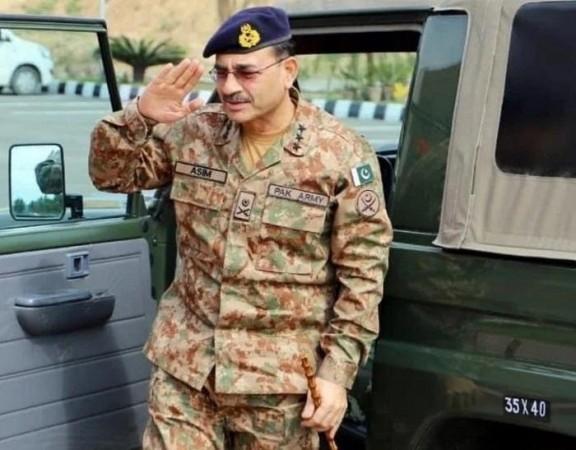
In the grand symphony of South Asian geopolitics, where the cadence of power often dictates the rhythm of regional harmony or discord, the ascension of Field Marshal Syed Asim Munir to Pakistan's inaugural Chief of Defence Forces role in December 2025 emerges as a profound leitmotif. Enshrined via the 27th Constitutional Amendment, this reconfiguration vests in him an expanse of authority reminiscent of General Pervez Musharraf's dominion, which concluded in 2008 after a decade of overt military stewardship.
Viewed from New Delhi, this evolution invites not reflexive consternation but a contemplative appraisal, informed by the annals of history and the imperatives of strategic sagacity.
The contours of Munir's trajectory evoke a poignant symmetry with Musharraf's epoch, illuminating the cyclical nature of Pakistan's civil-military dialectic. Just as Musharraf parlayed a coup d'état into constitutional bulwarks, Munir has harnessed the aftermath of the May 2025 frontier imbroglio New Delhi's principled Operation Sindoor, precipitated by the Pahalgam atrocity to orchestrate a paradigm where unified command spans land, sea, and aerial domains. Accompanied by enduring legal safeguards and sway over juridical and security spheres, this edifice subtly reorients the polity toward a model wherein democratic facades yield to institutional primacy. It is a maneuver that, while ostensibly stabilizing, risks perpetuating the very disequilibria that have historically undermined Pakistan's quest for holistic sovereignty.
This resurgence unveils deeper philosophical undercurrents in Pakistan's governance narrative: the perennial tension between the Platonic ideal of enlightened guardianship and the Aristotelian virtue of civic participation. Munir, ascending from intelligence echelons since his 2022 appointment, has navigated a labyrinth of domestic vicissitudes political realignments, the quelling of oppositional fervor with a finesse that bespeaks both cleverness, guile, acuity and institutional resilience. Yet, in a landscape beset by fiscal exigencies, provincial dissonances in realms like Balochistan, and dependence on multilateral succor, such concentration of power may inadvertently attenuate the dialogic ethos indispensable for enduring progress. It prompts reflection on whether true national fortitude arises from centralized command or from the organic vitality of pluralistic institutions.
For India, the ramifications extend across a spectrum of strategic and existential dimensions, necessitating a response imbued with both circumspection and clairvoyance. On the securitarian front, a monolithic military helm under Munir's aegis amplifies the exigency of impeccable deterrence mechanisms. The stewardship of nuclear capabilities, the calculus of crisis escalation, and the perils of inadvertent conflagration along liminal frontiers all assume heightened salience when civilian equilibrants diminish. The May episode, though circumscribed, exemplified how shadowy proxies entities operating in liminal zones of state complicity can catalyze volatility, potentially emboldening doctrinal rigidity over pragmatic conciliation on abiding conundrums such as Kashmir or riparian equities.
Yet, amid these shadows, India's inherent asymmetries shine as beacons of advantage. New Delhi's vibrant democratic tapestry, coupled with its economic efflorescence and kaleidoscopic international ententes, contrasts vividly with Rawalpindi's introspective fortification. Where Pakistan pursues equilibrium through institutional coalescence, India cultivates eminence via inclusive globalism: fortifying the Quadrilateral Security Dialogue, amplifying its Indo-Pacific imprimatur, and weaving strategic synergies from Persian Gulf shores to European capitals. Munir's apotheosis, rather than eroding India's stature, accentuates the timeless allure of governance rooted in consent and innovation as the sine qua non of geopolitical preeminence.
On the broader canvas of regional architecture, this pivot infuses novel complexities into an already intricate tableau. South Asia, enmeshed in Afghan flux and the gravitational pulls of Sino-American rivalries, becomes more prone to subterranean frictions or nautical contestations. Pakistan's augmented liaison with Beijing, interwoven with discerning overtures to Gulf confederates, may aim to countervail internal frailties, thereby recalibrating India's peripheral equations. These alignments, however, remain quintessentially realpolitik fluid constructs amenable to the tectonic shifts of multipolar diplomacy, much like the mutable alliances of the Concert of Europe in bygone eras.In charting its course through this unfolding narrative, India must embody the enlightened realism that has hallmarked its diplomatic odyssey: a fusion of unyielding vigilance and magnanimous outreach. Bolstering defensive architectures, harmonizing intelligence paradigms, and pioneering asymmetric innovations constitute the bedrock of prudence. Concurrently, New Delhi should perpetuate channels for discourse, conditioned upon empirical strides in countering terror and honoring sovereign integrities. The essence of strategic brilliance resides not in reciprocal entrenchment but in transcendent vision: harnessing economic dynamism and cultural affinity to forge a subcontinent where mutual flourishing supplants mutual suspicion.
As Field Marshal Munir steers Pakistan toward this new horizon, India, anchored in its republican ethos and ascendant global narrative, can regard this interlude with poised equanimity. It beckons as an impetus to invigorate pursuits of collaborative destiny, where the subcontinent's shared heritage philosophical, cultural, and aspirational transmutes potential discord into collective elevation. In the end, the annals of civilizations affirm that lasting concord emerges not from the silos of authority but from the bridges of enlightened interdependence, a principle that, even in moments of flux, illuminates the path to enduring amity.
[Major General Dr. Dilawar Singh, IAV, is a distinguished strategist having held senior positions in technology, defence, and corporate governance. He serves on global boards and advises on leadership, emerging technologies, and strategic affairs, with a focus on aligning India's interests in the evolving global technological order.]