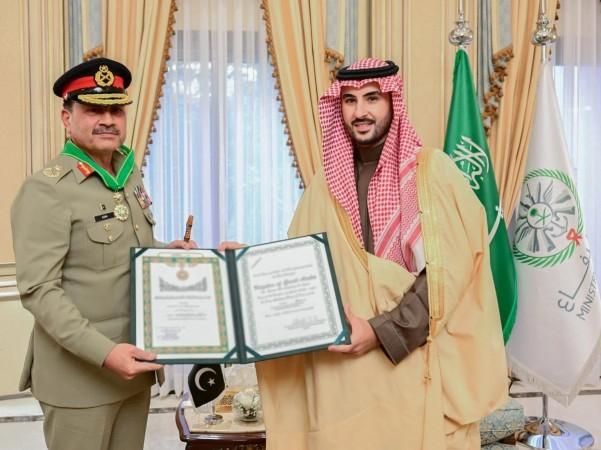
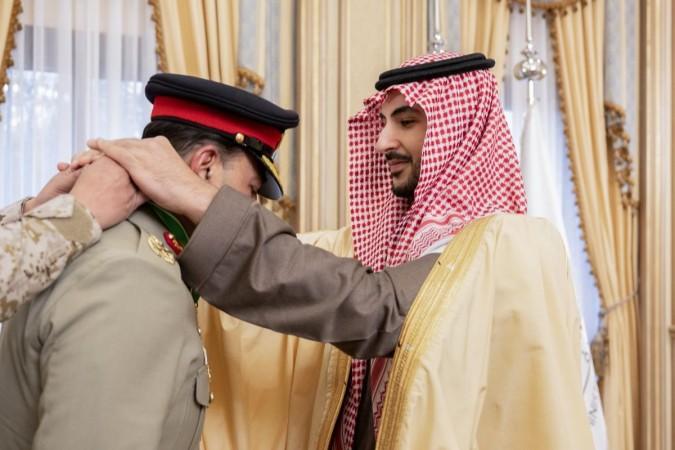
In the subtle orchestration of international relations, where gestures often encode deeper strategic intents, the Kingdom of Saudi Arabia's conferral of the King Abdulaziz Medal of Excellent Class upon Field Marshal Syed Asim Munir, Pakistan's Chief of Defence Forces, on December 21, 2025, stands as a poignant exemplar.
Presented by Defence Minister Prince Khalid bin Salman under a royal decree from King Salman bin Abdulaziz Al Saud, this accolade acknowledges Munir's instrumental role in fortifying defence collaboration and strategic synergy between Riyadh and Islamabad. Occurring against the backdrop of enduring Indo-Pakistani tensions, this event invites a nuanced examination of its implications for Saudi Arabia's engagements with these two pivotal South Asian powers. At its essence, the honour illuminates the primacy of hard-nosed national interests in shaping alliances interests that prioritize security, economic resilience, and geopolitical equilibrium over ideological affinities or ephemeral symbolism.
For Saudi Arabia, the award represents a deliberate reinforcement of its multifaceted security architecture, wherein Pakistan emerges as a dependable pillar. Historical precedents abound: Islamabad has long extended military expertise, including personnel deployments and training initiatives, to safeguard the Kingdom's internal stability and regional ambitions. The timing, following a landmark defence pact signed earlier in 2025 and amid discussions on counterterrorism and geopolitical exigencies, underscores Riyadh's imperative to diversify its partnerships in a volatile Middle East. Munir's invocation of "divine assistance" in reference to the May 2025 border skirmish with India sparked by New Delhi's Operation Sindoor in retaliation to a terrorist incident in Pahalgam subtly aligns with Pakistan's narrative of fortitude, potentially resonating with Saudi Arabia's own security concerns. Yet, this gesture does not signify an unequivocal tilt; rather, it exemplifies the Kingdom's adept balancing act, leveraging military ties with Pakistan to enhance its leverage in the Islamic world while mitigating risks from broader regional instabilities.
From Pakistan's vantage, the medal augments its strategic stature at a juncture of internal vulnerabilities and external pressures. Domestically, it bolsters the military's prestige amid economic challenges and political flux. Internationally, it reaffirms Islamabad's utility as a security exporter, potentially unlocking further financial inflows, oil concessions, and diplomatic support vital lifelines in navigating its rivalry with India. The award's portrayal in Pakistani discourse as the Kingdom's premier civilian honour amplifies this narrative, fostering a sense of parity in regional dynamics. However, such enhancements are transactional at heart, tethered to Saudi Arabia's evolving priorities under Vision 2030, which emphasize diversification beyond traditional dependencies.
Conversely, the honour's reverberations in India-Saudi relations appear muted and non-disruptive, reflecting the depth and breadth of New Delhi's engagement with Riyadh.Indian commentary has remained measured, with no overt expressions of concern, underscoring confidence in a partnership that transcends military optics. Bilateral trade volumes surpassing US$50 billion annually, coupled with substantial investments from the Saudi Public Investment Fund into India's infrastructure, renewables, and technology sectors, form the bedrock of this alliance.
Prime Minister Narendra Modi's receipt of the superior Order of King Abdulaziz (Special Class) in 2016 personally bestowed by King Salman symbolized this elevated rapport, paving the way for joint ventures in energy security, counterterrorism, and strategic dialogue. India's unique distinction of securing top honours from five of the six Gulf Cooperation Council states further cements its role as a balanced, indispensable partner in the Indo-Pacific, where shared interests in stability and prosperity eclipse episodic gestures toward Islamabad.
In the trilateral context, the award exerts a subtle, rather than seismic, influence. It may afford Pakistan marginal diplomatic buoyancy in multilateral fora, such as the Organisation of Islamic Cooperation, but it scarcely alters the asymmetrical realities: India's economic heft and strategic autonomy render it less susceptible to such calibrations. Saudi Arabia, attuned to the perils of entanglement in Indo-Pakistani discord, pursues a policy of constructive parallelism bolstering defence with Pakistan while deepening economic and strategic ties with India. This approach safeguards the Kingdom's core interests: energy export reliability, investment diversification, and regional counterpoise against threats like Iranian influence or Houthi insurgencies.
For India, this award should be viewed through a lens of serene confidence rather than apprehension as a affirmation of Saudi Arabia's pragmatic diversification, not a dilution of New Delhi's privileged standing. It serves as a gentle reminder of the enduring value of multifaceted engagement over narrowly military alignments. Accordingly, India would do well to sustain and intensify its high-level dialogue with Riyadh, accelerating investments under Vision 2030, expanding defence and technology cooperation, and leveraging institutional mechanisms like the Strategic Partnership Council. By deepening economic interdependence and cultural ties while maintaining strategic autonomy New Delhi can ensure that its partnership with the Kingdom remains not merely resilient, but preferentially positioned in Riyadh's evolving geopolitical calculus, yielding enduring mutual prosperity amid a fluid regional landscape.
[Major General Dr. Dilawar Singh, IAV, is a distinguished strategist having held senior positions in technology, defence, and corporate governance. He serves on global boards and advises on leadership, emerging technologies, and strategic affairs, with a focus on aligning India's interests in the evolving global technological order.]