
Modern war has quietly entered a new phase. Behind the headlines of drones, artificial intelligence and precision weapons lies a far older determinant of military power: the ability to manufacture and sustain ammunition at scale. In recent strategic discussions in Washington, the Chairman of the Joint Chiefs of Staff, Dan Caine, reportedly warned political leadership that prolonged confrontation with Iran could expose severe constraints in American interceptor missile inventories. The concern was not about tactical capability but about production capacity and stockpile depth.
According to data from the Center for Strategic and International Studies, the United States possesses unparalleled military technology but was never structured to sustain multiple simultaneous industrial-scale conflicts. Over the past three years the United States has supplied massive quantities of weapons to Ukraine, supported Israeli defensive operations around Gaza, and deployed naval forces to protect shipping routes across the Red Sea and Persian Gulf. These operations have drawn from the same limited inventories of missiles, interceptors, artillery shells and precision-guided bombs. As one U.S. defense official told Reuters in 2024, "The challenge is not the ability to build the most sophisticated weapons in the world. The challenge is building enough of them." The wars of the 2020s are therefore forcing strategists to rediscover an uncomfortable truth: military power ultimately rests on industrial capacity.
The artillery reality revealed by the war in Ukraine
The war in Ukraine has shattered long-standing assumptions about ammunition consumption in modern warfare. Ukrainian forces have frequently fired between 5,000 and 8,000 artillery rounds per day, while Russian forces have sometimes exceeded 20,000 rounds daily, according to estimates published by the Royal United Services Institute in London. The principal NATO artillery round is the 155 mm artillery shell, used by systems such as the M777 and PzH-2000 howitzers.
Before the war began in 2022, the United States produced approximately 14,400 shells per month, a level adequate for limited expeditionary conflicts but dramatically insufficient for large-scale war. By 2025 the Pentagon had expanded production to more than 40,000 shells monthly, with plans to reach 100,000 per month by 2027, representing the largest surge in American artillery manufacturing since the Cold War. According to Mark Cancian of the Center for Strategic and International Studies, "The Ukraine war exposed that Western militaries had optimized their logistics for small wars, not high-intensity conflict between industrial states." This expansion has required major investments in ammunition plants across Pennsylvania, Iowa, and Arkansas, where steel forging, explosive filling, and propellant production lines had to be reopened or modernized. Even with these efforts, NATO production remains far below the levels required for sustained high-intensity war.
Precision weapons and the depletion of strategic inventories
Among the most iconic weapons supplied to Ukraine has been the FGM-148 Javelin anti-tank missile, produced by Lockheed Martin and RTX Corporation. The United States has delivered more than 10,000 Javelin missiles to Ukrainian forces, representing nearly one-third of the total U.S. inventory, according to Pentagon disclosures. Each missile costs approximately $178,000, and the complete launch system can cost more than $250,000. Replenishing these stockpiles is not immediate; analysts estimate that restoring pre-war inventory levels could take four to five years even under accelerated production schedules. A similar challenge emerged with the FIM-92 Stinger shoulder-launched air defense missile.
More than 1,600 Stingers were transferred to Ukraine early in the war, yet production had been dormant for nearly two decades because the weapon had been considered obsolete. Restarting manufacturing required rebuilding supply chains for guidance electronics and rocket motors that had not been produced since the early 2000s. According to Doug Bush, the Pentagon had to re-engineer portions of the missile because several original components were no longer manufactured anywhere in the world.
Missile defense and the economics of interceptors
Missile defense systems are technologically remarkable but economically demanding. Systems such as the Patriot missile system, Terminal High Altitude Area Defense, and naval interceptors like the SM-6 missile represent decades of advanced research in radar, propulsion and guidance technologies. A single Patriot PAC-3 interceptor costs between $3 million and $5 million, while THAAD interceptors can exceed $10 million each. According to data released by the US Congressional Budget Office, annual Patriot interceptor production has historically ranged between 500 and 850 missiles per year.
Ukrainian air defenses alone have required roughly 60 Patriot interceptors per month to counter Russian ballistic missile attacks. Russian weapons such as the Iskander missile and Kh-101 cruise missile have been used extensively to target Ukrainian energy infrastructure and command facilities. As defense economist Michael O'Hanlon has noted, "Missile defense works technically, but it creates a cost-exchange problem when cheap offensive weapons force defenders to expend extremely expensive interceptors." This imbalance is becoming one of the defining economic features of modern warfare.
Iran's missile geography and regional strike capability
Iran has invested heavily in missile development for more than three decades, creating one of the largest ballistic missile arsenals in the Middle East. Western intelligence estimates suggest that Iran possesses more than 3,000 ballistic missiles, including systems such as the Shahab-3 missile, Fateh-110 missile, and the longer-range Khorramshahr missile. Many of these missiles are deployed in hardened underground bases built into the Zagros Mountains, allowing them to survive air strikes and launch from concealed tunnels. Satellite imagery has identified missile complexes near Kermanshah, Isfahan, and Khuzestan, regions that provide strategic access to the Persian Gulf and Israel. Iran has also developed extensive drone capabilities, including the Shahed-136 drone and Mohajer-6 drone, which have been exported to allied forces across the region.
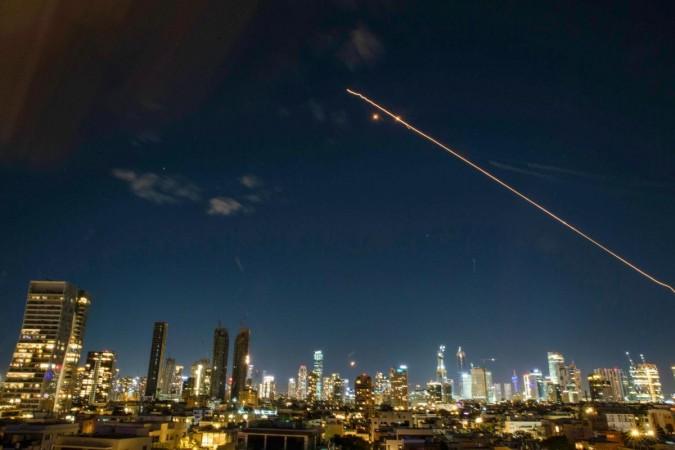
During recent escalations, Iranian forces and affiliated groups launched hundreds of missiles and thousands of drones within days, demonstrating the potential scale of saturation attacks. Analysts at the International Institute for Strategic Studies note that Iran's missile strategy emphasizes volume and dispersal rather than technological sophistication, making it difficult for adversaries to neutralize the arsenal completely.
The logistics of precision strike warfare
Modern Western military doctrine depends heavily on long-range precision strike systems capable of hitting targets hundreds or thousands of kilometers away. One of the most widely used systems is the Tomahawk cruise missile, produced by RTX Corporation, which has a range of roughly 1,600 kilometers and costs approximately $2 million per missile. Historically, the United States produced about 90 to 100 Tomahawks per year, although new contracts signed after 2023 aim to increase production to replenish stockpiles depleted by operational use. Another critical system is the High Mobility Artillery Rocket System, widely known as HIMARS. HIMARS launches Guided Multiple Launch Rocket System rockets capable of striking targets up to 70–80 kilometers away with high accuracy.
Before the Ukraine war, annual production of GMLRS rockets was roughly 10,000 units, but demand has pushed production goals toward 14,000–16,000 rockets per year. According to William LaPlante, "Precision munitions are incredibly capable but extremely complex to manufacture because they combine electronics, propulsion systems and advanced guidance technologies." This complexity slows production even when funding is available.
The drone revolution and cost asymmetry
The most disruptive development in modern warfare is the widespread use of inexpensive unmanned aerial systems. Iranian-designed drones such as the Shahed-136 are estimated to cost between $20,000 and $50,000 per unit, depending on configuration and production scale. Russia has launched thousands of these drones against Ukrainian cities and infrastructure, often in large waves designed to overwhelm air defenses. Ukrainian forces must intercept these drones using missiles costing hundreds of thousands or even millions of dollars. The same dynamic has appeared in maritime security operations in the Red Sea, where Western naval vessels have fired expensive surface-to-air missiles to intercept drones launched by Houthi forces operating from Yemen.
According to Seth Jones at the Center for Strategic and International Studies, "The drone revolution is fundamentally about economics. Cheap unmanned systems can force advanced militaries into unsustainable cost exchanges." This economic imbalance is driving research into directed-energy weapons, laser defenses and high-power microwave systems capable of destroying drones at far lower cost.
The fragile defense industrial base
For decades after the Cold War, Western defense industries consolidated and reduced manufacturing capacity for ammunition and missiles. The assumption was that future wars would be limited interventions rather than prolonged industrial conflicts. As a result, many factories capable of producing large volumes of munitions were closed or repurposed. Since the beginning of the Ukraine war, the United States has invested more than $5.3 billion to expand the defense industrial base and increase ammunition production. This funding supports new production lines for artillery shells, rocket motors, missile guidance systems and explosives.
However, modern munitions rely on highly specialized components such as microelectronics, composite materials and rare earth magnets sourced through complex global supply chains. According to a report by the RAND Corporation, rebuilding the defense industrial base could take five to ten years because skilled labor, specialized machinery and secure supply chains cannot be created instantly. Industrial resilience is therefore emerging as a critical component of national security.
Multi-theatre strategic pressure
The United States now faces strategic commitments across three major geopolitical theatres simultaneously. In Europe it continues to support Ukrainian resistance against Russia. In the Middle East it provides missile defense and security assistance to Israel and Gulf partners while monitoring Iranian missile activities. In the Indo-Pacific it maintains a powerful military presence to deter potential conflict involving Taiwan and the rising military capabilities of China. These commitments draw upon the same stockpiles of precision missiles, interceptors and guided rockets. Analysts at the Center for a New American Security warn that simultaneous conflicts could strain American inventories faster than industry can replenish them. Strategic planners therefore increasingly emphasize "magazine depth", the ability of a nation to sustain high-intensity combat for extended periods. This concept, once associated with twentieth-century industrial warfare, is returning as a central factor in modern strategy.
Industrial endurance as the foundation of power
The emerging lesson from the wars of the 2020s is profound. For three decades Western military strategy assumed that technological superiority would ensure rapid victory in future conflicts. Precision weapons, stealth aircraft and digital networks appeared to promise decisive battlefield dominance. Yet the conflicts in Ukraine and the Middle East are demonstrating that even the most advanced arsenals can be exhausted under sustained combat conditions. Russia's artillery barrages, Iran's missile and drone inventories, and the proliferation of inexpensive unmanned systems have restored an older strategic reality. Military power ultimately depends on industrial endurance, logistical resilience and production capacity. As historian Adam Tooze observed in a recent strategic analysis, "War in the twenty-first century still returns to the fundamentals of economic strength and industrial capacity." The nations that prevail in future conflicts will therefore not only possess advanced technologies but also the factories, supply chains and strategic foresight necessary to sustain them. In the emerging era of great-power competition, the true measure of military strength will not only be the sophistication of weapons but the depth of the magazines behind them.
[Major General Dr. Dilawar Singh, IAV, is a distinguished strategist having held senior positions in technology, defence, and corporate governance. He serves on global boards and advises on leadership, emerging technologies, and strategic affairs, with a focus on aligning India's interests in the evolving global technological order.]