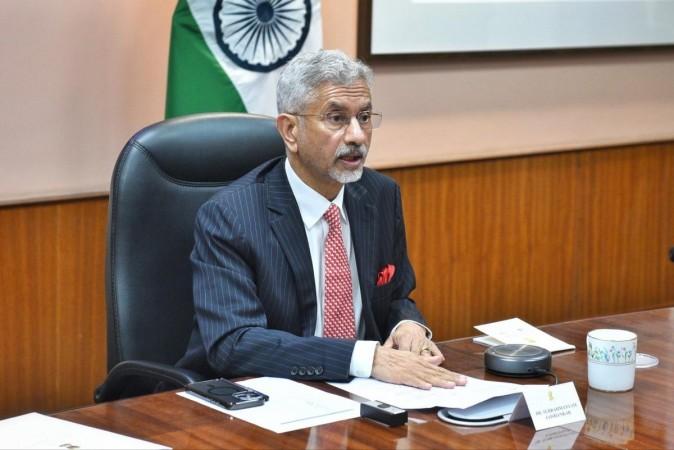
Diplomacy occasionally produces moments that appear routine in the headlines but prove consequential in history. The recent meeting in New Delhi between Nepal's Foreign Minister Shishir Khanal and India's External Affairs Minister Dr. S. Jaishankar may well be one such moment. At first glance, the outcomes seem procedural: reactivating bilateral mechanisms, discussing connectivity, expanding energy cooperation, strengthening flood management, and advancing digital collaboration. Yet beneath these announcements lies something far more significant, a conscious attempt by Kathmandu and New Delhi to reset one of South Asia's most important strategic relationships.
For decades, Nepal–India relations have oscillated between extraordinary intimacy and periodic distrust. Geography has made them inseparable, history has made them interconnected, and politics has often made them uncomfortable partners. Today, however, both nations appear to recognize that the emerging geopolitical landscape offers an opportunity that neither can afford to squander.
As former U.S. Secretary of State Henry Kissinger observed, "Geography has made us neighbors. History has made us friends. Economics has made us partners, and necessity has made us allies." Few relationships in Asia reflect this reality more profoundly than that between Nepal and India.
The most striking aspect of the New Delhi discussions was not any specific agreement but the political language employed by Nepal's new leadership. Foreign Minister Khanal's assertion that his government carries "no burden of the past" represents a subtle yet powerful departure from the periodic nationalism that has often complicated bilateral engagement. It signals a willingness to move beyond historical grievances toward a future defined by economic transformation, infrastructure development, technological collaboration, and shared prosperity.
This shift comes at a critical time. South Asia is undergoing a profound strategic transition. Economic competition, technological disruption, energy insecurity, climate change, and geopolitical rivalry are reshaping national priorities. Smaller states increasingly seek strategic autonomy while simultaneously requiring deeper economic integration. In this environment, ideology matters less than outcomes, and symbolism matters less than development.
The revival of all dormant bilateral mechanisms is therefore more important than it may initially appear. Effective international partnerships are rarely sustained by political declarations alone; they require institutions, processes, and mechanisms capable of resolving disagreements before they become crises. By agreeing to reactivate mechanisms covering border management, water resources, flood control, connectivity, energy cooperation, and security coordination, both governments are investing in the architecture of stability.
The emphasis on connectivity deserves particular attention. Historically, the Himalayas have often been viewed as barriers. Modern geopolitics increasingly treats them as corridors. Roads, railways, transmission lines, digital networks, and financial systems are becoming the new instruments of influence and prosperity. Nepal's aspirations for accelerated economic growth depend heavily on overcoming the constraints imposed by geography. India, meanwhile, recognizes that regional connectivity enhances not only economic opportunity but also strategic resilience.
The discussions regarding rail connectivity, transmission infrastructure, and cross-border transport networks indicate a growing appreciation that infrastructure is no longer merely a developmental issue. It has become a strategic asset. Nations connected by physical and digital networks are generally more stable, more prosperous, and less susceptible to external disruption.
Energy cooperation emerged as another pillar of the evolving partnership. Nepal possesses one of the world's most remarkable untapped hydropower endowments. Estimates suggest theoretical potential exceeding 80 gigawatts, with a substantial portion commercially exploitable. For Nepal, hydropower represents far more than electricity generation; it offers a pathway toward economic transformation, industrialization, export earnings, and fiscal stability.
For India, Nepalese hydropower provides clean, renewable, and geographically proximate energy capable of supporting growing demand while contributing to broader climate objectives. Energy interdependence often creates powerful incentives for long-term stability. Europe learned this lesson through its post-war economic integration. South Asia may increasingly discover the same principle through electricity markets and cross-border energy trade.
Former World Bank President Robert Zoellick once remarked that "energy security and economic security are inseparable." That observation is particularly relevant today. The Nepal–India energy partnership has the potential to become one of the most consequential examples of regional economic integration in South Asia.
Perhaps the most forward-looking outcome of the discussions was the agreement to deepen cooperation in artificial intelligence, digital public infrastructure, and fintech. While traditional diplomacy often focuses on territory, treaties, and trade, the geopolitics of the twenty-first century increasingly revolves around data, digital ecosystems, and technological standards.
India's emergence as a global leader in Digital Public Infrastructure has attracted considerable international attention. The success of Aadhaar, UPI, and related digital platforms has demonstrated how technology can drive financial inclusion, governance efficiency, and economic participation at unprecedented scale. By extending aspects of this ecosystem to neighboring countries, India is creating a new model of regional influence based not on dependency but on digital interoperability.
The agreement involving AI-powered language technologies and voice-first digital infrastructure may ultimately prove more transformative than many traditional development projects. In societies characterized by linguistic diversity and varying levels of digital literacy, voice-enabled platforms have the potential to democratize access to government services, financial systems, education, and healthcare.
Equally significant is the launch of cross-border digital payment arrangements. While such initiatives often receive limited public attention, their long-term impact can be substantial. Lower transaction costs, faster settlements, improved remittance efficiency, and greater financial inclusion directly affect millions of citizens. Given the central role of remittances in Nepal's economy, digital payment integration could generate tangible economic benefits relatively quickly.
The security dimension of the talks should not be overlooked. Nepal's assurance that its territory will not be allowed to be used against India's security interests addresses one of New Delhi's longstanding concerns. Open borders are a unique feature of Nepal–India relations and a powerful symbol of mutual trust. Yet they also create vulnerabilities requiring sustained cooperation. Effective security coordination remains essential for preserving the openness that has long distinguished the bilateral relationship.
At a broader strategic level, the meeting reflects a changing regional environment. The conversation was notably focused on development, technology, energy, investment, and connectivity rather than geopolitical rivalry. This does not mean strategic competition has disappeared. Rather, it suggests that both nations increasingly understand that economic modernization and national development must take precedence over ideological posturing.
China's growing presence in the Himalayan region inevitably forms part of the strategic backdrop. Yet the most successful foreign policy for Nepal is unlikely to involve choosing between major powers. Instead, Kathmandu's interests are best served by leveraging relationships with multiple partners while preserving strategic autonomy. Likewise, India's interests are better advanced through partnership and performance than through pressure and expectation.
The challenge now lies in implementation. South Asia has historically suffered from an abundance of declarations and a shortage of execution. Numerous agreements have been signed, mechanisms established, and intentions announced, only to encounter bureaucratic delays, political changes, or institutional inertia.
The real measure of success will therefore be visible progress over the next twenty-four months. Can transmission projects be accelerated? Can connectivity corridors be completed? Can flood management mechanisms function before the next monsoon season? Can hydropower investments move from negotiation to execution? Can digital cooperation produce measurable improvements in governance and economic opportunity?
These questions matter because the stakes extend beyond bilateral relations. A successful Nepal–India partnership would offer a model for regional cooperation across South Asia. It would demonstrate that neighboring countries can build relationships grounded in mutual benefit rather than mutual suspicion. It would show that infrastructure, energy, technology, and economic integration can serve as instruments of peace as effectively as diplomacy and security agreements.
A further opportunity lies in Kathmandu's ongoing process of appointing ambassadors to key capitals. At a time when diplomacy is increasingly driven by economics, technology, investment, and knowledge networks, Nepal would benefit from selecting envoys of exceptional professional standing, international credibility, and deep relationships across India's policy, business, academic, technological, and cultural ecosystems. Individuals of national eminence such as distinguished medical, scientific, academic leaders like Famous Dr Arun K Singh, Nepal's leading Gastroenterologist cum Hepatologist who regularly carries out critical surgeries in top Indian hospitals and having a strong relationship network with extensive cross-border engagement and proven understanding of international affairs can often achieve results beyond the conventional diplomacy in overall bilateral interests. Complementing this, Nepal could consider establishing an informal India-Nepal Technology and Innovation Advisory Group comprising eminent Indian technology leaders, entrepreneurs, investors, researchers, and industrialists to provide strategic guidance and accelerate Nepal's ambitions in digital public infrastructure, artificial intelligence, advanced manufacturing, innovation ecosystems, and technology-driven economic transformation. Such people-centric and knowledge-driven diplomacy would add a powerful new dimension to the bilateral partnership.
The Himalayas have witnessed centuries of civilizational exchange between Nepal and India. Today, a new chapter may be unfolding not one defined by geography alone, but by connectivity; not one driven by historical memory alone, but by future opportunity.
The New Delhi meeting may not have produced dramatic headlines or breakthrough treaties. Yet strategic transformations often begin quietly. If both governments sustain the momentum generated by this engagement, historians may eventually look back on June 2026 as the moment when Nepal and India chose to replace periodic friction with purposeful partnership and transformed one of South Asia's oldest relationships into one of its most consequential engines of growth, stability, and regional progress.
In an era increasingly shaped by artificial intelligence, digital networks, renewable energy, and economic interdependence, the future of Nepal India relations will not be determined by the mountains that separate them. It will be determined by the bridges physical, digital, economic, and strategic that they choose to build together.
[Major General Dr. Dilawar Singh, IAV, is a distinguished strategist having held senior positions in technology, defence, and corporate governance. He serves on global boards and advises on leadership, emerging technologies, and strategic affairs, with a focus on aligning India's interests in the evolving global technological order.]







![Alia Bhatt looks sexy in beachwear, enjoys girls' getaway in Spain; changes her Instagram DP [Photos]](https://data1.ibtimes.co.in/en/full/839220/alia-bhatt-looks-sexy-beachwear-enjoys-girls-getaway-spain-changes-her-instagram-dp-photos.jpg?w=220&h=138)