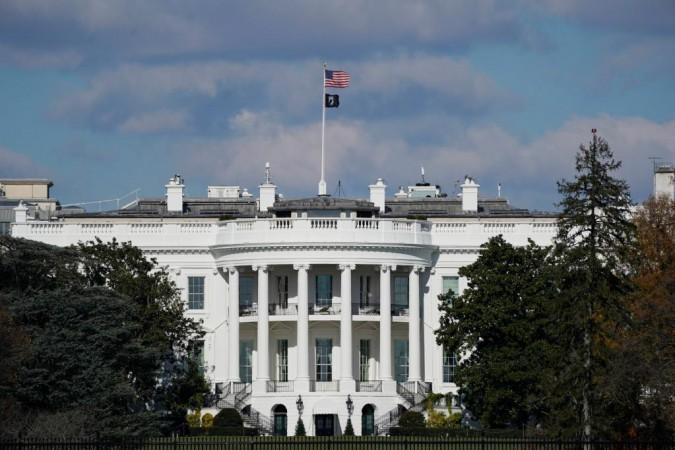
The White House is reaching out to allies to form a new international coalition aimed at ensuring safe navigation through the Strait of Hormuz, amid escalating tensions between the United States and Iran.
According to a report by The Wall Street Journal, the proposed initiative, called the "Maritime Freedom Construct" (MFC), was outlined in an internal State Department cable sent to US embassies. The plan urges countries to join as diplomatic or military partners to help restore freedom of navigation and stabilise global trade routes.
The MFC would be a joint effort between the US State Department and US Central Command. While the State Department would act as the diplomatic hub, Central Command would provide real-time maritime surveillance and coordinate with partner militaries.
The coalition aims to share intelligence, coordinate enforcement of sanctions, and support commercial shipping amid rising tensions. The cable also noted that the initiative would complement existing maritime security efforts led by the UK and France.
The Strait of Hormuz has emerged as a key flashpoint in stalled US-Iran negotiations. Iran has reportedly targeted vessels that do not comply with transit conditions, while the US Navy has imposed a blockade on ships linked to Iranian ports.
US President Donald Trump said the blockade would continue until Iran agrees to a nuclear deal, stating that it has proven "more effective than bombing." However, Iranian officials have warned that continued US actions could trigger "unprecedented" retaliation.
The ongoing blockade has disrupted shipping traffic through the Strait, pushing up global energy prices and prolonging uncertainty. Reports indicate that vessel movement has dropped to its lowest levels since large-scale US-Israel strikes on Iran began on February 28. Despite intermittent ceasefires, including a two-week truce starting April 8, diplomatic efforts have failed to yield a breakthrough.
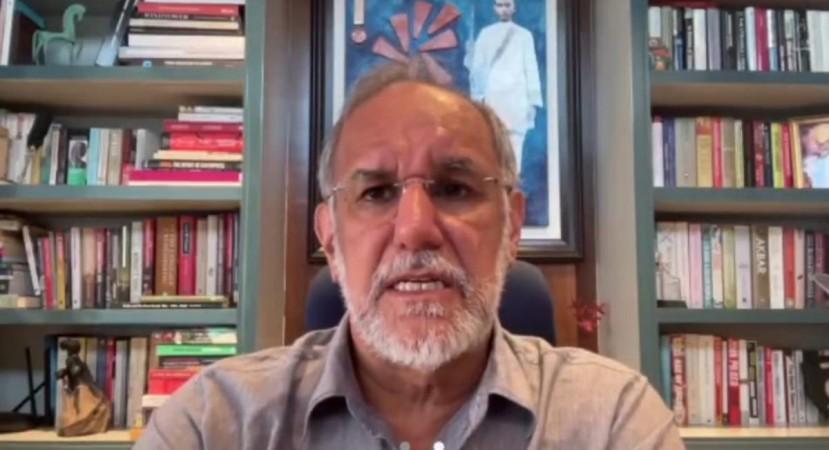
'Illegal blockade', warns former Indian envoy
Amid the escalating crisis, former Indian diplomat Navdeep Singh Suri has termed actions by both the US and Iran as "illegal," calling it a breakdown of international law and the rules-based global order.
He said the conflict has direct implications for India's economy, particularly due to its heavy dependence on energy imports routed through the Gulf. Suri called for restoring the Strait of Hormuz to its pre-February 28 status, when it functioned as a free international waterway between Iran and Oman.
Suri noted that while the US and Israel may have military superiority, Iran has gained strategic leverage by controlling access to the Strait. He warned that Iran could continue to exercise influence over the waterway, potentially introducing tolls or restrictions that would raise global shipping costs.
He also flagged broader concerns that similar actions could be replicated elsewhere, citing discussions around imposing tolls in the Strait of Malacca.
Global law, war dynamics, and terrorism debate
Suri further highlighted that the ongoing conflict reflects a wider breakdown of international norms, with both the US and Iran acting unilaterally and neither being fully bound by the UN Convention on the Law of the Sea in this context.
Assessing the conflict, he said that while the US has achieved tactical military success, Iran may hold a strategic advantage due to its control over a critical global chokepoint.
On terrorism, Suri backed Defence Minister Rajnath Singh, stating that terrorism has no religion or nationality. He pointed to multiple global examples across regions and ideologies, arguing that attributing terrorism to any one religion is fundamentally flawed.