India's stakes are high in the ongoing conflict in West Asia, particularly in terms of the safety of Indian immigrants living in the region and ensuring its energy security.
In this age of uncertainty and regional crises, India's nuanced and multi-vector diplomacy is both pragmatic and necessary.
A noted expert, writing in Modern Diplomacy, said that New Delhi has consistently avoided directly intervening or taking sides in the domestic and regional matters of Gulf countries. At the same time, these nations have not pressured India to abandon its balanced, multi-pronged approach despite the deeply polarised regional environment.
Following the escalation of the conflict, India's energy security has remained a top priority. The Gulf region continues to be a major supplier, accounting for around 60 per cent of India's crude oil and 50 per cent of its liquefied natural gas (LNG). The Strait of Hormuz plays a crucial role in this supply chain.
The report also highlighted the Indian government's coordinated efforts with Tehran and the calibrated actions of the Indian Navy through "Operation Urja Suraksha", which helped ensure the safe transit of several Indian merchant vessels through the Strait.
It added that Indian-flagged LNG and petroleum-carrying vessels were allowed safe passage by Iran, which regards India as a "friendly nation", reflecting the success of New Delhi's diplomatic outreach and strategic positioning.
India's bilateral engagements, including high-level visits, have further strengthened ties with key energy partners such as Qatar, which has reaffirmed its commitment to remain a reliable supplier.
The report emphasised that in an interconnected global order, proactive communication and diplomatic outreach are essential to managing crises and ensuring mutually beneficial outcomes. It noted that India's engagement with Gulf nations amid the escalation reflects this approach.
Meanwhile, India may be closer than ever to achieving long-term nuclear self-reliance following a key milestone in its ambitious three-stage nuclear programme, according to a report by Vietnam Times.

The report described the development as a potential turning point in India's decades-long effort to overcome fuel constraints and build a sustainable nuclear energy base.
It noted that India has historically faced a shortage of uranium, the primary fuel used in most nuclear reactors, and continues to depend on imports, including agreements with countries like Canada. However, India possesses vast reserves of thorium — nearly 25 per cent of the global total — offering significant long-term potential.
Since thorium cannot be used directly as fuel, India adopted a long-term strategy instead of short-term solutions. Nuclear scientist Homi J. Bhabha envisioned a system that could convert this resource advantage into energy self-reliance over time.
This vision led to India's three-stage nuclear programme — starting with uranium, moving to plutonium, and eventually utilising thorium. For years, progress in the second stage remained limited, but a recent breakthrough has changed that.
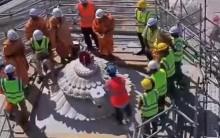
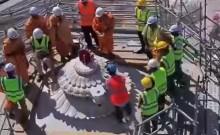
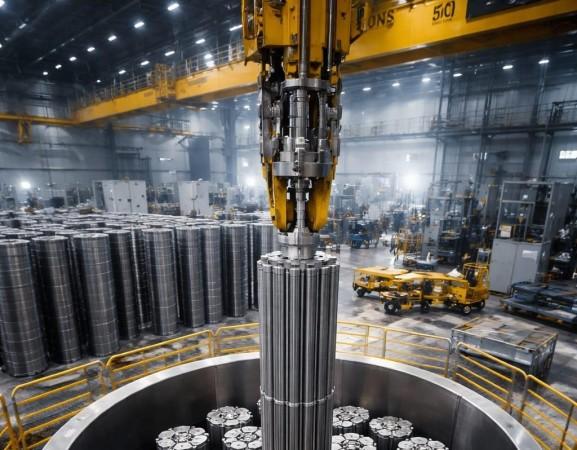
On April 6, India's Prototype Fast Breeder Reactor (PFBR) at Kalpakkam achieved criticality for the first time — a stage at which a nuclear reactor becomes self-sustaining.
While similar reactors exist globally, the report noted that many countries have struggled with such projects. India's continued commitment, therefore, stands out.
The achievement is significant because fast breeder reactors can produce more fuel than they consume, helping expand the country's nuclear fuel base and reduce dependence on imports.
The report also highlighted the technological complexity involved, including the use of mixed oxide fuel and liquid sodium cooling, which requires precise engineering and monitoring.
Despite this milestone, challenges remain. Nuclear energy currently contributes just over 3 per cent of India's electricity generation, indicating there is still a long way to go.
However, if successfully scaled, the programme could significantly reduce India's reliance on imported uranium and help realise Dr Bhabha's long-term vision of energy self-reliance.
(With inputs from IANS)