
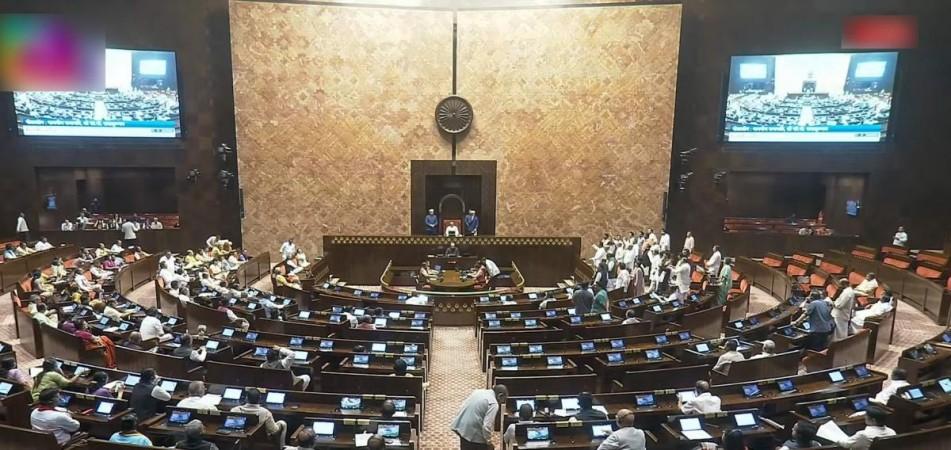
Few public policy sectors influence a nation's future as profoundly as higher education. Universities do far more than award degrees. They produce scientists who fuel innovation, engineers who build infrastructure, doctors who safeguard public health, teachers who shape future generations, entrepreneurs who create wealth, and informed citizens who sustain constitutional democracy. The quality of higher education therefore determines not only economic competitiveness but also social cohesion, technological capability, national security and the vitality of democratic institutions. As India aspires to become a developed nation by 2047, the governance architecture of its higher education system assumes strategic importance.
India today possesses one of the world's largest higher education ecosystems, comprising over 1,100 universities, more than 45,000 colleges and millions of students. Despite remarkable quantitative expansion, qualitative outcomes remain uneven. Graduate employability continues to concern industry, research productivity remains modest compared to other major economies, Indian universities are underrepresented among the world's leading institutions, faculty shortages persist, regulatory compliance is often cumbersome, and institutional fragmentation has become a recurring criticism. It is within this broader context that the Viksit Bharat Shiksha Adhishthan Bill, 2025 has emerged as one of the most consequential education reform proposals in recent decades.
The Government presents the Bill as a transformational reform intended to simplify regulation, improve institutional quality, eliminate duplication, strengthen accountability and align India's higher education system with the aspirations of the National Education Policy (NEP), 2020. By replacing multiple regulatory bodies with an integrated institutional framework, the Government argues that universities will enjoy greater autonomy, reduced compliance burden and improved capacity to innovate, collaborate internationally and respond to emerging technological and economic realities.
The proposal, however, has also generated substantial debate. Educationists, constitutional scholars, university administrators, student organisations and several State governments broadly acknowledge the need for reform but differ sharply on the institutional model proposed. While supporters view the legislation as overdue administrative modernisation, critics question whether concentrating regulatory authority within a single national framework may inadvertently weaken federalism, institutional autonomy and academic freedom. The debate therefore extends beyond administrative efficiency to fundamental questions regarding constitutional balance, governance philosophy and the future character of Indian higher education.
As India's renowned educationist and former President Sarvepalli Radhakrishnan, also former Chairman of the University Education Commission, once observed: "A university stands for humanism, for tolerance, for reason, for the adventure of ideas and for the search for truth."
That timeless observation remains the central test against which every higher education reform must ultimately be evaluated. Universities cannot become centres of excellence merely through legislative restructuring. Their strength depends upon intellectual freedom, institutional integrity, competent governance, scientific inquiry and public trust. The critical question before Parliament is therefore not whether reform is necessary, but whether the proposed framework creates conditions in which these values can flourish.
The Imperative for Reform
India's higher education regulatory architecture has evolved over more than seven decades through successive legislative interventions responding to specific sectoral needs. The University Grants Commission (UGC) was entrusted with promoting and coordinating university education. The All India Council for Technical Education (AICTE) regulated technical institutions. The National Council for Teacher Education (NCTE) oversaw teacher education, while other professional councils governed specialised disciplines such as architecture, pharmacy and law. Individually, these institutions addressed genuine policy requirements. Collectively, however, they increasingly produced overlapping jurisdictions, multiple inspections, duplicative approvals and inconsistent regulatory expectations.
The result has been a governance system frequently criticised as fragmented, process-driven and compliance-oriented. Universities often interact simultaneously with multiple regulators, State Governments, affiliating authorities and accreditation agencies, each operating under distinct legal mandates and procedural frameworks. Institutional leaders have repeatedly argued that excessive regulatory complexity diverts scarce academic and administrative resources away from teaching, research and innovation.
The National Education Policy, 2020 explicitly acknowledged these structural limitations. It observed that the existing system suffers from "fragmentation of higher education ecosystem; rigid separation of disciplines; limited teacher and institutional autonomy; and an inefficient regulatory system." The Policy therefore proposed a simplified governance architecture based upon the principle of "light but tight" regulation, reducing unnecessary procedural control while strengthening transparency, accountability and educational outcomes.
The economic rationale for reform is equally compelling. Human capital has become the principal determinant of national competitiveness. The OECD's Director for Education and Skills, Andreas Schleicher, has repeatedly argued: "Education today is about making sure people have the skills to navigate an uncertain future."
Artificial intelligence, advanced manufacturing, biotechnology, cybersecurity, quantum technologies and digital commerce are transforming labour markets at unprecedented speed. Universities must therefore evolve from degree-granting institutions into centres of lifelong learning, interdisciplinary research, innovation and entrepreneurship. Regulatory systems designed for the industrial economy of the twentieth century cannot adequately serve the knowledge economy of the twenty-first.
India's demographic profile reinforces this urgency. With one of the world's youngest populations, the country possesses an unprecedented demographic opportunity. Yet demographic advantage translates into economic strength only when supported by quality education, employable skills, research capability and institutional excellence. Failure to modernise higher education would risk transforming demographic dividend into demographic pressure.
Salient Features of the Proposed Bill
The proposed legislation seeks to establish a unified higher education regulatory framework replacing several existing statutory institutions. The underlying philosophy is to shift regulation away from excessive procedural oversight towards quality assurance, institutional performance and academic outcomes.
The proposed authority is expected to function as an integrated regulator responsible for establishing broad academic standards, coordinating accreditation, facilitating institutional governance and promoting transparency through technology-enabled regulation. Instead of navigating multiple regulatory agencies, universities would engage with a single institutional framework intended to reduce administrative duplication and improve policy coherence.
The Bill also seeks to encourage multidisciplinary education, research collaboration, international partnerships and greater operational flexibility for institutions demonstrating consistent academic performance. Universities are expected to receive enhanced autonomy in curriculum development, faculty recruitment, academic collaborations and research initiatives while remaining accountable to nationally prescribed quality benchmarks.
The Government argues that these reforms will improve India's global competitiveness by simplifying regulation, attracting international collaboration, strengthening research ecosystems and encouraging innovation. The proposal is closely aligned with the objectives of the National Education Policy, which envisages India emerging as a global knowledge society driven by multidisciplinary education, research excellence and institutional flexibility.
Critical Analysis: Reform Is Necessary, But Is Centralisation the Answer?
There is perhaps little disagreement that India's higher education governance requires substantial reform. The real question is whether replacing multiple regulators with a single overarching authority represents institutional simplification or institutional concentration.
The answer assumes constitutional significance because education occupies a distinctive place within India's federal framework. Following the 42nd Constitutional Amendment, education was transferred to the Concurrent List, recognising that both Parliament and State Legislatures possess legitimate responsibilities in educational policy. The constitutional design therefore envisages cooperative federalism rather than exclusive central authority.
India's diversity reinforces this constitutional philosophy. Educational priorities differ significantly across States in terms of language, socio-economic conditions, industrial structure, tribal populations, regional aspirations and labour market requirements. Universities located in metropolitan research clusters face fundamentally different challenges from institutions serving aspirational districts, border regions or historically disadvantaged communities. A regulatory framework that succeeds in one context may prove less effective in another.
It is against this background that one of the strongest criticisms of the proposed Bill has emerged. Several State governments, university leaders and constitutional scholars have argued that replacing multiple autonomous regulators with a single national authority may substantially increase the concentration of decision-making within the Union Government. Even if the legislation formally guarantees institutional autonomy, practical control over recognition, accreditation, governance norms, academic standards and regulatory oversight may become increasingly centralised.
This concern cannot be dismissed merely as political disagreement. It raises a deeper governance question: Does administrative efficiency necessarily require concentration of authority?
Recent experience suggests otherwise.
India has witnessed controversies relating to competitive entrance examinations, delays in recruitment, university appointments, regulatory approvals and administrative decision-making. These episodes demonstrate that governance failures often arise not from the number of institutions involved but from deficiencies in transparency, accountability, professional capacity and institutional independence. Simply replacing several regulators with one larger regulator may reduce organisational complexity, but it does not automatically improve governance unless accompanied by robust safeguards against arbitrariness and executive overreach.
As the Supreme Court of India has repeatedly emphasised in matters concerning educational institutions, universities occupy a distinctive place within constitutional democracy because they serve as centres of intellectual inquiry and independent scholarship. Their credibility depends not only upon academic standards but also upon freedom from unnecessary external interference. "Democracy needs citizens who can think for themselves rather than simply obey authority," stated Professor Martha C. Nussbaum, underscoring the significance of academic freedom.
If the debate on centralisation concerns constitutional design, the debate on institutional autonomy concerns the very soul of a university. The world's finest universities did not achieve excellence because governments micro-managed them. They succeeded because public institutions created enabling ecosystems where academic leadership, peer review, intellectual competition and institutional accountability flourished simultaneously.
This principle has long been recognised in India. Dr. Sarvepalli Radhakrishnan argued that universities should remain centres of "the adventure of ideas and the search for truth." Such an environment cannot exist where scholarship is shaped by fear, excessive regulation or ideological conformity. A modern regulator should therefore function less as a controller and more as a facilitator, setting broad standards while allowing universities sufficient freedom to innovate, experiment and respond to rapidly changing social and technological realities.
The proposed Bill undoubtedly attempts to simplify governance. Yet simplification should not inadvertently become standardisation. India's higher education landscape is extraordinarily diverse. Central universities, State universities, institutions of national importance, private universities, technical institutions, teacher education colleges, agricultural universities and research institutes operate under vastly different circumstances. A single regulatory philosophy cannot realistically accommodate every institutional context.
A regulator empowered to prescribe governance norms, approve institutional structures, monitor compliance, establish quality benchmarks and oversee accreditation must therefore exercise considerable restraint. Excessive concentration of authority may unintentionally discourage institutional initiative, creating a culture where universities focus more on regulatory compliance than on academic excellence. India's universities require greater responsibility rather than greater dependency.
Academic Freedom and Ideological Neutrality
Perhaps no aspect of the proposed reform has generated greater public debate than concerns relating to academic freedom.
Universities exist because societies recognise that the pursuit of knowledge requires intellectual independence. Scientific discoveries frequently challenge established beliefs. Social sciences encourage competing interpretations. History evolves through fresh evidence and new scholarship. Literature, philosophy and political science thrive upon debate rather than consensus. Consequently, universities derive legitimacy not from ideological uniformity but from intellectual pluralism.
UNESCO's 1997 Recommendation concerning the Status of Higher-Education Teaching Personnel emphasises that institutional autonomy and academic freedom are indispensable conditions for higher education to fulfil its public mission. This principle is now widely accepted across democratic societies.
Several academics, opposition parties, faculty associations and student organisations have argued that a highly centralised regulatory structure may create opportunities for greater influence over curricula, textbooks, appointments, research priorities and institutional governance. These concerns are frequently articulated in public discourse through allegations that the Government seeks to "saffronise" education by increasing the influence of institutions or individuals perceived to be ideologically aligned with the Rashtriya Swayamsevak Sangh (RSS). Critics contend that such a trajectory could narrow intellectual diversity and weaken universities as spaces for independent inquiry.
The Government has categorically rejected these allegations. It argues that the objective is not ideological control but educational reform. According to the Government, Indian education has historically underrepresented indigenous knowledge systems, civilisational history and Indian intellectual traditions. Integrating these perspectives, it argues, represents decolonisation rather than politicisation. The Government further maintains that the proposed reforms are intended to improve quality, reduce bureaucratic fragmentation, encourage multidisciplinary education and prepare graduates for a rapidly changing global economy.
Both positions deserve careful consideration. Democracies benefit when educational policy remains open to public debate. However, the long-term credibility of any regulatory reform will ultimately depend less upon official assurances than upon institutional safeguards. Transparent appointments, publicly available regulatory criteria, independent appeals, judicial review and meaningful parliamentary oversight provide stronger protection against real or perceived ideological influence than legislative declarations alone.
Governance Capacity: Can One Regulator Govern a Continental System?
Administrative consolidation often promises efficiency, but scale can also generate complexity.
India's higher education system serves millions of students across thousands of institutions differing in ownership, academic focus, geography and quality. Effective regulation of such diversity requires specialised expertise across engineering, medicine, law, agriculture, teacher education, management, liberal arts, research universities and emerging interdisciplinary domains.
If every major decision flows through one institution, the regulator itself may become the system's greatest bottleneck. Delays in accreditation, approvals, dispute resolution, institutional recognition or policy implementation could affect thousands of institutions simultaneously. Regulatory concentration therefore increases not only authority but also systemic risk.
International experience demonstrates that successful governance rarely depends upon centralisation alone. High-performing systems typically combine national quality standards with decentralised implementation, independent accreditation, professional peer review and significant institutional autonomy.
Economic Implications
Every advanced economy has relied upon universities to generate innovation, technological capability, entrepreneurship and highly skilled human capital. Whether one examines the United States, Germany, South Korea, Singapore or Israel, universities have functioned as engines of research, patents, start-ups and industrial competitiveness.
India's aspiration to become a US$30 trillion economy by 2047 will depend as much upon knowledge creation as upon physical infrastructure. Artificial intelligence, semiconductor manufacturing, biotechnology, clean energy, defence technologies and quantum computing require universities capable of producing globally competitive research and talent.
If the proposed Bill successfully reduces bureaucratic barriers, promotes interdisciplinary research, facilitates international collaboration and strengthens institutional accountability, it could significantly improve India's innovation ecosystem.
Conversely, if regulatory centralisation produces excessive procedural control, delays or uncertainty, the consequences may include slower research output, reduced academic competitiveness, difficulty in attracting world-class faculty and continued migration of talented students overseas.
Social and Constitutional Implications
Education is perhaps the most powerful instrument of social mobility available to a democratic society.
The proposed reform should therefore be evaluated not only through the lens of efficiency but also through constitutional values including equality, diversity, inclusion and federalism.
Regional universities often serve populations that would otherwise remain excluded from higher education. Tribal communities, linguistic minorities, economically weaker sections and first-generation learners depend heavily upon institutions responsive to local realities.
A governance framework that excessively standardises educational priorities risks overlooking India's remarkable diversity. Cooperative federalism requires consultation rather than command, partnership rather than hierarchy.
International Lessons
No major knowledge economy relies exclusively upon centralised regulation.
- The United Kingdom maintains rigorous quality assurance but allows universities extensive academic autonomy.
- The United States relies heavily upon independent accreditation bodies rather than direct governmental academic regulation.
- Australia combines national standards with institutional flexibility.
- Singapore demonstrates how strategic national direction can coexist with considerable operational autonomy.
- Finland, frequently recognised for educational excellence, places exceptional trust in academic institutions and professional educators while minimising bureaucratic intervention.
The common lesson is clear. Governments establish standards and provide strategic direction. Universities generate knowledge through autonomy, competition and intellectual freedom.
Recommendations
The proposed Bill could become a landmark reform if Parliament strengthens several safeguards.
- First, the governing body of the proposed authority should include substantial representation from State Governments, universities, faculty, industry, researchers and independent education experts to reflect India's federal character.
- Second, appointments to senior positions should be undertaken through transparent, merit-based search committees insulated from partisan influence.
- Third, the legislation should explicitly protect institutional autonomy in curriculum design, research priorities, faculty appointments and academic collaboration, subject only to clearly defined national quality standards.
- Fourth, every major regulatory decision should be accompanied by published reasons, time-bound appeals and independent review.
- Fifth, accreditation should rely extensively upon professional peer review rather than administrative inspection.
- Sixth, Parliament should mandate periodic independent evaluation of the regulator's effectiveness every five years.
- Finally, the Bill should expressly affirm that universities remain spaces for free inquiry, respectful debate, scientific temper and constitutional values. Such a declaration would strengthen public confidence while reaffirming India's long intellectual tradition.
The Viksit Bharat Shiksha Adhishthan Bill, 2025 represents one of the most ambitious attempts to redesign India's higher education governance since Independence. Its objectives are both timely and necessary. Few would dispute that the existing regulatory architecture is fragmented, cumbersome and insufficiently aligned with the demands of a knowledge-driven economy.
The central question, however, is not whether reform should occur but how reform should be designed. Administrative simplification must not come at the expense of constitutional federalism. National standards must not diminish institutional diversity. Accountability must not weaken academic freedom. Strategic direction must not become excessive control.
The true measure of this legislation will therefore lie not in the powers it confers upon a new regulator but in the confidence it inspires among universities, States, faculty, students and society. If Parliament succeeds in building a framework founded upon cooperative federalism, transparency, institutional autonomy, academic excellence and intellectual freedom, this Bill could become a cornerstone of India's journey towards becoming a global knowledge power. If these safeguards remain inadequate, however, the reform may achieve administrative consolidation without delivering the educational renaissance that India seeks.
As India moves towards Viksit Bharat 2047, its universities must not merely be well regulated. They must be trusted, empowered and free to pursue knowledge wherever evidence, curiosity and reason may lead. That, ultimately, is the enduring foundation of every great civilisation and every great democracy.
[Major General Dr. Dilawar Singh, IAV, is a distinguished strategist having held senior positions in technology, defence, and corporate governance. He serves on global boards and advises on leadership, emerging technologies, and strategic affairs, with a focus on aligning India's interests in the evolving global technological order.]