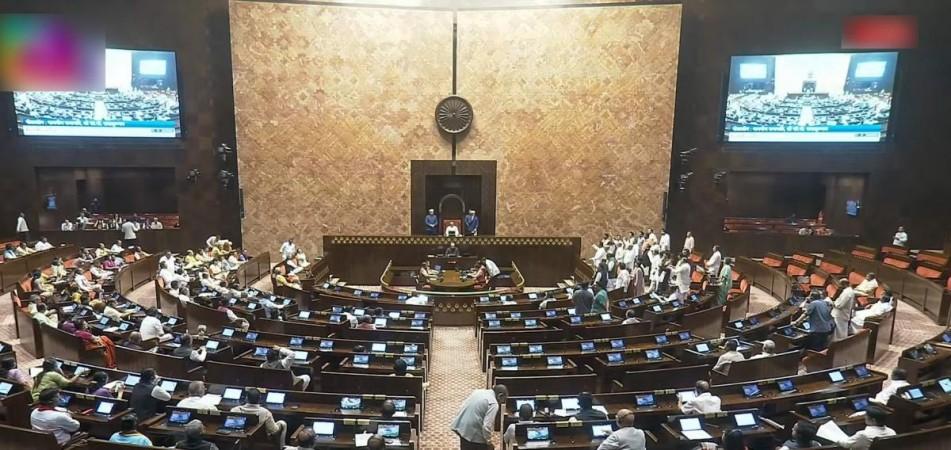
Parliament has acted with unusual speed. The Public Examinations (Prevention of Unfair Means) Amendment Bill, 2026, introduced on 27 July, cleared the Lok Sabha on 29 July and the Rajya Sabha on 30 July. It raises the minimum imprisonment for individuals using unfair means from three to five years (extendable to ten), increases the maximum fine from ₹10 lakh to ₹50 lakh, hikes penalties for organised crime to a minimum of seven years and ₹10 crore, lengthens the debarment of errant service providers to eight years, mandates two-month investigations, and requires Special Fast Track Courts to complete trials within three months of the chargesheet. On the face of it, the message is clear: zero tolerance for those who steal the futures of honest students.
Yet the question that matters is not whether the law looks tougher. It is whether, in the circumstances that actually exist, repeated high-profile leaks, institutional fragility at the National Testing Agency (NTA), and a long history of state-level anti-cheating statutes that failed to stop the problem, this amendment is adequate.
The 2024 Act's Track Record: A Cautionary Tale
The parent legislation, the Public Examinations (Prevention of Unfair Means) Act, 2024, was passed in February 2024 amid the first major NEET-UG storm, notified only in June that year, and still suffered delays in full operationalisation of rules. It already made offences cognisable, non-bailable and non-compoundable, and prescribed meaningful penalties. State laws in Uttar Pradesh, Rajasthan, Gujarat, Odisha and elsewhere had done much the same for years, some dating back decades.
The results were disappointing. Leaks continued. The 2024 NEET-UG paper was compromised in parts of Bihar and Jharkhand. The 2026 edition was cancelled after another significant breach. Public data on cases registered, chargesheets filed and convictions secured under the 2024 Act remains thin, suggesting that the real bottlenecks lay less in the maximum sentence and more in detection, investigation capacity and preventive controls. A statute that raises the height of the fence without increasing the chance of being caught achieves little.
Criminologists have long stressed this point. Cesare Beccaria argued in the eighteenth century that the certainty of punishment deters far more effectively than its severity. Modern reviews, including those synthesised by the U.S. National Institute of Justice, confirm the finding: increasing the likelihood of apprehension has a stronger effect than lengthening prison terms. India's experience with paper-leak laws appears to illustrate the same principle.
What the Experts and the Courts Have Said
The K. Radhakrishnan Committee, constituted in June 2024 under the former ISRO chairman after the first NEET controversy, submitted a report containing 101 recommendations. It identified local transport, storage and human handling as the weakest links in the examination chain. It recommended computer-assisted secure pen-and-paper testing (encrypted electronic transmission to centres with printing only shortly before the exam), a sharp reduction in dependence on private service providers, permanent professional staffing at the NTA, stronger accountability mechanisms, digital surveillance, and the phased creation of at least 1,000 secure government-run testing centres. The committee explicitly called for transforming the NTA into "a nimble, zero-error, adaptive and integrative process" and urged implementation on a war footing.
Two years later, full implementation remains incomplete. The Supreme Court has repeatedly returned to the same institutional failures. In observations during the 2026 proceedings, the Court spoke of the need to break the cycle of error, develop institutional memory, and move beyond ad-hoc responses. It has described the trauma inflicted on students and families and questioned whether the NTA has truly learnt its lessons. These are not abstract critiques; they point to design flaws that no amount of post-facto criminalisation can fully repair.
Critical Gaps the Law Still Leaves Open
A serious anti-leak framework must rest on three pillars: prevention, investigation and adjudication. The 2026 amendments strengthen the second and third. They leave the first largely untouched.
There are still no statutory mandates for end-to-end custody protocols, secure printing standards, real-time tracking of question papers, or mandatory encrypted digital delivery. There is little on procurement standards for service providers or independent audit of the examining authority itself. Victim support, fee refunds, attempt or age-limit relaxations, counselling, is absent. Timelines for investigation and trial lack clear consequences if breached. Designating existing Courts of Session as "fast-track" courts does not automatically create additional judges, courtrooms or forensic capacity; India's experience with other specialised courts shows how quickly backlogs reappear.
Accountability has improved at the edges. Service providers and their senior management now face steeper personal and institutional penalties. Some 47 NTA officials have been removed in recent weeks. Organised networks attract higher minimum sentences. Yet responsibility for the overall architecture of the examination system, the decisions that determine how many hands a paper passes through, remains diffuse.
Lessons from Elsewhere
China's Gaokao, taken by more than 13 million students annually, is frequently cited as a model of near-leak-proof security. Question papers are treated as state secrets, often printed in high-security facilities under continuous surveillance. Setters are sequestered. Transport is heavily guarded and tracked. Centres deploy facial recognition, metal detectors, radio-frequency detectors and, in some cases, drones. Organisers of cheating face multi-year prison terms. Even so, Chinese courts have punished thousands for exam-related offences in recent years, demonstrating that no system is invulnerable. The difference lies in the density of preventive controls and the consistency of enforcement.
Jurisdictions in the United States and the United Kingdom place heavier emphasis on institutional integrity frameworks, secure digital platforms, documented chain-of-custody procedures, risk assessment and technology-enabled anomaly detection. The common thread is that robust prevention reduces the need to rely solely on deterrence after the fact.
What Must Happen Now
The 2026 amendments are a useful hardening of the enforcement tool. They should be implemented with seriousness: dedicated investigative capacity, properly resourced Special Fast Track Courts, transparent public reporting of cases and outcomes, and genuine consequences for missed deadlines.
But legislation cannot substitute for institutional redesign. The government should place the full set of Radhakrishnan recommendations, and any subsequent reports from the Nilekani-led panel, on a public implementation dashboard with clear timelines and independent monitoring. The NTA requires structural overhaul: permanent professional leadership, reduced outsourcing, and investment in secure infrastructure. Technology solutions already available, encrypted transmission, blockchain-style tracking, secure on-site printing, should move from recommendation to standard operating procedure. States should be encouraged to align their laws while the Centre models best practice in prevention rather than only punishment.
Every cancelled examination represents not only administrative failure but a profound breach of the social contract with young people who have invested years of effort. A tougher criminal law is necessary. It is not sufficient. The real test of seriousness will be whether India builds an examination system that is difficult to breach in the first place, rather than one that merely punishes those who succeed in breaching it.
[Major General Dr. Dilawar Singh, IAV, is a distinguished strategist having held senior positions in technology, defence, and corporate governance. He serves on global boards and advises on leadership, emerging technologies, and strategic affairs, with a focus on aligning India's interests in the evolving global technological order.]