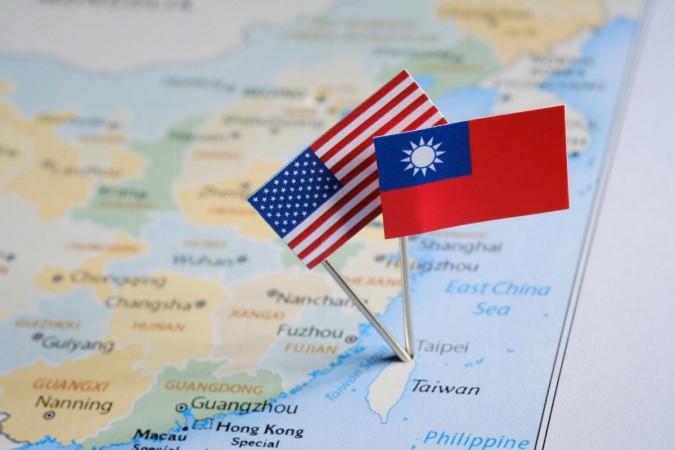
The United States' approval of a multi-billion-dollar arms package to Taiwan represents a pivotal escalation in Washington's support for Taipei's defense amid mounting pressures from Beijing. On December 17, 2025, the Trump administration notified Congress of an unprecedented $11.1 billion Foreign Military Sales package, the largest ever to Taiwan. This package includes 60 M109A7 self-propelled howitzers valued at $4.03 billion, 1,050 FGM-148 Javelin missiles at $375 million, and 1,545 BGM-71 TOW missiles at $353 million, among other assets like High Mobility Artillery Rocket Systems and loitering munitions. Domestic budget standoffs in Taiwan's legislature have prompted the Ministry of National Defense to seek extensions on the Letters of Offer and Acceptance, with drafts valid until March 15, 2026, and initial payments due by March 31. This development underscores the urgency of modernizing Taiwan's ground forces against the backdrop of the People's Liberation Army's overwhelming numerical and technological superiority.
The Republic of China Army's procurement strategy aligns with broader efforts to transition from conventional symmetric warfare to an asymmetric "porcupine" defense posture, emphasizing anti-access/area denial tactics to deter or delay a potential PLA amphibious invasion. Taiwan currently fields approximately 490 self-propelled howitzers, including 225 M109A2 and M109A5 variants, alongside over 1,000 towed systems. The M109A7 acquisition, initially planned for 168 units but scaled to 60 in the latest package, aims to replace aging Vietnam-era M108 105mm howitzers and potentially expand artillery reserves for frontline and reserve units. Complementing this are expansions in anti-tank arsenals, with Javelin and TOW missiles building on inventories established since 2002 and the 1970s, respectively.
Technical Breakdown: The Systems in Focus
The M109A7 Paladin, manufactured by BAE Systems, represents a significant upgrade over Taiwan's existing M109 variants. Equipped with a 155mm M284 cannon on a 39-caliber barrel, it achieves a maximum range of 22km with standard projectiles, extending to 30km with rocket-assisted rounds and up to 40km using precision-guided munitions like Excalibur. Its automated loader enables a sustained rate of fire of one round per minute and a burst rate of four rounds per minute, supported by a crew of four and a combat weight of 38 metric tons. The system's Bradley-derived chassis enhances mobility, with a top speed of 61km/h and a cruising range of 300km, incorporating advanced fire control systems for rapid "shoot-and-scoot" operations.In contrast, the PLA's PLZ-05 self-propelled howitzer, a cornerstone of Chinese artillery, outclasses the M109A7 in several metrics. Featuring a 52-caliber (or 54-caliber in the PLZ-04 variant) 155mm barrel, it delivers ranges of 50-60km with specialized projectiles, a burst rate of 4 rounds in 15 seconds, and a sustained 8-10 rounds per minute. Weighing 35-43 tons, it achieves speeds of 56-65km/h and operational ranges of 450-550km, with full autoloading and advanced networked fire control systems derived from Russian designs. The PLZ-05's proliferation within PLA Ground Forces highlights China's emphasis on long-range, high-volume fire support, potentially overwhelming Taiwanese defenses in a saturation barrage scenario.
The anti-tank components of the package further fortify Taiwan's ground denial strategy. The FGM-148 Javelin, a fire-and-forget system, employs an imaging infrared seeker for top-attack profiles, penetrating over 760mm of rolled homogeneous armor with a tandem warhead. Effective ranges extend from 2.5km (original) to 4.75km when vehicle-mounted, with a peak altitude of 150m in top-attack mode for exploiting weaker top armor. The BGM-71 TOW, a wire-guided missile, offers versatility with variants like TOW-2A (tandem HEAT) and TOW-2B (top-attack), achieving ranges of 3-4.5km and speeds up to 320m/s. Warhead penetration varies from 430-900mm rolled homogeneous armor, making it suitable for bunker-busting and anti-armor roles.
These systems are particularly vital against the PLA's armored superiority, exemplified by the Type 100 main battle tank unveiled in September 2025. Weighing around 40 tons, the hybrid-electric Type 100 integrates beyond-visual-range capabilities through optical, infrared, and radar sensors networked with aviation and artillery assets. Equipped with augmented reality interfaces, active protection systems like the GL-6, and drone countermeasures, it represents a paradigm shift toward sensor-fused, low-profile armored warfare optimized for drone-heavy environments. Taiwan's Javelin and TOW acquisitions aim to exploit vulnerabilities in such advanced platforms, focusing on ambush tactics in urban and mountainous terrain.

Strategic Context: Asymmetric Warfare and Cross-Strait Dynamics
Taiwan's defense reforms, including re-equipping reserve units with self-propelled artillery and unmanned systems, reflect a shift toward hybrid warfare. The island's lack of diplomatic ties limits procurement options to the United States and Israel, making these sales critical. However, the PLA's quantitative edge, over 3,500 tanks including the Type 100, poses an overwhelming threat, as noted in assessments of its September 2025 unveiling. U.S. arms aim to impose prohibitive costs on any invasion, leveraging Taiwan's geography for attrition-based defense.
Broader Indo-Pacific ramifications include strained U.S.-China relations, with Beijing viewing the sales as provocative. The package aligns with U.S. efforts to deter Chinese assertiveness, bolstering alliances under frameworks like the Quadrilateral Security Dialogue. Yet, delays in deliveries, exacerbated by U.S. production bottlenecks, highlight vulnerabilities in supply chains.
Implications and Imperatives for India
The U.S.-Taiwan arms dynamic carries profound implications for India, which shares a contested 3,488km Line of Actual Control with China. Since the 2020 Galwan clashes, India has forward-deployed tanks, artillery, and BrahMos missiles in Ladakh and Arunachal Pradesh, mirroring Taiwan's asymmetric focus. India's artillery inventory includes M777 ultralight howitzers (range 24-30km), K9 Vajra self-propelled guns (similar to M109A7 specifications), and indigenous Advanced Towed Artillery Gun Systems with 48km ranges. Anti-tank capabilities feature Spike missiles (4km range) and Nag systems, effective against PLA armor like the Type 15 light tanks deployed in high-altitude regions.
However, China's PLZ-05 and Type 100 deployments along the Line of Actual Control expose gaps in India's long-range fire and networked warfare. The U.S.-Taiwan deal signals strengthened U.S. commitment to Indo-Pacific partners, potentially enabling India, as a Quadrilateral Security Dialogue member, to access similar technologies via frameworks like the U.S.-India Defense Technology and Trade Initiative. This could include precision-guided munitions and anti-tank systems to counter PLA advantages.
Imperatives for India include accelerating artillery modernisation, with a focus on indigenous production like Advanced Towed Artillery Gun Systems and Dhanush guns to reduce import dependency. Enhancing drone and commando units for border deterrence, as announced in October 2025, is essential. Deeper U.S.-India cooperation on cyber and maritime security could integrate Taiwan's lessons into Quadrilateral Security Dialogue exercises, fostering collective resilience against Chinese coercion. Ultimately, New Delhi must prioritise self-reliance while leveraging alliances to maintain strategic autonomy in a volatile region.
[Major General Dr. Dilawar Singh, IAV, is a distinguished strategist having held senior positions in technology, defence, and corporate governance. He serves on global boards and advises on leadership, emerging technologies, and strategic affairs, with a focus on aligning India's interests in the evolving global technological order.]