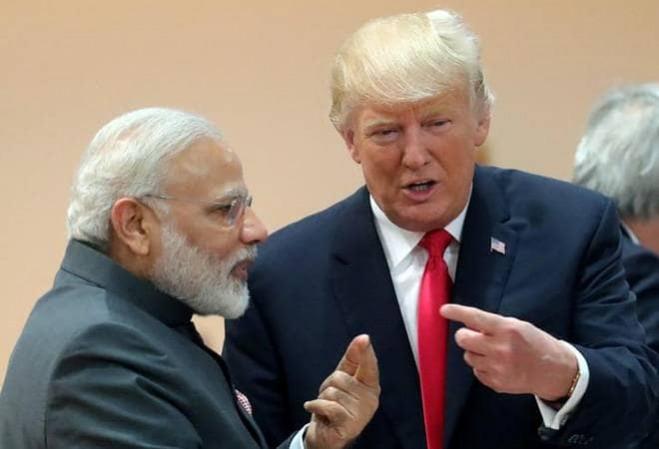
On February 2, 2026, the governments of India and the United States inaugurated a definitive chapter in 21st-century geopolitics and commerce with the signing of a comprehensive bilateral trade agreement. Announced by U.S. President Donald Trump and Indian Prime Minister Narendra Modi, this pact reduces U.S. tariffs on Indian exports particularly slashing them from roughly 25 % to 18 % and commits India to pivot its energy imports away from Russia toward the United States and other partners, while purchasing more than $500 billion in American goods across energy, industrial, agricultural, and technology sectors.
This event must be understood not as a discrete commercial transaction but as a strategic inflection point in global power economics, alliance construction, and supply-chain geopolitics, the culmination of years of negotiation, pressures, and recalibration.
A New Geoeconomic Architecture: Balancing Washington and New Delhi
For decades, generous forecasts about an India–U.S. free trade agreement alternated with diplomatic ambivalence and structural friction. Earlier rounds of talks stalled repeatedly, often over agriculture, dairy, digital standards, and market access asymmetries, illustrating the depth of substantive differences between a developed economy protecting legacy sectors and a rapidly developing market safeguarding fragile constituencies.
The deal's contours reflect this reality. Rather than a sweeping zero-tariff free trade agreement of the kind seen in Europe, it is a strategic, phased, and practical pact cutting selected duties, aligning energy trade, and signaling deeper economic engagement while managing domestic sensitivities. India retains calibrated protections in agriculture and key sectors, even as it opens energy, technology, and services adjuncts to U.S. markets.
This is not a classic Washington consensus-style liberalization treaty. Instead, it is a hybrid geoeconomic instrument that tailors trade incentives to broader strategic goals, a model likely to define future large-power commercial diplomacy.
Energy and Security: Mercantilism With a Strategic Mission
A central pivot of the agreement is India's commitment to reduce purchases of Russian crude, a critical issue in the negotiations. The United States, amid ongoing geopolitical tensions with Moscow over Ukraine, viewed Indian oil sourcing as a geopolitical leverage point. India's willingness to diversify its energy portfolio toward American crude and liquefied natural gas is as much a security signal as a trade adjustment.
This reorientation carries economic costs. Indian refiners historically benefited from Russian crude discounts worth several billion dollars annually, and shifting away involves higher landed costs and recalibrated supply chains. The choice to absorb that cost in exchange for predictable trade terms and strategic alignment demonstrates a long-term calculation: securing diversified energy resilience tied to the world's most advanced market.
Viewed from Washington, that shift also institutionalizes a geopolitical logic: trade policy has increasingly become a tool of alliance signalling, not mere tariff tinkering. India's energy commitment complements a broader U.S.–India strategic partnership that extends from defence cooperation to Indo-Pacific deterrence architectures.
Trade Dynamics: Surplus, Competitiveness, and New Markets
Economically, the agreement realigns trade incentives in a way that will reshape Indian and American industrial calculus.
For India:
The reduction in U.S. tariffs signals an expanded competitiveness for Indian goods that have long borne punitive duties. This is particularly salient for sectors such as textiles, pharmaceuticals, manufacturing components, and engineering goods - items that have lost market share under asymmetric tariffs.
By committing to a predictable market framework, Indian firms will gain confidence to scale exports and invest in capacity aligned with U.S. demand.
Yet, the deal also acknowledges the reality of India's growth model: protecting vulnerable sectors and small producers remains a political and economic priority. Unlike some euro-centric free trade pacts, it is not a blanket liberalization that uproots domestic structures in the name of global market access.
For the United States:
The deal unlocks Indian demand for American energy, agricultural tech, machinery, and high-end industrial inputs, balancing the U.S. trade ledger and enhancing export growth.
It also integrates India more deeply into North American supply chains, weakening competitor nodes historically dominated by China or ASEAN.
The result is a bilateral trade equilibrium calibrated for mutual export gains without complete market surrender, a negotiated balance rare in global trade pacts today.
Domestic Politics and Regulatory Realities
A central challenge for the pact's durability will be domestic political calculus in both capitals.
In the United States, legislative complexities, especially the absence of a Fast Track Trade Authority mean the agreement's implementation could face Congressional scrutiny, delays, or amendments. Previous analyses warned that without such authority, any trade deal is vulnerable to legislative pull-backs or modifications well after signing.
In India, concerns about displacement of small dairy and agricultural producers, a sector employing hundreds of millions, highlight the social sensitivity embedded in commercial policy. Analysts have cautioned that opening agricultural trade without calibrated safeguards could imperil livelihoods that form the backbone of the Indian rural economy.
Thus, while the headline terms are strategically significant, the real test of this pact will be its domestic embedment, the extent to which governments can manage transitional impacts and sustain political consent for deeper economic integration.
Strategic Implications: Beyond Markets to Multipolar Influence
The significance of this trade deal transcends bilateral commerce. It is a regime-shaping instrument in the evolving multipolar order, defined by:
Economic diversification away from Sino-centric supply chains: both India and the U.S. have vested interests in reducing overreliance on China.
Strengthening the Indo-Pacific economic architecture's commercial linkages undergirds more extensive defence, digital, and infrastructure cooperation.
Signalling to global markets that large-economy collaborations can be achieved even amid geopolitical tensions, complicating binary alignments in global economics.
This pattern resonates with India's broader trade diplomacy, from the India–EU "mother of all deals" to other regional trade talks where New Delhi seeks diversified market access without forsaking strategic autonomy.
A New Template for Strategic Trade in the 21st Century
The India–USA trade deal signed in February 2026 is not a conventional tariff reduction treaty. It is a tectonic realignment of economic strategy and geopolitical calculus blending market incentives with energy security, alliance signalling, and industrial competitiveness.
In an era where trade is inseparable from strategy, this pact represents a new template: pragmatic, phased integration that respects domestic imperatives while advancing shared global objectives. It demonstrates that large democracies with divergent development profiles can converge on rules that enhance mutual prosperity without one side subsuming the other.
For global markets, it is a beacon of predictability. For policymakers, it sets a new paradigm in trade-cum-strategic architecture. And for the broader geopolitical order, it is a profound marker: trade is once again a cornerstone of power, not just performance—a nexus where prosperity and strategy coalesce in the making of a new economic era.
[Major General Dr. Dilawar Singh, IAV, is a distinguished strategist having held senior positions in technology, defence, and corporate governance. He serves on global boards and advises on leadership, emerging technologies, and strategic affairs, with a focus on aligning India's interests in the evolving global technological order.]