
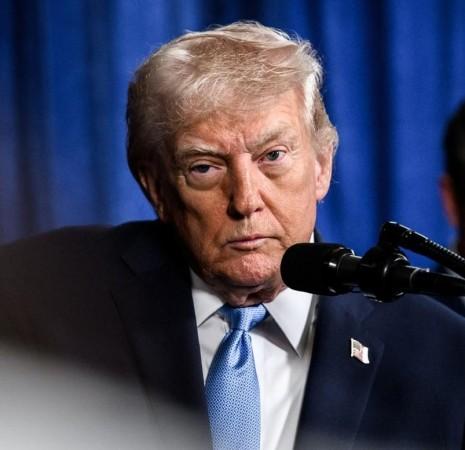
US President Donald Trump on Friday announced plans to reopen commercial airspace over Venezuela, signalling a new phase of engagement that could include US oil companies returning to the country. At the same time, he escalated trade tensions with Canada, threatening steep tariffs over an aircraft certification dispute.
Speaking at a Cabinet meeting, Trump said he had spoken to Venezuela's interim president and ordered immediate steps to restore commercial travel. "I just spoke to the president of Venezuela and informed her that we're going to be opening up all commercial airspace over Venezuela," he said, adding that American citizens would soon be able to travel there.
Trump assured that travellers would be safe, saying Venezuela was "under very strong control". He said Venezuelans living in the United States, particularly in the Doral area of Miami — often referred to as "Little Venezuela" — were welcoming the move.
Linking the decision to what he described as improved security conditions and better diplomatic ties, Trump thanked military officials for their role and said relations with Caracas had strengthened significantly. He also highlighted renewed interest from the energy sector, saying major US oil companies were already scouting opportunities in Venezuela.
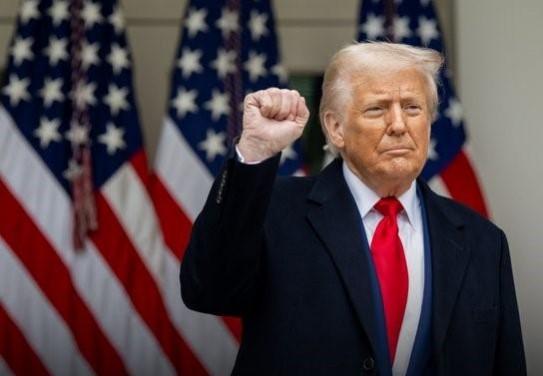
"They'll be bringing back tremendous wealth for Venezuela and for the United States," Trump said, noting that Venezuela holds some of the world's largest proven oil reserves and was once a major destination for US energy firms before sanctions curtailed operations.
Trump said he had instructed Transportation Secretary Sean Duffy and other agencies to move quickly to reopen the airspace, enabling two-way travel for Venezuelans who wish to visit or return home.
While signalling engagement with Venezuela, Trump adopted a confrontational tone toward Canada, threatening sweeping penalties over aircraft certification issues. In a post on Truth Social, he accused Ottawa of "wrongfully and illegally" refusing to certify Gulfstream 500, 600, 700 and 800 jets.
In response, Trump said the United States would decertify Canadian-made aircraft, including Bombardier Global Express jets, until Gulfstream receives approval. He warned that if the issue is not resolved immediately, the US would impose a 50 per cent tariff on all aircraft sold into the country from Canada.
The threat sparked immediate criticism from Democrats, including New York Senator Kirsten Gillibrand, who accused Trump of recklessly using tariffs against close allies. Gillibrand warned that escalating trade penalties would hurt New Yorkers, particularly in upstate regions reliant on Canadian imports such as fertilizer, electricity and car parts.
She said higher tariffs would worsen inflation pressures on working families and cited past tariff measures that she claims increased household costs by thousands of dollars. Gillibrand reiterated her opposition to Trump's tariff policies, noting legislative and legal efforts to challenge them.
Canada remains one of the United States' largest trading partners, with deeply integrated supply chains across energy, manufacturing and aviation. Analysts warn that aircraft certification disputes between regulators could have serious commercial and diplomatic consequences if tensions continue to escalate.
(With inputs from IANS)