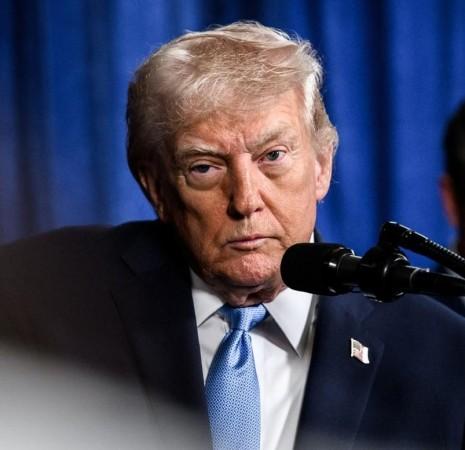
Reinforcing his intent to keep trade pressure central to his economic and foreign policy agenda, US President Donald Trump signaled that he would seek alternative tools if the Supreme Court moves to curb tariffs, which he described as "indispensable" towards success.
In an interview with Fox News host Will Cain, Trump defended tariffs as a core driver of investment and manufacturing growth in the United States. He said the policy has forced companies to build plants at home rather than produce abroad and sell into the US market.
"The tariffs have been indispensable towards success," Trump said. He added, "We've taken in $600 billion in tariffs."
Asked what would happen if the Supreme Court ruled against his tariff authority, Trump acknowledged the risk but said the strategy would not change. "We'll have to find another way," he said. "It'll be more inconvenient; it won't be as easy." He added that the administration would pursue "some other way of doing a similar thing."
Trump said tariffs have pushed foreign manufacturers to relocate production to the United States. He cited companies from Germany, Mexico, and Canada and said large investments were flowing into the automotive, artificial intelligence, and other sectors. "The only way they can do that, they have to build the plants here," he said.
He claimed the approach had triggered a wave of construction. Trump said thousands of businesses were being built across the country and that hundreds of major factories were under development. He also repeated a broader claim that the US has secured "$18 trillion coming into the country."
Trump tied tariff revenue to domestic support programs, especially for farmers. He said his administration recently provided "$12 billion" in farm assistance funded by tariff income. "We're taking in so much money from the tariffs that we can do that," he said.
He acknowledged farmers' concerns about short-term disruptions but said the benefits would become clear over time. "It's going to take a little while to kick in," he said, adding that farmers would be "the biggest beneficiary" once trade measures fully take effect.
Trump said tariffs had reversed what he described as years of unfair trade practices. He argued that foreign countries had long imposed barriers on US products while exporting freely to the American market. "For years, it was the reverse," he said. "I've totally reversed it."
The president also framed tariffs as a geopolitical tool. Asked whether he saw them as useful beyond economics, Trump replied, "For world peace, yeah, we have to use it for world peace." He did not provide further details.
Trump said tariffs had protected US industries from what he called unfair competition. He argued that companies could no longer rely on low-cost labor overseas and then sell products in the US without penalties.
(With inputs from IANS)