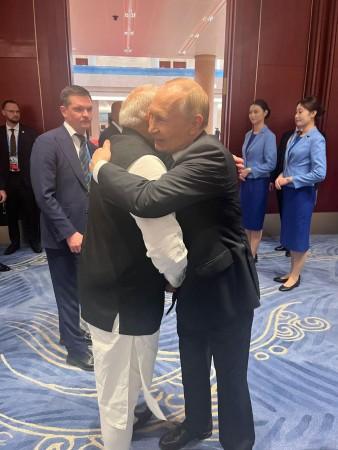
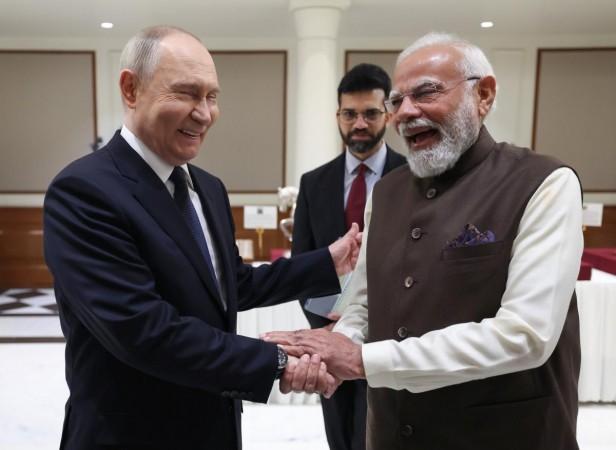
The images were striking even by the standards of Indian statecraft. Prime Minister Narendra Modi receiving President Vladimir Putin at the airport, the two leaders settling into the back of the gleaming Aurus limousine, and the cameras catching gestures that were warm yet deliberate a choreography carefully designed to communicate both friendship and intent.
Delhi had rolled out the red carpet, but the tone was not nostalgic. It was strategic. On the surface, the visit delivered what the media expected: a renewed roadmap for bilateral trade, major agreements in energy and minerals, reaffirmation of defence-industrial cooperation, and a joint declaration to raise trade to USD 100 billion by 2030. In the age of polarising geopolitics, the India-Russia relationship had been ceremonially polished and publicly displayed.
Yet for those who follow the silent chambers of foreign policy, the real story lay not in the press releases, but in the gaps between them. This visit both highly symbolic and quietly transactional carried a dual message: India asserting its sovereign strategic space, and Russia seeking a long-term corridor into the only major economy still capable of absorbing its exports, currency flows, and geopolitical narrative.
This calls for an analysis of the public script and the shadow script, the confirmed, the quietly hinted, and the very likely but not publicly acknowledged agenda that shaped Putin's presence in Delhi.
The Public Script:
Firstly energy as the new anchor. Putin's pledge of "uninterrupted shipments" of oil, gas, and refined fuels to India was delivered with theatrical clarity. In a world battered by sanctions, supply squeezes, and weaponised trade, Russia was promising India security of supply and signalling to Washington that sanctions would not erode Moscow's reach. India's public response was measured. New Delhi did not dwell on oil, but it did amplify the theme of energy security. The real meaning was straightforward: India will not tie its energy future to Western political shifts.
Second; a comprehensive economic reset. The jointly announced Programme of India–Russia Economic Cooperation (2025–2030) emphasised diversification: agriculture, fertilisers, maritime cooperation, critical minerals, petrochemicals, hydrocarbons, and manufacturing. This is not the old, narrow partnership of defence purchases. It is an attempt to rewrite the commercial architecture of the relationship and, significantly, an attempt to normalise rupee–rouble payments, which free both sides from dollar domination.
Third; defence industrial cooperation re-framed. No flashy purchase announcements were made. Instead, both sides reinforced the shift to joint development, joint manufacturing, and co-production inside India. This is diplomacy in the language of capability. Moscow says: We remain relevant. Delhi says: We remain in control. The ambiguity is intentional and useful.
Fourthly; nuclear and critical mineral cooperation. India wants assured access to minerals essential for batteries, green energy, and advanced manufacturing. Russia wants to pivot its export profile and secure long-term investments. Civil nuclear cooperation, exploration and development of critical minerals, and supply-chain integration fit this mutually dependent logic perfectly.
The Shadow Script: What Was Almost Certainly Discussed, But Not Published
This is where the visit becomes far more intriguing. A summit of this weight always carries a second, quieter agenda the one not photographed, not tweeted, and not acknowledged on podiums. From my assessment, at least five elements formed the shadow script.
Firstly Moscow's Strategic Strengthening: Securing Its Last Scalable Market. Russia's economy is under unprecedented structural stress. Europe has sealed its pipelines; sanctions have crippled supply chains; capital has fled westward. Under these pressures, Russia's survival depends on two factors: first the uninterrupted buyers and second the political partners who resist Western pressure. India is both. Putin's real mission was to lock in a long-term economic anchor one no amount of Western pressure can easily break. This anchor is not only oil; it is a web of mutual dependencies ranging from minerals to joint ventures. Such entanglement gives Moscow leverage: a future negotiating chip with the West.
Secondly -India's Quiet Insurance Against Global Volatility. Delhi understands the fragility of global supply chains better than most. The world today is defined by unpredictability - Red Sea shipping risks, sanctions volatility, unpredictable Gulf tensions, fluctuating oil routes. India's hedging strategy can be summarised simply: Secure energy, diversify risk, retain autonomy. By deepening engagement with Russia but not in ways that anger the West excessively, India buys a long horizon of energy security, flexible payment mechanisms, and strategic independence.
Thirdly the China Dimension - The Quiet Triangle. This element has not been discussed publicly, but it is impossible to ignore. Russia and China have tightened coordination. Beijing's recent messaging towards India has also subtly shifted: it wants stability, predictability, and corridors for economic recalibration. It is highly plausible that Putin carried quiet assurances, indirectly linked to Chinese strategic thinking, about allowing India greater breathing room in Asia's contested diplomatic theatres. Not overtly. Not coordinately. But as a signal that Russia's re-alignment with China does not come at India's expense. This triangular signalling subtle, indirect, yet unmistakably real is a critical, unspoken layer of the visit.
Fourthly, turning Rupee balances into strategic investments. Russian oil exporters have accumulated large rupee deposits in Indian banks through vostro accounts. These funds cannot be converted freely into dollars. What does a country do with billions it cannot move internationally? It invests. The public joint statement hints at new Russian investments in: critical mineral projects, fertiliser production, shipping infrastructure, manufacturing units, energy storage and possibly even in new "special economic corridors". The private subtext is clearer: Delhi will quietly allow Russia to convert illiquid rupee holdings into physical Indian assets under strict Indian oversight. This benefits both sides.
Fifthly subtle deterrence signal to the region. The optics of Modi and Putin together always send ripples through South Asia. Pakistan, Myanmar, Bangladesh all understand what Russia's overt friendliness signals: India's strategic heft has more than one pillar. For the West, it is also a message: India will remain a partner, not a client. This summit, therefore, was not just bilateral theatre. It was a calibrated assertion of sovereign choice.
The Role of the "Limo Diplomacy" The Real Conversations
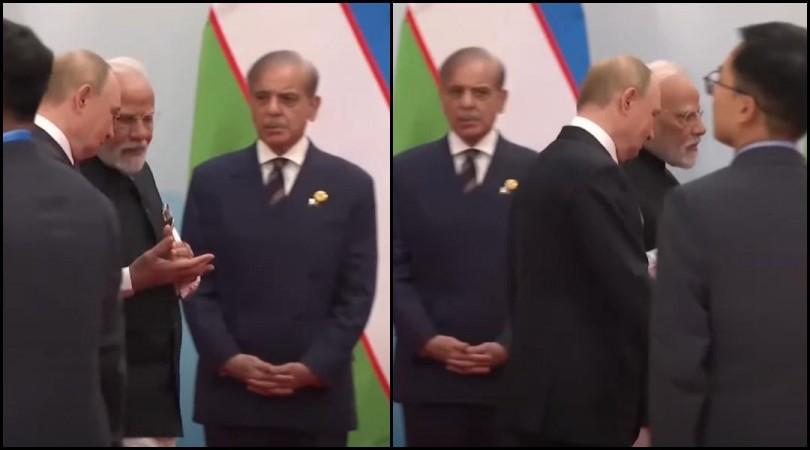
The Aurus limousine ride may one day be studied in diplomacy schools. Because it communicated something distinct: private space. No aides. No files. No official stenographers. That twenty-minute drive likely shaped the understandings that mattered. From my perspective, these are the themes that were almost certainly discussed: the sequencing of Russian investments in India using rupee reserves, a confidential framework for uninterrupted energy flows in a crisis, the future of India's defence diversification and Russia's role in legacy systems, sensitive regional issues where Moscow's quiet influence can stabilise India's periphery and dual-use technologies and the limits of cooperation under sanctions. None of this will be written anywhere.
But almost all of this will shape policy in the months ahead.
Why the Su-35, Su-57 and High-Tech Jet Discussions Still Matter
Even if India does not purchase them, the mere existence of these options matters, for Russia, they are bargaining chips reminders that Moscow still has something unique to offer, for India, they are strategic insurance pressure points to extract better terms elsewhere, including from the West, and the mention of these platforms was less about procurement and more about preserving leverage on both sides.
What to Watch Next
Over the next 90 days, several developments will reveal the true depth of the visit: announcements of new joint ventures, particularly in minerals & energy, quiet regulatory clearances for Russian investments in India, creation of new rupee-rouble financial mechanisms, signals about regional diplomacy, especially in the Indian Ocean and Central Asia, fresh movement in long-pending defence maintenance agreements and an uptick in Track-II engagements between Russian institutes and Indian think tanks, if these appear even in muted form we will know the summit was not ceremonial. It was strategic.
My Verdict: The Visit That Repositions the Chessboard
On the record, Putin's visit delivered a strong, calibrated reaffirmation of the India-Russia partnership, with specific, carefully drafted commitments across trade, energy, minerals, defence, and nuclear cooperation.
Off the record, it did far more: it deepened economic interdependence, it created space for India's strategic autonomy, itt allowed Russia to secure its economic survival corridor and it sent signals subtle, layered, unmistakable to Beijing, Washington, Islamabad, and Brussels
Above all, it confirmed one essential truth about geopolitics in this new era that great powers do not seek alignment, they seek room. Both Modi and Putin came to Delhi to carve out exactly that and in many ways, this was not a visit, it was an understanding one that the world will only understand fully much later.
[Major General Dr. Dilawar Singh, IAV, is a distinguished strategist having held senior positions in technology, defence, and corporate governance. He serves on global boards and advises on leadership, emerging technologies, and strategic affairs, with a focus on aligning India's interests in the evolving global technological order.]