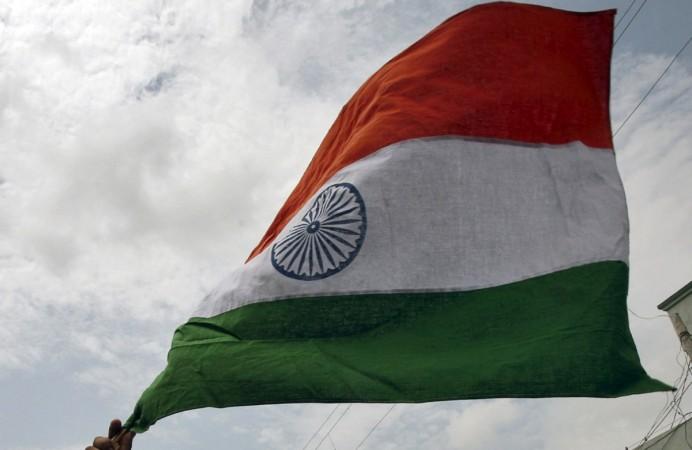
As the national flag rose over Kartavya Path on January 26, 2026, during India's 77th Republic Day celebrations, the event transcended ritual. It became a powerful symbol of a nation navigating profound global and domestic shifts. President Droupadi Murmu's address on January 25 evoked Jawaharlal Nehru's vision from 1947: India as the architect of its own destiny, a messenger of peace in an era defined by conflict and uncertainty. In a world marked by escalating Middle East tensions, persistent U.S.-China trade frictions, and looming economic protectionism, India confronts its own formidable challenges. Youth unemployment, climate vulnerabilities, regional security threats, and eroding foundational sectors demand more than incremental policy adjustments. They require a decisive, integrated push to strengthen education, healthcare, science and technology, and agriculture.
Bolstered by diplomatic breakthroughs such as the unprecedented joint attendance of European Union leaders, this Republic Day presents an opportunity for strategic renewal. Failure to act risks converting India's demographic advantage into a long-term liability.
The parade's most striking diplomatic gesture was the invitation of two EU presidents, António Costa of the European Council and Ursula von der Leyen of the European Commission, as joint chief guests. This first-ever dual invitation to representatives of a supranational body signaled India's intent to treat the EU as a unified strategic partner. Costa's Goan roots add a layer of historical resonance, linking colonial pasts to contemporary collaboration, while von der Leyen's focus on climate, digital, and trade agendas aligns closely with India's priorities. Their presence, followed by the 16th India-EU Summit on January 27, positioned the event to potentially conclude a comprehensive Free Trade Agreement after more than 20 rounds of negotiations. With bilateral trade already exceeding €110 billion annually, the deal could reduce tariffs on key sectors such as automobiles, wines, textiles, pharmaceuticals, and electronics, while advancing pacts on investment protection, geographical indications, and mobility. In an environment of U.S. tariff threats and supply-chain disruptions, this partnership enhances India's multi-alignment strategy, diversifies economic ties, and strengthens resilience in semiconductors, electric vehicles, and sustainable technologies.
Diplomatic gains, however, cannot mask domestic vulnerabilities. India's economy, on track to become the world's third-largest, faces headwinds from subdued private investment and job-market pressures. The Reserve Bank's strategic accumulation of gold reserves and reduction in U.S. Treasury holdings provide buffers against global volatility, yet achieving sustained 7-8 percent growth requires revitalizing domestic consumption through targeted tax reforms, continued infrastructure expansion under "Make in India," and enhanced manufacturing incentives. National security remains paramount. Following the 2025 India-Pakistan border clashes and ongoing Chinese assertiveness, increased capital expenditure on defense modernization, critical mineral security, and indigenous production is essential. Foreign policy must sustain India's role as a bridge-builder in the Global South, fostering regional stability in South Asia while countering extremism and advancing Indo-Pacific cooperation.
Social cohesion forms the ethical foundation of progress. President Murmu highlighted the contributions of women ("Nari Shakti"), tribal communities, farmers, and youth, calling for their full empowerment. This necessitates shifting from short-term welfare to systemic reforms that promote "Ease of Living," eliminate caste and religious polarization in politics, and devolve real authority to local governments. Sustainability, central to the parade's "Green Growth and Digital India" theme, requires accelerated transitions away from coal dependency, urban pollution control, and climate-resilient infrastructure. Governance itself stands as Prime Minister Modi's principal challenge for 2026: eradicating systemic corruption, enforcing rule of law, and reforming bureaucratic processes for greater transparency and efficiency.
The most urgent imperatives converge on four interlocking foundations: education, healthcare, science and technology, and agriculture. Education deteriorates steadily, jeopardizing the demographic dividend. The latest ASER surveys (with 2024 data showing partial post-pandemic recovery but persistent gaps) indicate that over 25 percent of rural 14-18-year-olds cannot read simple Class 2-level text, and many struggle with basic arithmetic. Teacher vacancies number in the lakhs, infrastructure in government schools remains inadequate, and the digital divide excludes roughly 30 percent of rural households from reliable connectivity. The National Education Policy 2020's 5+3+3+4 structure, emphasis on foundational literacy and numeracy, vocational integration from Grade 6, and AI curriculum rollout (planned for wider adoption by 2026-27) offer a roadmap, but implementation lags due to funding shortfalls. Education spending hovers around 4-4.5 percent of GDP; stakeholders expect Budget 2026-27 to push toward the promised 6 percent threshold to enable nationwide missions like NIPUN Bharat and teacher training at scale.
Healthcare compounds these weaknesses. Schemes such as Ayushman Bharat and the Ayushman Bharat Digital Mission provide coverage to hundreds of millions, yet rising non-communicable diseases, antimicrobial resistance, an ageing population, and high out-of-pocket expenses (still a major burden for many families) persist. Recent studies advocate higher public health allocations to reduce household medical costs and address inequities. Preventive care, maternal and adolescent health, and integration with school nutrition programs must become priorities to create a healthier learning environment.
Science and technology lag in investment intensity. Gross Expenditure on Research and Development (GERD) remains stuck at 0.6-0.7 percent of GDP, well below global leaders like China (over 2.5 percent) and South Korea. Initiatives such as the Anusandhan National Research Foundation, IndiaAI programs, and deep-tech startup support show promise, but scaling requires doubling GERD to at least 2 percent to achieve sovereignty in artificial intelligence, quantum computing, and critical supply chains. The India AI Impact Summit 2026 underscores AI's potential to transform healthcare diagnostics, agricultural precision farming, and educational personalization.
Agriculture, the rural economy's backbone, confronts low productivity, fragmented landholdings, monsoon vulnerability, soil degradation, and market inefficiencies. Farmers experience income stagnation despite credit expansions and subsidy regimes. Climate-smart practices, drone adoption, micro-irrigation upgrades, and digital market linkages are essential to raise yields, cut post-harvest losses, and secure food self-sufficiency. Budget 2026 expectations include allocations around ₹1.5 lakh crore for agriculture, new seeds legislation, and incentives for dairy and oilseed self-reliance.
National security remains paramount in this turbulent landscape. Following the 2025 India-Pakistan border clashes and persistent Chinese assertiveness along the Line of Actual Control, the government has accelerated military modernization through indigenous platforms and capabilities. The modernization drive encompasses upgrades across domains: the Advanced Medium Combat Aircraft (AMCA) stealth fighter program advances toward prototype testing, drone swarms and unmanned aerial systems see expanded indigenous production, Project 75I submarines progress with technology transfer, and next-generation main battle tanks incorporate advanced armor and fire control systems. Building on "Operation Sindoor's" demonstrated tactical edge, Budget 2026 is widely anticipated to deliver a substantial hike in defence capital expenditure potentially pushing allocations beyond the ₹6.81 lakh crore mark seen in FY 2025-26 (a 9.5 percent increase), to prioritize self-reliance under Atmanirbhar Bharat. Greater needs of defence continue to demand urgent and sustained attention: rapid expansion of cyber and space warfare capabilities, accelerated induction of hypersonic and directed-energy weapons, and fortified border infrastructure to deter multi-domain threats in an increasingly contested neighbourhood. Targets include scaling defence production to ₹3 lakh crore annually and boosting exports toward ₹50,000 crore by 2030, with private sector participation surging in missiles, UAVs, and electronics. This focus not only counters external threats but also creates high-skilled jobs, strengthens supply-chain sovereignty in critical minerals and semiconductors, and positions India as an emerging global defence exporter amid shifting strategic alliances.
India's economic ascent provides the fiscal backbone for these ambitions, yet it requires careful navigation of both domestic headwinds and external shocks. Recent data shows robust momentum: GDP expanded by 8.2 percent year-over-year in the second quarter of FY 2025-26, prompting the IMF to revise its forecast upward to 7.3 percent for fiscal 2026 (an increase of 0.7 percentage points), with RBI and ADB projections clustering around 7.2-7.3 percent. To sustain this trajectory toward third-largest economy status, Budget 2026 must prioritize capital expenditure continuity, tax reforms to revive private investment, and measures to cushion against U.S. tariff threats and global trade disruptions. The economy faces mounting pressures that demand sharper policy responses: persistent high youth unemployment (especially in urban areas), sluggish formal-sector job creation, widening income inequality, and the need for faster structural reforms to lift potential growth closer to 8 percent. Key levers include deepening "Make in India" incentives for manufacturing, expanding credit access for MSMEs, and channeling non-tax revenues (up 20.9 percent in recent months) toward infrastructure and consumption boosters. By balancing fiscal discipline with targeted spending particularly in defence-linked industries the government can convert economic strength into strategic depth, ensuring that growth translates into inclusive prosperity and unassailable security.
These sectors form a virtuous cycle: Educated and healthy citizens fuel scientific innovation; technology-driven agriculture boosts rural incomes and food security; robust science supports advancements across domains. Improvement of Defence Capabilities is imperative and for all these the boosting of economy is inescapable. Budget 2026-27 must deliver capital expenditure surges, outcome-based monitoring, decentralized execution, and cross-sectoral integration to realize this potential. In 1947, Nehru's tryst with destiny heralded India's sovereignty amid the ruins of empire; in 2026, that covenant renews not as a mere commemoration but as a profound existential imperative, where global fractures geopolitical schisms, technological disruptions, and ecological tipping points intersect with India's internal reckonings to forge a new paradigm of resilience. By interweaving diplomatic acuity with economic fortitude, defense sovereignty with human capital renewal across education, healthcare, science, and agriculture, India stands poised to transcend its challenges, transforming demographic potential into a symphony of innovation and equity that echoes the constitutional ethos of justice, liberty, and fraternity. This Republic Day, let the architects of destiny citizens, leaders, and institutions alike embrace a holistic renaissance, where self-reliance (Atmanirbhar) evolves into collective transcendence, propelling Viksit Bharat toward a luminous horizon of shared prosperity and unyielding sovereignty. In 1947, Nehru described India's awakening as a tryst with destiny. In 2026, that tryst renews amid global fractures. With disciplined focus on these foundations, leveraged diplomatic momentum, and citizen agency, India can convert challenges into enduring strength. The path to Viksit Bharat lies in decisive action today.
Jai Hind!