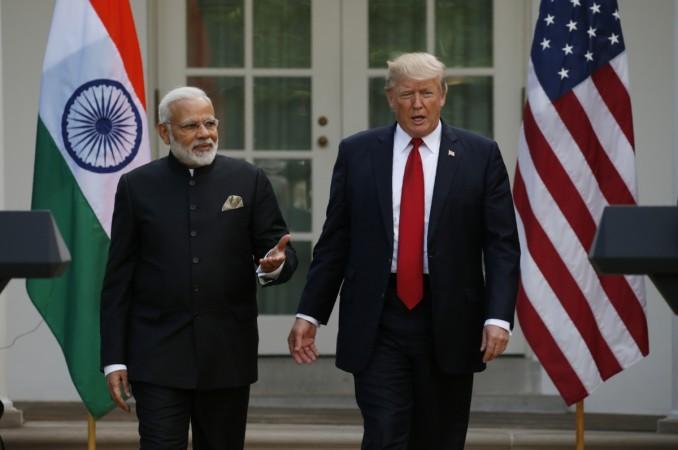
In early 2026, India–U.S. relations find themselves at a complex but formative stage. What at first glance might be dismissed as a stalled trade deal is in reality a broader realignment of economic rivalry, strategic partnership, and negotiation posture. As Washington expands its trade diplomacy under an assertive industrial policy and New Delhi pursues diversified global engagement, the contours of the relationship are being reshaped, not broken, into something more resilient and multifaceted.
This is no ordinary trade negotiation. It is a test of strategic gravity between two major powers, where commerce, geopolitics, and interdependence collide.
Where India–U.S. Trade Talks Stand: Active, Strategic, and Unfinished
Contrary to simplistic narratives of collapse or breakdown, India–U.S. trade negotiations are active and substantive in 2026:
Both countries continue official dialogue on a Bilateral Trade Agreement (BTA) after multiple negotiation rounds and a pause during the holiday season. Talks were scheduled to resume in January 2026 with renewed engagement.
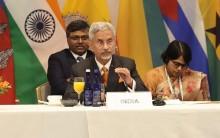
Indian Foreign Minister S. Jaishankar's recent discussions with U.S. Secretary of State Marco Rubio spanned trade, critical minerals, nuclear cooperation, defence, and energy, demonstrating that trade is just one pillar of a much larger strategic architecture.
U.S. Ambassador Sergio Gor's early diplomatic outreach in Mumbai signalled continued emphasis on economic partnerships, innovation, finance, and business links.
President Trump's invitation to India to join the "Board of Peace" initiative on Gaza even as tariffs and trade negotiations are unresolved underscores that strategic cooperation and geopolitical alignment continue independently of commercial friction.
In other words, trade is not over; it has simply evolved into a nuanced negotiation within a broader strategic partnership.
Economically, both capitals are clear that a deal has large stakes: a shared target to more than double bilateral trade to $500 billion by 2030. But operationally, disagreements remain over market access, tariff structures, agriculture, and non-tariff barriers.
New Dynamics in the Negotiation
1. Reciprocal Tariffs and Industrial Policy Realities
While the period of headline-grabbing tariffs is past, their legacy has reshaped negotiating positions:
The U.S. has imposed steep duties on imports from India tied partly to complaints about trade imbalances and India's energy purchases now totalling up to about 50 per cent in punitive measures.
India reacted not just with tariffs but with strategic diversification, strengthening its presence in other markets and supply chains beyond the U.S., and accelerating reforms to mitigate tariff impact. Data suggests Indian exports to the U.S. have remained remarkably resilient, with declines muted despite higher duties due to sector exemptions and front-loading of shipments.
This reflects a deeper reality: tariffs are a tactical skirmish in a larger strategic game, not the war itself.
Strategic Actions India Is Taking to Support and Reframe the Partnership
India's approach is far from passive. It is pursuing a multi-vector strategy that reassures Washington while enhancing New Delhi's autonomy:
a) Diversifying Strategic Engagements
India is expanding trade and security relationships with other major partners:
Germany and the EU are exploring deeper economic and defence ties, including a potential EU–India Free Trade Agreement.
The India–EFTA trade pact is entering force, broadening India's global commercial footprint and reducing dependence on a single bilateral outcome.
These moves give India leverage and alternative trade outlets, diminishing the risk of overdependence on any one partner.
b) Energy and Strategic Resource Linkages
India has increased cooperation with the U.S. on energy including significant import agreements to address structural deficits and reduce political friction.
c) Strategic Initiatives Beyond Trade
Partnerships in critical minerals, technology, and nuclear cooperation are being solidified. These areas align with U.S. strategic priorities and embed India in supply chain resilience and high-tech cooperation frameworks.
India's Foreign Policy: Gains and Growing Pains
1. India Has Not Lost Strategic Ground
India remains indispensable to U.S. Indo-Pacific strategy, energy cooperation, and supply chain resilience. Future collaboration in critical minerals, AI, and defence technology makes the bilateral relationship structurally important.
2. But Negotiation Leverage Is Limited
Trade negotiations reveal that economic leverage has not yet matched geopolitical weight:
The U.S. continues to condition tariff reductions on structural market access in sensitive Indian sectors especially agriculture and dairy which New Delhi has guarded jealously.
Washington's broader industrial policy protective, assertive, and tied to domestic political imperatives makes it difficult to secure concessions on India's terms in a classic free trade mold.
India's response has been calibrated: protecting domestic interests while avoiding escalation. This is prudent but necessarily cautious.
Recalibration for the Future
Rather than framing current negotiations as failure, the deeper truth is that India and the U.S. are redefining economic engagement in the context of strategic partnership, a relationship that now transcends simple tariff liberalisation.
For India to strengthen its negotiating posture, three imperatives emerge:
1. Integrate trade diplomacy with industrial policy - build a comprehensive Indo-U.S. economic framework that includes supply chains, technology cooperation, and regulatory alignment, not just tariffs and market access.
2. Leverage multilateral forums - BRICS (with India as president in 2026) and other platforms should be used to facilitate alternative trade flows and normative influence, reducing bilateral pressure points.
3. Align domestic reforms with export competitiveness strengthen manufacturing, services, and innovation ecosystems to make Indian exports less vulnerable to external tariffs and economic nationalism.
A Relationship Larger Than Tariffs
Today's India–U.S. engagement cannot be reduced to the "tariff battle." The negotiation landscape in 2026 is strategic, multi-layered, and dynamic:
Trade talks, while unfinished, are alive, evolving in substance and scope.
India's foreign policy has not lost relevance but is being tested in execution and leverage.
Both countries are learning to integrate economic negotiation with broader geopolitical cooperation.
In the long view, this phase may emerge not as a setback, but as a formative period in which two major democracies learned to balance competition with cooperation. India's task is to translate its geopolitical importance into economic agency not by capitulation, but by strategic innovation.