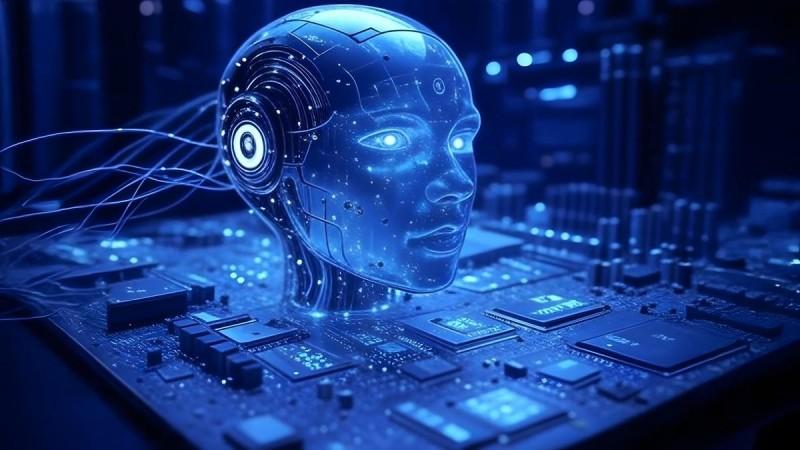
In early February 2026, ETH Zurich researchers announced a breakthrough in quantum computing with a technique called lattice surgery. This method allows safe manipulation of qubits during calculations, addressing a key barrier to practical, error-resistant quantum systems. This development arrives alongside surging progress in agentic AI, embodied robotics, and biocomputing innovations like FinalSpark's Neuroplatform, which uses lab-grown human brain organoids for ultra-efficient computation.
Recent models such as DeepSeek-V4 introduce silent internal reasoning capabilities that enhance logical depth without external token output. These advances, combined with agentic systems from companies like Anthropic and multi-agent deployments in enterprise workflows, signal an accelerating fusion of AI agents, agentic AI, superintelligence trajectories, robotics, and quantum sciences. Together, they are poised to fundamentally reshape society, including the skills we prioritize, the nature of jobs, leadership structures, operational costs, optimization strategies, and broader societal implications.
The Accelerating Convergence of Frontier Technologies
The core of this transformation is the integration of multiple high-impact domains. Agentic AI has evolved from generative foundations into autonomous systems capable of independent planning, execution, and adaptation. Platforms such as Anthropic's Claude Code now handle complex software tasks with minimal supervision, dramatically shortening development timelines from months to days. In enterprise settings, these agents debug code, refine algorithms, and manage deployments at scales comparable to full human teams.
This capability extends into multi-agent ecosystems, where specialized agents collaborate seamlessly. Predictions from 2025, including Gartner's outlook that over 40 percent of enterprise applications would incorporate task-specific agents by 2026, are now proving accurate across industries like logistics, where agents orchestrate supply chains with predictive accuracy and real-time adjustments.
Approaches toward superintelligence build on these foundations, with models exhibiting emergent behaviors such as DeepSeek-V4's silent reasoning protocol. This internal chain-of-thought processing boosts performance on complex problems while reducing visible computational overhead, pointing toward systems that may soon exceed human-level cognition in targeted domains.
When embodied in robotics, these intelligences gain physical presence. Humanoid platforms from Tesla's Optimus to Boston Dynamics' Atlas demonstrate learning in unstructured environments through reinforcement and adaptation. They perform tasks ranging from warehouse operations to assistive care with increasing dexterity and contextual awareness.
Quantum sciences supply the enabling computational power. Techniques like lattice surgery enhance qubit stability and mid-operation manipulation, paving the way for reliable quantum advantage in areas such as molecular simulation and optimization. Hybrid quantum-classical approaches are beginning to tackle problems previously considered intractable, including accelerated drug discovery and advanced materials design.
This integration is active and expanding. Edge-deployed AI, neuromorphic hardware, and bioprocessors like those from FinalSpark achieve energy efficiencies orders of magnitude beyond traditional silicon, effectively merging biological and artificial paradigms.
Reshaping Jobs, Skills, and the Workforce
Employment impacts are extensive and varied. Automation will eliminate many routine cognitive and manual roles in manufacturing, data processing, and select creative domains. Estimates suggest agentic AI and robotics could automate a significant portion of work activities by the early 2030s, with quantum-enhanced optimizations potentially accelerating this timeline.
Roles such as long-haul transportation may diminish as autonomous systems, guided by multi-agent coordination and quantum-optimized routing, deliver superior efficiency in time, energy, and safety.
However, displacement is accompanied by creation. Emerging positions center on human-AI collaboration, including the design, oversight, and ethical governance of agentic ecosystems. Demand will grow for AI ethicists to align superintelligent behaviors with societal values, quantum-literate data scientists to leverage simulation capabilities, and robotics specialists skilled in integrating adaptive hardware.
Core human competencies such as adaptability, emotional intelligence, cross-disciplinary synthesis, and critical judgment will gain premium value. Workers will need to master orchestration of these technologies rather than direct execution.
Transitioning the workforce requires substantial investment in continuous learning, supported by personalized AI-driven education platforms. Absent proactive measures, a widening skills divide risks deepening economic inequality between those who adapt and those who cannot.
Transforming Leadership and Organizational Dynamics
Leadership must evolve toward augmented models. Decision-makers will increasingly rely on agentic systems for advanced scenario modeling, risk evaluation, and strategic simulation, often enhanced by quantum precision in forecasting market or operational disruptions.
This shift enables more proactive governance but raises concerns about power concentration among those controlling advanced tools. Robotics and AI proxies in executive functions could prioritize metrics over nuanced human considerations, potentially reducing empathy in high-stakes choices.
Mitigating these risks calls for frameworks that maintain human authority, such as oversight protocols ensuring final accountability rests with people. Leaders will need to foster cultures of technological humanism, balancing efficiency gains with ethical and relational priorities.
Costs will decline in targeted areas. Quantum methods promise reduced R&D expenditures in fields like energy by optimizing complex designs, while agentic automation lowers overhead in compliance, finance, and operations. Healthcare examples include robotic procedures guided by predictive AI, potentially decreasing costs through precision and preventive maintenance.
Initial capital requirements remain high, encompassing model training, quantum infrastructure, and cryogenic environments. Dynamic resource allocation via multi-agent systems will be essential for sustained optimization and waste reduction.
New Age Implications: Societal, Ethical, and Existential Horizons
Broader effects point to expanded human potential alongside significant challenges. Societally, accessible quantum cloud resources and agentic tools could empower smaller organizations and nations in research and innovation, promoting greater global equity. Robotics companions may alleviate pressures from aging demographics by providing consistent, empathetic support.
Ethical questions loom large. Opaque internal protocols in advanced models complicate transparency and bias detection. Quantum advances threaten current encryption standards, necessitating urgent adoption of post-quantum cryptography.
Existentially, the trajectory toward superintelligence integrated with robotics raises possibilities of rapid self-improvement cycles that challenge human centrality. Sustainability benefits include low-energy biocomputing aiding climate goals, though resource demands for hardware scaling require careful management.
International coordination, similar to established global agreements, will be vital to govern deployment, prioritize inclusive benefits, and safeguard against misuse.
Charting a Balanced Path Forward
As of February 2026, the convergence of AI agents, agentic AI, superintelligence pathways, robotics, and quantum sciences delivers extraordinary potential for efficiency, cost reduction, and human advancement. Realizing these gains while preserving meaningful work, equitable access, and human-centered leadership demands deliberate, evidence-based stewardship. By confronting both transformative opportunities and inherent risks with clarity, we can guide this evolution toward outcomes that enhance rather than diminish our shared future. The momentum is unmistakable; the direction remains ours to determine.
[Major General Dr. Dilawar Singh, IAV, is a distinguished strategist having held senior positions in technology, defence, and corporate governance. He serves on global boards and advises on leadership, emerging technologies, and strategic affairs, with a focus on aligning India's interests in the evolving global technological order.]