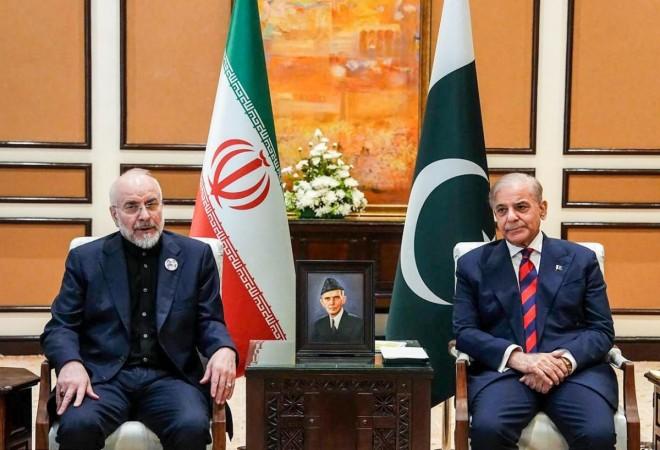
With the second round of US–Iran talks set to be held in Pakistan faltering, frustration is growing in Islamabad, which has remained under a virtual lockdown for nearly a week amid heightened security and preparations for foreign delegations. Residents and local commentators have voiced resentment over the disruption, highlighting the irony of a city brought to a standstill for guests, where "one side doesn't trust us, and the other treats us merely as a convenience," a report said on Monday.
The anticipated second round of talks in the Pakistani capital reportedly failed to commence following the abrupt departure of the Iranian Foreign Minister from Islamabad. In response to the breakdown, US President Donald Trump reportedly directed his envoys Steve Witkoff and Jared Kushner to cancel their scheduled visit to Pakistan, signalling a total freeze in the current channel, according to a report by Athens-based Geopolitico.
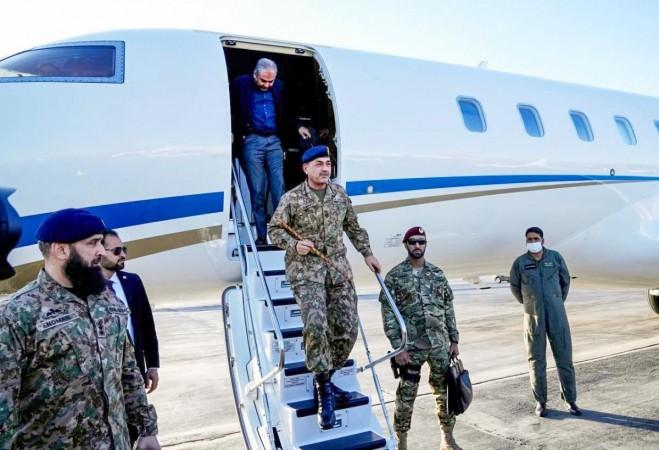
According to the report, efforts to mediate peace between the United States and Iran have suffered a major setback, with Pakistani Army Chief Asim Munir arriving in Muscat on April 25 to reportedly seek Oman's support in reviving the stalled peace process after a series of diplomatic failures in Islamabad.
The main hurdle in the US–Iran talks appears to be a profound lack of trust from the Iranian side. Tehran has reportedly expressed clear distrust over Pakistan's role as a "neutral and reliable mediator."
Citing diplomatic sources, the report noted that Iran's grievances include suspicions that Islamabad has been conveying inaccurate or distorted messages between the two sides. It added that allegations have emerged that Pakistan has been sharing details of private, high-level discussions with Iranian officials directly with the US government.
The report highlighted a growing belief within Iranian circles that the Pakistan-hosted talks are a "strategic ploy." Tehran suspects Islamabad of assisting the US in creating a "diplomatic drama" to buy time for American military forces to remobilise and reposition resources in the region while Iran remains distracted by negotiations.
As a result of this friction, Iran has signalled its preference for Oman — a nation with a long-standing history of successful mediation — as a more neutral and trustworthy venue. General Munir's urgent trip to Muscat is seen as a desperate attempt to involve Omani officials in restarting dialogue and restoring Pakistan's fading relevance in the process.
Pakistan mediating between the US and Iran out of necessity, the report stated. For Pakistan, a destabilised Iran increases space for militants along the western flank, while tensions between Saudi Arabia and Iran risk triggering treaty obligations.
By mediating between the US and Iran, Pakistan has gained visibility. However, diplomatic access does not guarantee agreement, and leverage does not translate into financial or strategic returns. Until outcomes are formalised and converted into tangible gains, Pakistan is seen but not rewarded, according to an opinion piece in Pakistan's leading daily The News International.
The article questions: "Is Pakistan a pillar or a bridge?" It explains that a bridge connects others but is used, while a pillar holds value and is compensated. It argues that Pakistan has become a repeat-use mediator, securing seats at select negotiation tables, but remains balance-sheet dependent.
"Ground reality: Pakistan has no monetisation framework," wrote Farrukh Saleem in the opinion piece. He added that Pakistan lacks a pricing mechanism and contract pipeline, stressing that mediation is driven by necessity rather than choice.
For Pakistan, the author said, a destabilised Iran expands militant space on its western border, while a Saudi–Iran escalation could trigger treaty obligations. Mediation, therefore, is a form of risk containment.
The piece further argues that monetising strategic relevance is essential, urging Pakistan to move diplomacy from meetings to mandates, and from visibility to value. Without a pricing mechanism, it warns, Pakistan risks staying at the centre without long-term benefits.
Drawing historical comparisons, it notes that during the Soviet–Afghan war (1979–1989), Pakistan's geography generated approximately USD 85 billion in inflows (inflation-adjusted), and after 9/11, around USD 45 billion, suggesting that past geopolitical roles were more effectively monetised.
It concludes that diplomacy without financial or strategic conversion becomes "theatre," stating that in geopolitics, bridges are crossed while pillars are compensated — highlighting the need for Pakistan to convert relevance into measurable gains.
(With inputs from IANS)