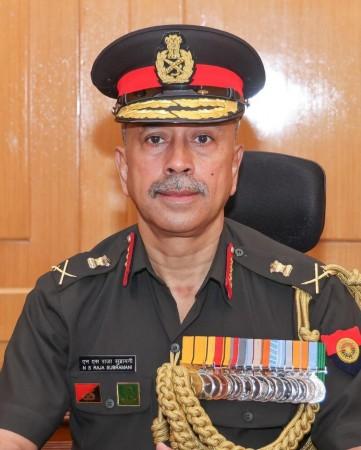
The appointment of Lieutenant General NS Raja Subramani (Retd) as India's third Chief of Defence Staff is not a routine succession, it is the critical pivot on which India's most ambitious military restructuring since independence will either consolidate into enduring institutional strength or remain an elegant but unimplemented concept on paper.
Announced on 9 May 2026 precisely one year after Operation Sindoor demonstrated tri-service coordination in punitive strikes against terrorist infrastructure in Pakistan, the decision signals New Delhi's resolve to accelerate jointness at a moment when modern conflict has revealed the brutal realities of attrition, multi-domain convergence, and societal resilience.
Succeeding General Anil Chauhan on 30 May and serving concurrently as Secretary of the Department of Military Affairs, General Raja Subramani inherits a reform agenda that is 90 percent designed and zero percent implemented.
The blueprint for three Integrated Theatre Commands - Western (Pakistan-focused, IAF-led), Northern (China-focused, Army-led), and Maritime (Indian Ocean, Navy-led) stands finalised and endorsed by the service chiefs. What remains is the arduous task of execution, sequencing, managing inter-service resistance, and locking in institutional structures before the next political cycle reshuffles priorities.
The Profile: Depth Across Conventional and Emerging Domains
Gen Subramani brings a career of exceptional distribution across the very theatres and domains he must now integrate. Command of 11 Corps equipped him with intimate insight into Pakistan-axis offensive manoeuvre warfare, heavy armour operations, and the persistent frictions of air-land integration. As Chief of Staff of Northern Command and commander of 17 Mountain Division, he gained granular familiarity with the high-altitude logistics, terrain constraints, and sustained force projection dilemmas of the China LAC confrontation. Early counter-insurgency experience with 16 Garhwal Rifles during Operation Rhino in Assam added hybrid warfare depth. Intelligence roles, including as Deputy Director General of Military Intelligence and Defence Attaché in Kazakhstan, broadened his perspective. Most crucially, his tenure since September 2025 as Military Adviser in the National Security Council Secretariat under NSA Ajit Doval has immersed him in the vital intersection of military planning, diplomatic strategy, and political decision-making encompassing the aftermath management of Operation Sindoor and the wider lessons from Operation Epic Fury.
The Structural Challenge: Beyond Three Theatres to Functional and National Integration
The structural challenge confronting Gen Subramani extends far beyond the three geographic theatres to demand a comprehensive re-engineering of India's defence architecture. Success will hinge on harmonising geographic commands with powerful functional structures, embedding multi-domain convergence, and forging unbreakable whole-of-nation linkages, all while addressing homeland vulnerabilities arising from proxy wars and exported terrorism.
In the Western Theatre, the perennial tension between IAF priorities for theatre-wide air superiority and the Army's requirement for dedicated close air support during offensive operations must be resolved through iron-clad apportionment rules, joint targeting boards, and shared planning cells. Op Sindoor provided real-world insights but also exposed coordination gaps that could prove fatal in prolonged conflict. The Northern Theatre, evolving from Central Command, must become a mature, land-dominant yet multi-domain formation capable of sustaining high-altitude operations against a peer adversary, with organic cyber, electronic warfare, and space capabilities rather than reliance on ad-hoc national assets. The Maritime Theatre requires elevation beyond a naval rebadging to serve as a true joint instrument integrating sea denial, power projection, diplomatic outreach, and Coast Guard synergies in an increasingly contested Indian Ocean.
IAF institutional concerns about fragmentation of scarce assets remain legitimate and must be addressed through a resource accretion to optimal levels even for a balanced compromise: retention of strategic enablers at Air Headquarters coupled with embedded air component commands in each theatre and robust CDS-mediated reallocation protocols. Yet the deeper reform lies in the functional commands.
The Armed Forces Special Operations Division must operate as a national strategic asset, capable of calibrated deep strikes, sabotage, intelligence fusion, and hybrid actions across theatres while preserving strategic surprise and escalation control. The Defence Cyber Agency and Defence Space Agency must transition from adjuncts to primary warfighting enablers, delivering offensive and defensive effects in real time, ensuring resilient C2, and protecting critical space-based ISR and communications against jamming, spoofing, or kinetic threats.
True all-domain operations demand seamless convergence across kinetic, cyber, electromagnetic, space, informational, and cognitive domains, a level of integration Ukraine has shown is decisive in both attritional and manoeuvrist warfare.
Overlaying this is the imperative of whole-of-nation coordination: civil-military fusion for critical infrastructure defence, rapid industrial mobilisation under Atmanirbhar Bharat, logistics integration with civil resources, and inter-ministerial mechanisms to counter hybrid threats. Proxy terrorism and state-sponsored destabilisation necessitate hardened homeland security architectures that link military theatres to internal resilience, intelligence fusion, and societal cohesion especially at a time when deepening political divisions risk undermining the national unity required for sustained operations.
Gen Raja Subramani's NSCS experience positions him uniquely to drive this holistic integration, transforming theatreisation from a military reorganisation into a comprehensive reimagining of national power projection.
The Imperatives from Ukraine and Iran Conflicts
The imperatives drawn from Ukraine and Iran conflicts are unambiguous and sobering. Operation Sindoor offered a valuable proof of concept for short, sharp, politically directed tri-service actions with resilient air defence. Yet Ukraine has exposed the punishing realities of prolonged high-intensity attrition: pervasive drone swarms, electronic warfare dominance, logistics under relentless pressure, and the decisive advantage conferred by adaptable, dispersed forces operating with mission command at tactical levels. Iran-related operations, including Epic Fury, demonstrated the reach of precision air and missile campaigns while illuminating their limitations against resilient, dispersed adversaries and the cascading economic, energy, and diplomatic consequences that follow.
India must prepare simultaneously for limited punitive operations, proxy-driven hybrid campaigns, exported terrorism, potential two-front contingencies of extended duration, and deepening political divisions that risk eroding societal cohesion essential for national resilience.
Incorporating Emerging Technologies
Incorporating emerging technologies is no longer optional but existential for India's defence transformation. The modern battlespace is being redefined by autonomous systems, AI-driven decision support, hypersonic weapons, directed-energy platforms, quantum-resistant communications, and large-scale attritable swarms. Gen Subramani must champion the doctrinal, organisational, and procurement shifts required to embed these capabilities organically within theatre commands and functional structures. This demands accelerated indigenisation of unmanned aerial, ground, and maritime platforms, robust AI frameworks for real-time ISR fusion and predictive logistics, and hardened networks resilient to cyber and electromagnetic disruption.
Without systematic technology convergence, even the most sophisticated organisational reforms risk rapid obsolescence in the face of peer adversaries.
Deeper Strategic Innovation
Deeper strategic innovation must complement structural reform if India is to achieve true battlefield superiority. Theatreisation supplies essential scaffolding, yet fresh intellectual capital is required in operational concepts dispersed lethality, mosaic warfare architectures, grey-zone dominance, calibrated escalation management under nuclear shadows, information-cognitive domain operations and exploiting geography and criticalities for achieving strategic objectives.
This necessitates a cultural shift within the senior leadership toward intellectual agility, rigorous adversarial wargaming, continuous doctrinal iteration informed by global conflicts, and tighter integration of military power with non-kinetic instruments of statecraft. Strategic innovation must ultimately bridge hard power with economic resilience, diplomatic manoeuvring, and societal cohesion to shape outcomes across the full spectrum of conflict.
Implementation Sequencing and Political Risk Management
Implementation sequencing will test Gen Subramani's statesmanship. A measured progression commencing with the more contained Maritime Theatre, stress-testing architectures through joint exercises and iterative wargames, then scaling to the high-stakes Western and Northern commands offers the best prospect of institutionalising change while retaining adaptability.
His NSCS-derived relationships across government will prove invaluable in framing reforms as a phased, evidence-based evolution rather than a disruptive gambit vulnerable to political headwinds or shifting priorities amid global crises.
What This Means in the Broader Frame
India today stands closer than at any time since the Kargil Review Committee to realising integrated theatre commands and genuine multi-domain capability. The architecture is complete, operational lessons from Sindoor remain vivid, and a CDS with unparalleled credibility across conventional theatres, emerging domains, national security architecture, and whole-of-nation coordination now holds the mandate. Yet execution remains profoundly contingent. Inter-service resistance, though tempered into acquiescence, must yield to authentic doctrinal convergence and institutional buy-in. Resource constraints, industrial base limitations, proxy threats from adversaries, and the corrosive effects of deepening political divisions on societal cohesion pose additional risks to sustained reform and homeland resilience.
Gen NS Raja Subramani's tenure will be judged by whether he can convert meticulously designed blueprints into resilient, adaptive institutions capable of prevailing in the complex, multi-domain battlespace of the 21st century against peer threats, hybrid destabilisation, and internal societal pressures alike. The conditions for transformative success strategic clarity, operational experience, fresh lessons from recent conflicts, and political timing have aligned with rare potency.
Seizing this moment will not only fortify India's defence posture but also affirm its emergence as a mature, self-assured strategic power equipped to shape the regional order. The pivot point is here; the responsibility is immense. History will record whether India rose decisively to meet it.
[Major General Dr. Dilawar Singh, IAV, is a distinguished strategist having held senior positions in technology, defence, and corporate governance. He serves on global boards and advises on leadership, emerging technologies, and strategic affairs, with a focus on aligning India's interests in the evolving global technological order.]