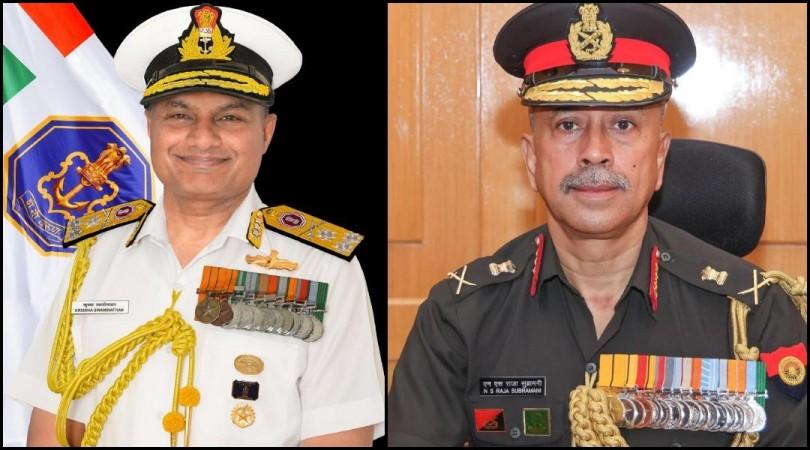
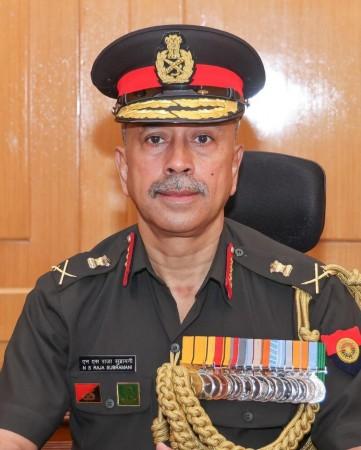
The Centre has appointed Lieutenant General N.S. Raja Subramani as the new Chief of Defence Staff (CDS), succeeding General Anil Chauhan, whose tenure is set to conclude on May 30.
Along with assuming charge as the country's top military officer, Lieutenant General Raja Subramani will also serve as Secretary to the Government of India in the Department of Military Affairs from the date he takes over the post until further orders.
Announcing the appointment, the Ministry of Defence described Lt Gen Raja Subramani as a highly decorated officer with more than four decades of distinguished military service.
"A highly decorated officer with over four decades of distinguished service, Lt Gen Raja Subramani is currently serving as Military Adviser at the National Security Council Secretariat since September 2025. He earlier served as Vice Chief of the Army Staff and GOC-in-C, Central Command, besides commanding key operational formations along the Western & Northern fronts," the Ministry of Defence stated.
Lt Gen Raja Subramani began his military journey at the National Defence Academy and was commissioned into the Garhwal Rifles in December 1985. Over the years, he built an extensive operational and strategic profile through several key appointments within the Army and the Defence establishment.
After attending the Joint Services Command Staff College in Bracknell, United Kingdom, he returned to India and took over as Brigade Major of a mountain brigade. He later studied at the National Defence College in New Delhi.
The officer also possesses an impressive academic background. He holds a Master of Arts degree from King's College London and an M.Phil in Defence Studies from Madras University.
During his long military career spanning more than 35 years, Lt Gen Subramani served across a variety of operational environments and conflict zones. He also represented India abroad as Defence Attache at the Embassy of India in Astana, Kazakhstan.
In the rank of Colonel, he served as Assistant Military Secretary in the Military Secretary's branch at Army Headquarters and later as Colonel General Staff (Operations) at Headquarters Eastern Command. In Jammu and Kashmir, he was posted as Deputy Commander of a Rashtriya Rifles sector.
After being promoted to Brigadier, he commanded the 168 Infantry Brigade in Samba, a strategically important sector. He subsequently served as Deputy Director General of Military Intelligence (DDGMI) at Army Headquarters and later as Brigadier General Staff (Operations) in Eastern Command.
In 2023, he assumed charge as General Officer Commanding-in-Chief of the Central Command, succeeding Lieutenant General Yogendra Dimri following his superannuation. A year later, he became the 47th Vice Chief of the Army Staff.
Following his retirement from active military service, Lt. Gen. Raja Subramani was appointed Military Advisor at the National Security Council Secretariat (NSCS), a role he held until being named the next CDS.
For his distinguished contribution to national security and military service, Lt Gen Raja Subramani has been awarded the Param Vishisht Seva Medal (PVSM), Ati Vishisht Seva Medal (AVSM), Sena Medal (SM) and Vishisht Seva Medal (VSM).
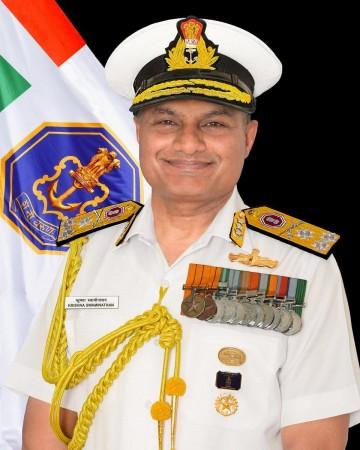
Vice Admiral Krishna Swaminathan Set To Head Indian Navy
Meanwhile, Vice Admiral Krishna Swaminathan, currently serving as the Western Naval Commander in Mumbai, will assume office as the next Navy chief on May 31, succeeding the outgoing naval leadership. His tenure is expected to continue till December 31, 2028.
Commissioned into the Indian Navy on July 1, 1987, Vice Admiral Swaminathan is a specialist in Communication and Electronic Warfare and has held several key operational and strategic appointments during his naval career.
He is an alumnus of the National Defence Academy in Khadakwasla, the Joint Services Command and Staff College in Shrivenham, the College of Naval Warfare in Karanja and the United States Naval War College in Newport, Rhode Island.
The appointments mark a major leadership transition in India's top military structure, with both officers expected to play crucial roles in strengthening defence preparedness, strategic coordination and military modernisation in the coming years.
(With inputs from IANS)