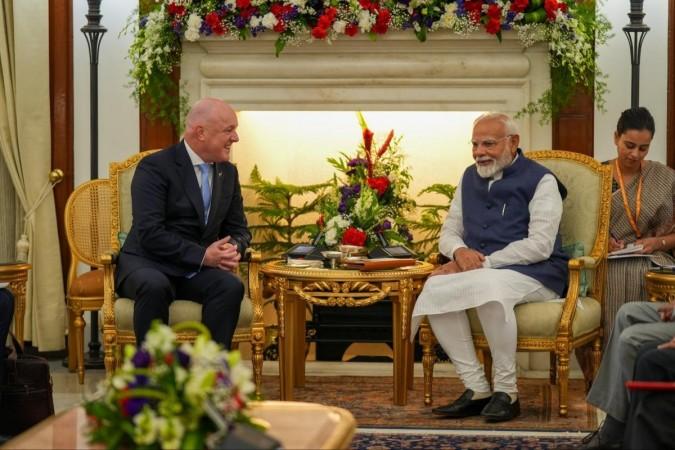
India and New Zealand on April 27 signed a long-pending Free Trade Agreement (FTA), marking a significant milestone in bilateral ties and opening new avenues across trade, investment, services, and labour mobility. The pact was finalised in the presence of Union Commerce Minister Piyush Goyal and his New Zealand counterpart Todd McClay, with Prime Minister Christopher Luxon describing it as a "once-in-a-generation" deal.
The agreement concludes a negotiation journey that began in 2010, stalled in 2015 after nine rounds, and was revived in March 2025 before being wrapped up in a record nine months by December 22, 2025—making it one of India's fastest trade deals to move from talks to signing.
At its core, the FTA goes beyond tariffs and signals a strategic pivot for India toward deeper engagement in the Indo-Pacific. While New Zealand represents a relatively small but high-income market, it also serves as a gateway to the wider Pacific and Oceania region. Bilateral merchandise trade between the two countries has already reached around $1.3 billion in 2024–25, with services trade—particularly in IT and travel—continuing to expand.
Under the agreement, India will gain duty-free access to 100 per cent of tariff lines in New Zealand, removing existing tariffs—previously around 10 per cent on several product categories—and making Indian exports significantly more competitive. Key sectors expected to benefit include textiles, leather, engineering goods, pharmaceuticals, processed foods, and gems and jewellery, many of which are labour-intensive and export-driven.
Prime Minister of New Zealand Christopher Luxon tweets, "Just over a year ago, I met with Prime Minister Modi in India. We agreed then, that we’d launch negotiations on a free trade agreement. For decades, many people said it couldn’t be done. But tonight, that deal gets signed.… pic.twitter.com/2FniU5OOuG
— IANS (@ians_india) April 27, 2026
At the same time, India has safeguarded sensitive domestic sectors by keeping roughly 30 per cent of tariff lines outside the agreement, particularly dairy and key agricultural products.
India and New Zealand will formally sign the Free Trade Agreement (FTA) in New Delhi this afternoon.
— All India Radio News (@airnewsalerts) April 27, 2026
Signing ceremony will be presided over by Union Minister for Commerce and Industry @PiyushGoyal and New Zealand’s Minister for Trade and Investment Todd McClay. The agreement was… pic.twitter.com/zZV5cRJqBp
A major highlight of the deal is New Zealand's commitment to invest $20 billion in India over the next 15 years. This investment is expected to support infrastructure, agriculture, technology partnerships, and supply chain resilience, while also boosting job creation, especially in MSME-driven sectors.
The agreement also places strong emphasis on mobility and people-to-people ties. It includes provisions for student mobility and post-study work opportunities, allowing Indian students to work part-time during their studies and benefit from extended work visas. Additionally, a quota of 5,000 visas has been introduced for skilled Indian professionals across sectors such as IT, healthcare, education, engineering, and traditional fields like AYUSH and yoga. A Working Holiday Visa programme will also allow 1,000 young Indians annually to live and work in New Zealand for up to 12 months.
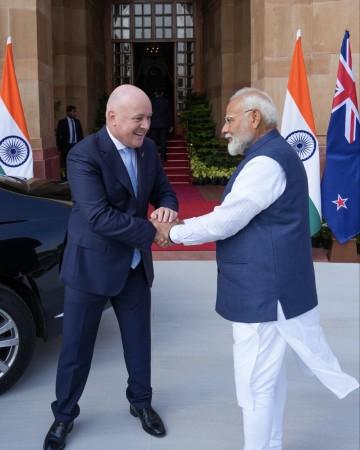
Further strengthening economic cooperation, ASSOCHAM signed a Memorandum of Understanding with the India-New Zealand Business Council to facilitate industry-led initiatives under the FTA and reduce procedural bottlenecks. Enhanced air connectivity, tourism cooperation, and stronger engagement between trade bodies are expected to unlock the full potential of the partnership.
The FTA is also set to provide a major boost to sectors like leather and pharmaceuticals. India's leather industry, particularly hubs like Agra, is expected to benefit from zero-duty access and increased demand, while pharmaceutical and medical device companies will gain from faster regulatory approvals and reduced compliance burdens through mutual recognition of standards.
With bilateral trade currently at about $1.3 billion in goods and $634 million in services, both countries aim to scale this to $5 billion over the next five years. A strong Indian diaspora of nearly 300,000 people in New Zealand is also expected to play a key role in strengthening economic and cultural ties.
In a global environment marked by trade uncertainties and shifting supply chains, the India–New Zealand FTA underscores India's strategy to diversify partnerships and build resilient, future-ready economic relationships across the Indo-Pacific region.