
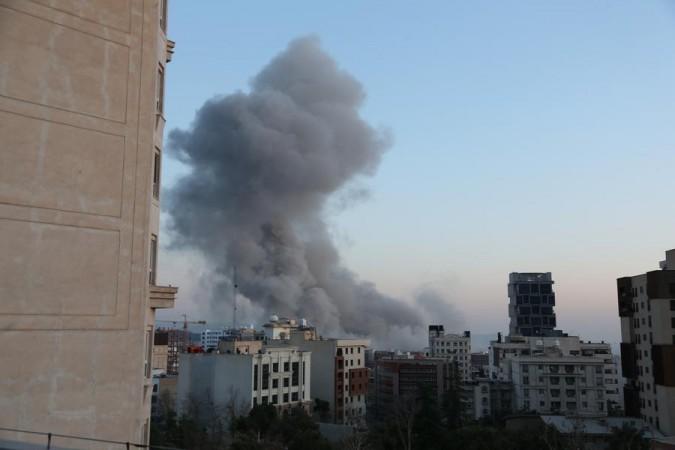
"Whoever controls the sea controls trade; whoever controls trade controls the wealth of the world," observed the great maritime strategist Alfred Thayer Mahan. In the twenty-first century, this observation has acquired a new dimension: control over energy routes, financial systems, and supply chains increasingly determines geopolitical power. The ongoing confrontation between the United States and Iran must therefore be understood not merely as a regional military clash but as a militarily asymmetric economic war, in which both sides pursue profound macroeconomic objectives through different strategic methods.
The United States, deploying the overwhelming force of technologically advanced military power including carrier strike groups, stealth aircraft, and precision weapons, seeks to maintain influence over the energy architecture that underpins the global economic system. Iran, facing a vast asymmetry in military capability, has adopted an alternative approach: imposing escalating economic costs on the United States and its partners through low-cost asymmetric warfare targeting energy routes, supply chains, and infrastructure. The resulting conflict is thus not simply about territory or ideology. It is about the economic foundations of global power in an era where finance, energy, and technology determine strategic dominance.
Energy Geopolitics and the Strategic Architecture of Power
Energy remains the lifeblood of the global economy. Few locations illustrate this more clearly than the Strait of Hormuz, the narrow maritime corridor connecting the Persian Gulf to the wider ocean system. Approximately 20 to 21 million barrels of oil per day, roughly one-fifth of global petroleum consumption, pass through this chokepoint, making it the most critical artery of the international energy system.
The protection of this energy flow has long been a core element of American strategic policy. The United States maintains significant naval and air capabilities in the region to ensure the uninterrupted movement of energy supplies to global markets. These deployments are not merely about protecting allies or stabilizing regional security. They also sustain the economic structure that underpins the global order.
The international oil trade is overwhelmingly conducted in U.S. dollars, creating the petrodollar system that reinforces the global demand for American currency. Oil exporting states recycle surplus revenues into dollar denominated assets, including U.S. Treasury securities. This system strengthens American financial power and provides the United States with an extraordinary ability to finance technological innovation, including massive investments in artificial intelligence, advanced computing, and defense technologies.
As former U.S. Secretary of State Henry Kissinger famously remarked, "Control oil and you control nations." The stability of energy markets thus directly supports the economic architecture that enables American strategic leadership.
Strategic Competition and the China Factor
Energy geopolitics today cannot be separated from the rise of China as a global economic power. China has become the world's largest importer of oil, consuming more than 15 million barrels per day, much of it sourced from the Persian Gulf. These supplies travel through maritime chokepoints that remain highly vulnerable to disruption.
For Beijing, the stability of Gulf energy exports is therefore essential to sustaining its industrial and economic growth. Recognizing this vulnerability, China has pursued a global strategy to diversify its energy supplies through investments across Africa, Central Asia, and Latin America. One key component of this strategy is China's engagement with the oil rich state of Venezuela, which holds over 300 billion barrels of proven oil reserves, the largest in the world.
From a strategic perspective, influence over such energy resources can shape the global supply landscape. If major producers such as Venezuela expand production under conditions favorable to Washington, they could offset disruptions elsewhere and help stabilize global markets. Conversely, disruptions in Gulf exports could disproportionately affect Asian economies heavily dependent on Middle Eastern energy.
Thus, the geography of energy routes intersects directly with the broader strategic competition between Washington and Beijing. Control over production centers and maritime corridors can influence not only energy prices but also the economic trajectory of rival powers.
Iran's Asymmetric Strategy of Economic Attrition
Confronted with overwhelming American military superiority, Iran has adopted a fundamentally different approach. Tehran's strategic doctrine centers on cost imposition and economic attrition, forcing a technologically superior adversary to spend vastly more resources defending its interests than the attacker spends disrupting them.
Iran's arsenal includes large numbers of drones, cruise missiles, and anti ship ballistic systems designed to threaten bases, shipping lanes, and energy infrastructure across the region. Systems such as the Shahed-136 loitering munition exemplify this approach. They are relatively inexpensive platforms capable of forcing defenders to deploy interceptors costing hundreds of thousands or even millions of dollars.
Meanwhile, the United States relies on extremely advanced and costly technologies, including stealth aircraft such as the F-35 Lightning II and precision weapons such as the Tomahawk cruise missile. While these systems provide unparalleled military capability, their use carries enormous financial costs.
This disparity reflects a classic principle articulated by the Prussian strategist Carl von Clausewitz: "War is the continuation of politics by other means." In this case, Iran's political objective is not necessarily battlefield victory but the economic exhaustion of a far more powerful adversary.
Supply Chains as Strategic Battlefields
Modern economic power depends on intricate supply chains connecting raw materials, manufacturing centers, and consumer markets across continents. Disruptions at critical nodes within these networks can produce cascading economic consequences.
The Middle East occupies a central position in these networks. Maritime routes linking the Persian Gulf to Europe and Asia pass through several strategic chokepoints, including passages leading toward the Suez Canal and the Red Sea. Should these routes become unstable, shipping companies may be forced to reroute vessels thousands of miles around the southern tip of Africa via the Cape of Good Hope.
Such detours dramatically increase transit times, fuel consumption, and insurance costs, sending ripple effects through global supply chains. Industrial production, commodity prices, and consumer markets can all experience disruptions when maritime corridors become insecure.
The strategic implications are profound. In the modern globalized economy, supply chains themselves have become a form of strategic infrastructure, and their disruption can be as consequential as the destruction of traditional military targets.
The Vulnerability of Military Infrastructure
Another dimension of the conflict lies in the immense financial investment embodied in modern military infrastructure. Overseas bases, airfields, and logistics facilities represent billions of dollars in construction and maintenance costs.
Operating a single carrier strike group centered on a Nimitz-class aircraft carrier can cost between 6 million and 8 million dollars per day during sustained operations. These formations include destroyers, submarines, aircraft squadrons, and logistical support vessels.
Even limited damage to such installations can impose significant reconstruction costs and operational disruptions. When ports, airbases, or logistics depots are disabled, the economic consequences extend far beyond immediate military effects. Supply chains supporting military operations must be rebuilt, equipment must be replaced, and operational timelines are disrupted.
Historical precedents illustrate how expensive modern wars can become. The War in Afghanistan cost the United States more than 2.3 trillion dollars, while the Iraq War exceeded 2 trillion dollars in total expenditures.
Iran's strategy therefore seeks to exploit the inherent vulnerability of high value military infrastructure.
The Weaponization of Energy
The current confrontation also echoes historical episodes in which energy itself became a strategic weapon. During the 1973 Oil Crisis, coordinated production cuts triggered a global economic shock that demonstrated the immense geopolitical power of energy markets.
Similarly, during the Tanker War in the 1980s, attacks on oil tankers in the Persian Gulf disrupted shipping and forced major powers to intervene to protect maritime traffic.
Today, even the possibility of disruptions in the Strait of Hormuz can trigger immediate spikes in global oil prices. According to the International Energy Agency, disruptions in this corridor could remove 15 to 17 million barrels per day from global markets, creating one of the largest supply shocks in modern history.
Thus, energy markets remain highly sensitive to geopolitical tensions, and disruptions can ripple across the global economy.
The Economic Foundations of Military Power
Behind these strategic dynamics lies a deeper reality. Modern military power itself is sustained by economic systems. Defense budgets, technological innovation, and global military deployments all depend on stable economic foundations.
The United States allocates more than 800 billion dollars annually to defense, supported by an economy that remains the largest in the world. Institutions such as the Federal Reserve and the Bank for International Settlements play crucial roles in maintaining the stability of the financial system that enables such expenditures.
If the economic environment becomes unstable through energy shocks, supply chain disruptions, or financial volatility, the ability to sustain global military commitments can be affected.
Iran's asymmetric strategy therefore aims not only at military targets but also at the economic structures that sustain American power.
Two Competing Macroeconomic Strategies
Viewed through this lens, the confrontation between the United States and Iran represents two contrasting macroeconomic strategies of warfare.
The United States seeks to preserve a global system characterized by stable energy flows, secure maritime routes, and dollar based financial markets. This system supports technological leadership and enables the massive investments required for emerging fields such as artificial intelligence, quantum computing, and advanced defense systems.
Iran, lacking the resources to compete directly with such capabilities, seeks instead to undermine the system's stability. By threatening shipping routes, targeting infrastructure, and raising the cost of regional security, Tehran attempts to erode the economic advantages that underpin American dominance.
Thus, the conflict is not merely military but systemic, a struggle over the structure of the global economic order.
The Future of Economic Warfare
The strategic implications extend far beyond the current confrontation. Modern warfare is increasingly shifting toward economic and systemic dimensions in which supply chains, energy markets, financial networks, and technological ecosystems become critical battlegrounds.
As global economic interdependence deepens, the vulnerability of these systems grows. Disruptions in a single strategic corridor can reverberate across continents, affecting industries, financial markets, and national economies.
The confrontation between the United States and Iran therefore provides a glimpse of the emerging character of twenty first century conflict.
Economic Warz to Dominate the Geopolitics and Emerging Global Structuring
The unfolding struggle between the United States and Iran is best understood as a militarily asymmetric economic war. One side deploys the full power of advanced military technology to preserve a global system that sustains its economic and strategic leadership. The other employs low cost asymmetric tactics designed to raise the economic cost of that system and exploit its vulnerabilities.
In this evolving strategic landscape, the decisive battlefield may no longer be defined by territory alone. Instead, it lies within the economic networks, energy flows, supply chains, and financial systems that sustain modern civilization.
The power that shapes these systems will ultimately shape the geopolitical order of the twenty first century.
[Major General Dr. Dilawar Singh, IAV, is a distinguished strategist having held senior positions in technology, defence, and corporate governance. He serves on global boards and advises on leadership, emerging technologies, and strategic affairs, with a focus on aligning India's interests in the evolving global technological order.]