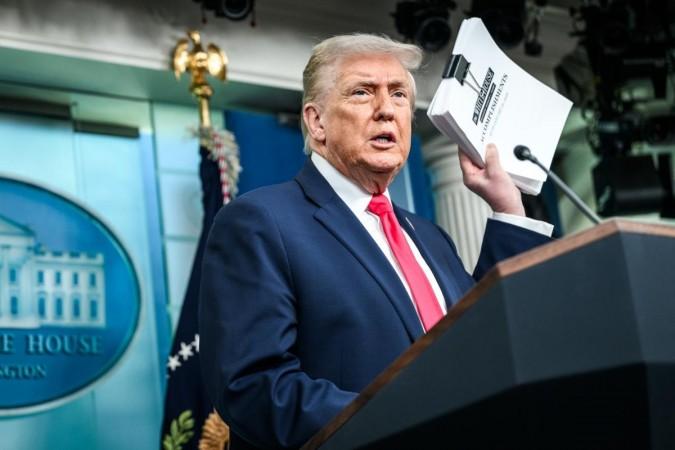
In the shadow of a second Trump presidency, the world order we once knew is unraveling, not with dramatic explosions but through a relentless barrage of tariffs, territorial threats, and transactional ultimatums. As 2026 unfolds, the United States under President Donald Trump pursues an aggressive form of isolationism cloaked in "America First" rhetoric. Mass withdrawals from United Nations institutions, coercive demands for territorial control over Greenland, and the creation of a pay-to-play "Board of Peace" are not merely adjusting alliances; they are shattering them. These actions empower rivals such as China and Russia while hastening a multipolar world where American hegemony can no longer be taken for granted. Far from strategic brilliance, this approach represents a high-stakes gamble that trades long-term global stability for fleeting tactical advantages.
At its core lies a vision of power defined by coercion rather than genuine cooperation.The United States' unprecedented exodus from the United Nations stands as a stark illustration. In early January 2026, President Trump signed an executive order directing the withdrawal from 66 international organizations, including 31 UN entities such as UN Women, the UN Population Fund, and the Framework Convention on Climate Change.
This sweeping pullout, presented as a rejection of wasteful bodies that contradict U.S. interests, amplifies Trump's first-term exits from UNESCO, the Human Rights Council, and the Paris Agreement. The underlying aim appears clear: to eliminate multilateral constraints on American sovereignty, enabling the pursuit of unilateral bilateral deals without interference. Yet the consequences are profound. This retreat undermines collective responses to pressing global challenges like climate change and gender inequality, areas where U.S. leadership has long been instrumental. UN Secretary-General António Guterres has emphasized that the United States still bears legal obligations to support core UN budgets, but proposed further cuts threaten to starve the institution Trump deems obsolete. In practice, this is not reform but deliberate sabotage, driving allies toward alternative platforms and ceding significant influence to Beijing, which has swiftly filled the resulting voids in development financing and normative leadership.
Amid this deliberate retreat, Trump has introduced the "Board of Peace," a peculiar fusion of diplomacy and pay-to-play mechanics. Originally framed as a mechanism to oversee Gaza's reconstruction under his comprehensive peace plan, the board's emerging charter exposes far broader ambitions: a self-appointed council with Trump as indefinite chairman, concentrated veto authority, and a staggering $1 billion contribution required for permanent membership (though three-year terms carry no such fee). Funds are ostensibly earmarked for Gaza's rebuilding, yet the structure exudes cronyism, with members including figures like Secretary of State Marco Rubio, Jared Kushner, Tony Blair, and Steve Witkoff. Nations such as the United Arab Emirates, Belarus, Morocco, Hungary, and Canada have joined or accepted invitations, while major democracies hesitate or decline outright. France's Emmanuel Macron, rebuffing participation, triggered Trump's blunt threat of 200 percent tariffs on French wines and champagnes, a petty escalation that underscores the board's coercive undertones. The true purpose seems evident: to circumvent the UN Security Council and establish a parallel body where loyalty and financial commitment purchase influence. By potentially including controversial leaders and expanding beyond Gaza to global conflicts, the board risks legitimizing autocrats, alienating established democracies, and sidelining international norms. This is less peacekeeping than a vanity-driven project that could deepen divisions and inflame existing tensions.
These disruptions are already catalyzing new power configurations, most notably the emerging "Muslim NATO." In September 2025, Saudi Arabia and Pakistan formalized the Strategic Mutual Defence Agreement, featuring a collective defense clause akin to NATO's Article 5. Turkey now advances in high-level talks to join, potentially creating a formidable trilateral bloc that merges Saudi financial resources, Pakistani nuclear capabilities and manpower, and Turkish military expertise, drone technology, and NATO-honed forces. While officially positioned against threats like Iran, the pact reflects a deeper strategic hedging: Middle Eastern and South Asian powers seeking autonomy amid perceived U.S. unreliability. Trump's UN withdrawals, tariff barrages, and alliance coercion have only hastened this realignment, as nations pursue independent security frameworks outside American dominance. The paradox is striking: such a "Muslim NATO" might foster regional stability in volatile areas, yet it would inevitably erode U.S. leverage in the Middle East and beyond.
Trump's coercive approach reaches its most vivid expression in the renewed obsession with Greenland. Reviving his 2019 proposal to purchase the Danish territory, he has imposed escalating tariffs starting at 10 percent and rising to 25 percent by June on eight European nations, all NATO allies: Denmark, Norway, Sweden, France, Germany, the United Kingdom, the Netherlands, and Finland. These measures target opposition to U.S. annexation or control, framed as essential for national and global security amid Arctic resource access opened by climate change. Danish Prime Minister Mette Frederiksen has warned that any forceful U.S. move would dismantle NATO and the postwar security architecture. European leaders have responded by deploying additional troops to Greenland, while the EU prepares its Anti-Coercion Instrument for retaliatory tariffs potentially affecting up to $108 billion in U.S. exports. Trump's rhetoric hints at inevitability, suggesting "something's going to happen" regardless of resistance. The intent is transparent: to secure strategic Arctic assets like rare earth minerals. Yet this brinkmanship invites the unthinkable potentially triggering NATO's Article 5 against the alliance's own leader while handing Russia greater freedom to pursue its Arctic ambitions.
The transatlantic rift fueled by these actions extends into wider economic confrontations, where tariffs serve as weapons. U.S.-China relations, temporarily steadied by a 2025 truce, remain tense, with Trump pressing for concessions on technology and Taiwan even as his focus shifts toward the Americas and away from Asia-Pacific commitments. European polls reflect plummeting U.S. favorability, with China increasingly viewed as a reliable economic partner. India, too, confronts direct pressure: after 25 percent tariffs linked to Russian oil imports, U.S. officials claim New Delhi has "geared down" and largely halted such purchases, though threats of up to 500 percent tariffs persist for non-compliant nations. This heavy-handed approach risks alienating a vital Indo-Pacific partner, nudging India toward deeper ties within BRICS and diversified sourcing that could weaken U.S. regional strategy.
At root, Trump's intentions reflect a purely transactional worldview: alliances as temporary leverage rather than enduring commitments, security as a commodity to be bought or coerced. Global reactions, including widespread condemnation of U.S. "bullying" on social platforms and in diplomatic circles, reveal growing isolation. Allies rearm independently, decouple economically where possible, and explore alternatives. China stands to gain the most, capitalizing on Western fractures to expand influence across the UN system, the Arctic, and global infrastructure.The international community must actively counter this slide toward unilateral dominance. Democracies should reinforce the UN's core functions, nurture resilient regional alliances like the emerging Muslim defense pact, and meet coercion with unified collective resolve. Trump's America First tactics may secure short-term concessions, but they plant the seeds of profound strategic reversal. History repeatedly demonstrates that empires collapse not primarily from external foes, but from self-inflicted hubris and overreach. In 2026, the path forward is stark: embrace multilateral renewal to preserve shared stability, or descend into the uncertainties of unchecked multipolar chaos. The American century need not conclude in solitude. True and lasting power emerges from partnership, not predation.
[Major General Dr. Dilawar Singh, IAV, is a distinguished strategist having held senior positions in technology, defence, and corporate governance. He serves on global boards and advises on leadership, emerging technologies, and strategic affairs, with a focus on aligning India's interests in the evolving global technological order.]

![Angry Jaya Bachchan pushes journalist's mic away during INDIA bloc protest [watch]](https://data1.ibtimes.co.in/en/full/839178/angry-jaya-bachchan-pushes-journalists-mic-away-during-india-bloc-protest-watch.jpg?w=220&h=135&l=50&t=40 "Angry Jaya Bachchan pushes journalist's mic away during INDIA bloc protest [watch]")






![Angry Jaya Bachchan pushes journalist's mic away during INDIA bloc protest [watch]](https://data1.ibtimes.co.in/en/full/839178/angry-jaya-bachchan-pushes-journalists-mic-away-during-india-bloc-protest-watch.jpg?w=220&h=138)



![Angry Jaya Bachchan pushes journalist's mic away during INDIA bloc protest [watch]](https://data1.ibtimes.co.in/en/full/839178/angry-jaya-bachchan-pushes-journalists-mic-away-during-india-bloc-protest-watch.jpg?w=220&h=135)