The ceasefire did not begin with silence. It began with a sentence.
On the evening of April 7, standing before cameras, Donald Trump declared with characteristic certainty: "Our objectives have been achieved. This is a complete and total ceasefire effective immediately."
Within hours, the ground told a different story.
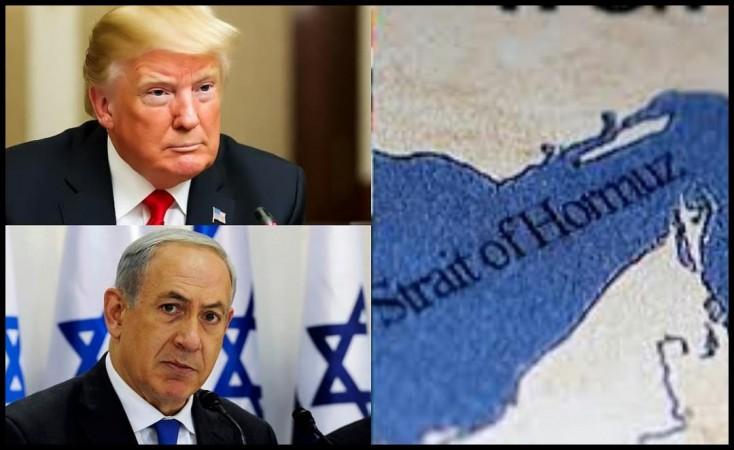
Explosions were reported along contested corridors. Maritime alerts flickered across shipping systems in the Strait of Hormuz. Insurance premiums for vessels transiting the Gulf spiked within hours, reflecting not confidence but caution. Satellite imagery analysts began flagging continued movement of assets. And by the next morning, Benjamin Netanyahu, speaking in a carefully measured tone, introduced the first fracture in the narrative: "Israel has agreed to a cessation of hostilities, but retains full freedom of action against any threats, wherever they arise."
In that gap between "complete and total" and "full freedom of action" the ceasefire revealed its true nature. Not peace. Not even pause. But a negotiated ambiguity, alive with intent, hedged with mistrust, and engineered for strategic maneuver. It is precisely in such linguistic divergence that modern conflict now resides. Words are not descriptors of reality. They are instruments that construct competing realities.
The First 24 Hours: Language as a Battlefield
What followed was not merely a sequence of events, but a cascade of signals.
Trump's declaration was designed for multiple audiences at once. To the American public, it was closure that was decisive, reassuring, final. To allies, it was a message of control. To adversaries, it was a claim of dominance. Yet, conspicuously, it avoided specifics. There was no geographic scope, no enforcement mechanism, no articulation of violations, no defined red lines.
That omission was not accidental. It was strategic elasticity embedded in language.
Within hours, Israeli aircraft struck what they described as "imminent threats" in peripheral zones. Tehran responded sharply. A senior Iranian official, speaking through state media, stated: "A ceasefire that allows continued aggression is not a ceasefire. It is deception dressed as diplomacy." The phrasing was deliberate. It was aimed not only at Washington but also at the global audience whose perception would determine legitimacy.
The sequence was now complete:
Trump declares closure. Netanyahu asserts latitude. Iran rejects legitimacy.
Markets reacted in parallel. Oil prices dipped momentarily on the announcement, only to rebound as reports of continued strikes emerged. This oscillation in markets mirrored the oscillation in credibility.
And the ceasefire, barely hours old, had already fractured into competing realities.
Day Two: Expansion of the Battlefield Without Expansion of War
By April 8, the geography of contradiction had widened.
Reports of continued Israeli operations in areas linked to Iranian proxies triggered a second wave of rhetorical escalation. Netanyahu did not deny the strikes. Instead, he reframed them: "This agreement does not and will not apply to those who seek our destruction through proxies. Israel will act wherever necessary."
This was not merely a legal argument. It was strategic signalling directed not only at Iran but also at Washington and regional actors. The message was precise and layered. Israel would not subcontract its security to the ambiguities of a U.S. brokered ceasefire. It would define its own operational perimeter.
Meanwhile, Washington recalibrated. Officials began using softer language such as "understanding," "framework," "initial phase," quietly diluting the absoluteness of Trump's original claim. This shift was subtle but consequential. It signalled recognition that the ceasefire was not holding in the way it had been presented. It also reflected internal balancing between political messaging and operational reality.
Tehran, observing this divergence, sharpened its tone: "We do not trust American assurances. Actions on the ground define truth, not statements. Commitments must be visible, not verbal."
Trust, already fragile, was now openly contested and publicly eroded.
The Silent Actor Speaks by Not Speaking: The UAE's Calculated Quiet
Amid this chorus, one voice was notably restrained: United Arab Emirates.
There were no dramatic declarations. No overt endorsements or rejections. Instead, the UAE operated through calibrated silence, punctuated by brief, carefully worded calls for "de-escalation," "stability," and "responsible conduct by all parties."
This silence was not absence. It was strategy of a high order.
The UAE's primary concern was not the semantics of the ceasefire, but the stability of the system it underwrites. Trade corridors, logistics chains, sovereign funds, investor confidence, and long term positioning as a global hub all demanded insulation from volatility. An overt alignment with either side risked destabilizing that system. Silence, therefore, became a form of positioning and influence.
Yet even in silence, signals were sent.
Backchannel engagements intensified. Energy infrastructure was quietly secured. Financial markets were reassured through indirect communication with institutional actors. Diplomatic channels remained active but discreet. The UAE was not shaping the battlefield. It was stabilizing the ecosystem around it while preserving optionality.
The Mediator Under the Microscope: Pakistan's Precarious Credibility
As contradictions deepened, attention turned to the intermediary: Pakistan.
Islamabad presented the ceasefire as a diplomatic achievement and a demonstration of its continuing relevance in a fragmented global order. Yet credibility in mediation is not conferred by announcement. It is tested by endurance, neutrality, and enforcement capacity.
Within days, questions emerged with increasing intensity.
Could Pakistan enforce compliance among actors with asymmetrical power?
Did it possess the leverage to address violations or merely the access to facilitate dialogue?
Was it acting as a neutral convener or a strategically positioned participant?
Privately, diplomats expressed cautious skepticism. Publicly, Pakistan maintained optimism: "All parties have committed to restraint. Mechanisms are in place and engagement is ongoing."
But the ground reality suggested strain. Continued strikes, contested interpretations, and rhetorical escalation indicated that mechanisms, if present, lacked coercive weight.
Pakistan had brokered a pause. Whether it could sustain a peace remained uncertain. Its credibility now rested not on the announcement of the ceasefire, but on its ability to manage its contradictions.
The Shadow Layer: China and Russia Reframe the Context
While visible actors contested the ceasefire's meaning, deeper currents were shaped by China and Russia.
Beijing's statement, issued with characteristic restraint, emphasized "respect for sovereignty," "dialogue," and "long term stability." It avoided endorsement of any specific framework. The language was deliberately broad. It allowed alignment with principles without entanglement in specifics.
China's intent was not to resolve the conflict in immediate terms. Its objective was to position itself as a stable, predictable counterpoint to Western volatility. Every instance of inconsistency in Western messaging strengthened that positioning. Every ambiguity in enforcement expanded China's diplomatic space.
Moscow, in contrast, adopted a more pointed tone. Russian commentary highlighted the "inconsistencies" in Western messaging and the "fragility of externally imposed frameworks." The subtext was unmistakable. Western led conflict management lacks coherence and credibility.
Russia's intent extended beyond the region. It sought to reinforce its global narrative while simultaneously diverting attention and strategic bandwidth from other theatres of engagement.
Together, China and Russia did not intervene directly. They shaped perception, narrative, and long term alignment. They altered not the events, but the meaning of those events.
The Pattern Emerges: Statements, Actions, Contradictions
By the third day, a pattern had crystallized with remarkable clarity.
Assertion: Trump declares a total ceasefire.
Qualification: Netanyahu introduces operational exceptions.
Rejection: Iran questions legitimacy and intent.
Silence: UAE stabilizes without overt alignment.
Mediation: Pakistan defends a framework under visible strain.
Reframing: China and Russia redefine the narrative context.
Each step was reactive, interdependent, and cumulative.
The ceasefire was no longer a single agreement. It had become a dynamic system of competing truths, each sustained by its own logic, each validated by its own audience.
This is the emerging grammar of modern conflict resolution. Agreement is replaced by alignment of convenience. Compliance is replaced by interpretation. Stability is replaced by managed volatility.
Intent Beneath Action: What Was Said, What Was Avoided
To understand the deeper structure, one must examine not only what was said, but what was deliberately left unsaid.
Trump avoided specifying enforcement, preserving flexibility while projecting control. He signalled strength domestically while retaining maneuverability internationally.
Netanyahu avoided acknowledging limits, ensuring operational autonomy. He signalled resolve to domestic audiences and deterrence to adversaries.
Iran avoided any language suggesting concession, maintaining deterrence credibility and internal legitimacy. It signalled resistance, continuity, and ideological consistency.
The UAE avoided visibility, protecting economic stability and strategic optionality. It signalled prudence and long term thinking.
Pakistan avoided confrontation, preserving its role as mediator while attempting to balance multiple pressures. It signalled relevance but not authority.
China and Russia avoided commitment, maximizing strategic optionality while shaping the narrative environment. They signalled patience, continuity, and long term positioning.
This collective avoidance was not accidental. It was the architecture of the ceasefire itself.
Each actor entered not to resolve the conflict, but to shape its next phase on favorable terms. Each statement, each omission, each calibrated silence contributed to a larger strategic design.
Credibility Under Strain: The Central Fault Line
As the days progressed, one reality became unavoidable.
The ceasefire's greatest vulnerability was not military. It was moral, political, and perceptual credibility.
When statements diverge from actions, trust erodes.
When interpretations multiply, enforcement collapses.
When actors hedge, commitments weaken.
When narratives diverge, legitimacy fragments.
In this environment, even genuine restraint is viewed with suspicion. Every move is interpreted through the lens of potential deception. Every pause is seen as preparation.
The ceasefire, therefore, exists. But it exists without belief.
The Crescendo: A Pause That Carries the Seeds of Its End
We now stand at a critical inflection point.
The ceasefire holds, but only in form, not in substance.
Violations are denied, justified, or redefined.
Diplomacy continues, but without convergence.
Statements multiply, but clarity diminishes.
This is not stability. It is metastability, a condition where the system appears balanced yet remains acutely sensitive to disruption.
One miscalculation in a proxy theatre.
One misinterpreted strike.
One political statement aimed at domestic audiences but received internationally as escalation.
One incident in a maritime corridor that triggers cascading reactions.
That is all it will take.
The Strategic Inevitability
This ceasefire is not an end. It is a rehearsal.
A rehearsal for a new kind of conflict where wars do not conclude, they pause. Agreements do not resolve; they reframe. Trust does not underpin diplomacy; it is substituted by calculation and hedging.
The warning is stark and immediate.
If ceasefires continue to be constructed as instruments of tactical advantage rather than foundations of mutual commitment, they will cease to function as bridges to peace. They will become intervals between escalations, structured pauses that allow actors to reset, rearm, reposition, and recalibrate narratives.
And the prediction is unavoidable.
The next phase of this conflict will not begin with a formal declaration of war. It will begin with the collapse of interpretation.
A strike that one side calls defense, another calls violation.
A response that one calls deterrence, another calls escalation.
A statement that one calls reassurance, another calls provocation.
And in that moment, the ceasefire will not end dramatically. It will simply cease to exist.
Not because it was broken,
but because it was never truly believed.
[Major General Dr. Dilawar Singh, IAV, is a distinguished strategist having held senior positions in technology, defence, and corporate governance. He serves on global boards and advises on leadership, emerging technologies, and strategic affairs, with a focus on aligning India's interests in the evolving global technological order.]