
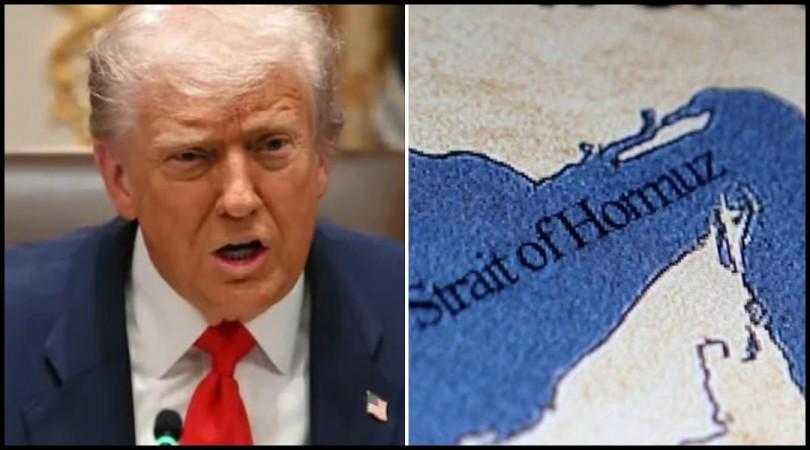
In the narrow waters of the Strait of Hormuz, geography has revealed its true value, not as a passive feature on any map but as a sovereign revenue engine of extraordinary and immediate power. As the 2026 Iran war continues, Tehran has transformed one of the world's most vital chokepoints into a selective tollbooth. Ships from friendly nations, often settling payments in yuan or cryptocurrency, transit for fees reportedly reaching up to two million dollars per vessel, while others encounter threats or outright denial. This development is no temporary wartime measure. It signals the acceleration of a profound structural shift: the strategic monetization of geography itself.
The Chokepoint Premium: Why Hormuz Proves Geography Pays
The chokepoint premium that Hormuz now commands demonstrates why geography pays handsomely in the modern era. Before the conflict intensified, approximately twenty to twenty-one million barrels per day of crude oil, condensate, and refined products flowed through the strait, representing about twenty percent of global petroleum liquids consumption and roughly one-quarter of all seaborne oil trade, with around one hundred cargo-carrying vessels passing daily on average. Even a partial restoration of traffic under a formalized toll regime could generate tens of billions of dollars annually for the controlling authority. By comparison, man-made waterways such as the Suez Canal and the Panama Canal already generate billions in annual fees. The Suez Canal is projected to reach 4.2 billion dollars in revenues for 2025, while the Panama Canal recorded 5.7 billion dollars in fiscal year 2025. Natural straits, however, with their irreplaceable geographic positioning, command far greater leverage and potential returns. At full scale, a one- to two-million-dollar fee structure applied to even a fraction of pre-war traffic could yield fifty billion dollars or more each year, all while advancing de-dollarization through payments in currencies other than the US dollar. Traffic through Hormuz has plunged by ninety to ninety-five percent at peak disruption periods, with only selective passages continuing. Oil prices have spiked sharply, and global supply chains have come under severe strain. The underlying logic remains both ruthless and rational: scarcity is manufactured through control, and safe passage is then monetized. Iran's parliament has moved to formalize this sovereign role, framing the charges as security or protection services.
This evolution represents far more than isolated opportunism. It embodies the maturation of geo-capitalism, in which narrow passages that long conferred military advantage now deliver precise and sustained economic rents. For centuries geography shaped strategy primarily through the projection of force. In today's fragmented world of great-power rivalry, sanctions, and hybrid conflict, it generates revenue streams with remarkable efficiency. History offers instructive precedents. Denmark once collected the famous Sound Dues on ships entering the Baltic Sea, a lucrative monopoly that endured for centuries until its abolition by international treaty in 1857. The Turkish Straits, governed by the 1936 Montreux Convention, have long allowed Ankara to impose mandatory pilotage and services that quietly generate hundreds of millions in annual revenue while preserving formal freedom of passage for commercial vessels. These examples illustrate a timeless truth: controlling the narrows has always tempted states to extract value, but the scale and sophistication of today's opportunities dwarf those of the past.
Geography as Economic Weaponry
The United Nations Convention on the Law of the Sea enshrines rights of transit passage and prohibits charges levied solely by reason of passage. Coastal states retain authority to regulate for safety or pollution control, yet they must not hamper or suspend unimpeded transit. Not every state adheres fully to the convention, and wartime conditions or security pretexts readily create exploitable openings. Nations positioned atop these natural monopolies are awakening to the full potential. Selective tolls can reward political alignment, penalize adversaries, and channel hard currency flows outside conventional financial systems. In practice, the legal framework bends under pressure. Iran is not a party to the convention, and even signatories have tested its limits through creative interpretations of environmental levies or mandatory escorts. Hybrid tactics, from Houthi disruptions in the Red Sea to selective enforcement in the Turkish Straits, expose how wartime or gray-zone conditions erode the old consensus on unimpeded passage. What once appeared as an ironclad norm now reveals itself as negotiable when power and necessity align.
The Geo-Toll Era: How Nations Are Turning Geography Into Cash Machines
Hormuz captures global attention as the current flashpoint, yet the planetary map forms a comprehensive atlas of parallel opportunities, spanning Asia's mega-lanes, Africa's critical gateways, Europe's vital northern passages, the rapidly thawing polar frontier, and even latent gateways such as the Strait of Gibraltar. Every strategic pinch point invites the same compelling economic and political calculus: secure control over the narrows and harvest the rents.
In Asia, the Strait of Malacca stands as the crown jewel. In the first half of 2025 it handled 23.2 million barrels of oil per day, accounting for twenty-nine percent of global maritime oil trade and up to twenty-four to thirty percent of all seaborne trade overall. Approximately ninety-four thousand vessels transit annually, carrying eighty percent of China's oil imports along with massive volumes of containers, liquefied natural gas, and manufactured goods destined for Japan, South Korea, and beyond. Indonesia, Malaysia, and Singapore already collaborate on piracy patrols and traffic management schemes. Expanding these efforts into formal navigation services, environmental levies, or congestion charges would require only modest adjustments. Rerouting through the Lombok or Sunda straits adds days and substantial costs to voyages, while proposed alternatives such as a Thai landbridge or the Kra Canal could themselves evolve into new toll-generating infrastructure. In an era of friend-shoring and regional realignment, Malacca is poised to function as Asia's preeminent geo-rent machine.
Africa's gate of tears, the Bab el-Mandeb Strait and its associated Red Sea corridor, normally carries four to five million barrels per day of oil and ten to fourteen percent of global maritime trade across a narrow sixteen-mile width that links the Indian Ocean to the Suez Canal and the broader Mediterranean. Houthi disruptions between 2023 and 2025 already halved certain flows and compelled widespread rerouting around the Cape of Good Hope, imposing an estimated seven to nine billion dollars in additional annual shipping costs across the industry. Littoral influence exercised by actors in Yemen, Djibouti, and Eritrea provides ideal conditions for instituting protection fees or enforcing selective access, particularly when synchronized with larger Red Sea geopolitical maneuvers. For states in the Global South, such geography confers genuine leverage: modest in physical scale yet capable of delivering outsized economic returns and diplomatic bargaining strength.
Europe experiences these dynamics through its own everyday arteries. The Danish Straits transport 4.9 million barrels per day of crude oil and petroleum products, equivalent to six percent of maritime oil movements, while also accommodating surging United States liquefied natural gas exports to Europe in the wake of reduced Russian pipeline supplies. The English Channel records more than five hundred vessels daily, establishing it as the planet's busiest single sea lane. Denmark, Sweden, and the United Kingdom possess clear opportunities to broaden pilotage requirements, environmental charges, or safety-related fees without necessitating wholesale revisions to international maritime law. Turkey's Bosphorus and Dardanelles already exemplify a working model. Fees there have risen more than seven times since 2022 through the imposition of mandatory services, with a further fifteen percent increase implemented in July 2025 that brought the rate to roughly 5.83 dollars per net ton, alongside base pilotage charges exceeding six hundred dollars plus additional surcharges for tankers and hazardous cargoes. In a continent marked by ongoing tensions, these waterways quietly operate as reliable cash registers for the regional powers that border them. Even the Strait of Gibraltar, carrying five to six million barrels per day of oil and roughly twenty percent of global maritime traffic, remains latent but potent; Spain and Morocco, as co-littoral states, could coordinate environmental, security, or congestion regulations to extract value from hundreds of thousands of annual transits.
The polar gold rush now underway in the Arctic provides perhaps the clearest preview of future geo-tolls. Russia's Northern Sea Route already levies charges for mandatory icebreaker escorts and pilotage. In 2025 the route carried 37 million metric tons of cargo, reflecting growth trends despite a modest recent dip. As sea ice continues to recede, the passage shaves approximately four thousand five hundred nautical miles from traditional Asia-Europe voyages. Canada's Northwest Passage and the Bering Strait, which serves as the maritime gateway between the United States and Russia, could readily adopt comparable permit systems or sovereign escort fees. Climate change does not simply unlock new routes; it generates entirely novel chokepoints that Russia and Canada are singularly positioned to monetize, skillfully combining assertions of environmental stewardship with direct revenue collection.
Geography extends its influence well beyond maritime domains. Terrestrial corridors offer equally promising avenues for similar exploitation. Proposed rail and road landbridges, including Thailand's Kra alternative, navigation fees along major rivers such as the Danube and Rhine, enhanced border charges at critical mountain passes, and strategic isthmuses in Central Asia or the Americas all parallel the maritime template. In a global landscape increasingly defined by friend-shoring and extended rail networks such as those associated with the Belt and Road Initiative, dominance over overland pinch points can produce pipeline royalties or mandatory transit services through sovereign territory, thereby replicating the economic rents traditionally associated with the sea. Artificial canals already monetize brilliantly, yet natural geography offers higher barriers to entry and geopolitical upside.
Diverse Perspectives: Who Wins, Who Pays?
Diverse perspectives help illuminate the full spectrum of stakes and beneficiaries. Shipping companies and broader business interests confront structurally elevated insurance premiums, fuel expenses, and delay costs; many will pass these burdens along to consumers, while others opt for permanent rerouting, and freight markets will increasingly incorporate explicit geo-risk premiums. From the vantage of the Global South, smaller littoral states such as Indonesia, Djibouti, and relevant actors in Yemen gain newfound agency, converting strategic geography into sovereign wealth funds even in the absence of abundant natural resources or advanced technology. Great-power calculations reveal China and Russia hastening the adoption of de-dollarized payment mechanisms and the development of alternative corridors, even as Western nations advocate for multilateral free-passage agreements or fund new bypass infrastructure. An environmental perspective introduces particularly elegant justifications: green tolls justified by emissions reduction or biodiversity protection transform urgent climate imperatives into reliable revenue streams. The legal and ethical dimension highlights the mounting pressure on the United Nations Convention on the Law of the Sea amid hybrid tactics, raising the possibility that future international norms may accommodate regulated geo-rents instead of enforcing absolute prohibitions.
Creative Horizons: Tomorrow's Geo-Rents
Creative horizons extend the concept still further into innovative territory. One can envision blockchain-enabled passage NFTs auctioned by coastal authorities to guarantee priority transit, or the establishment of multilateral geo-toll trusts designed to distribute revenues equitably among affected nations, though political realities may render such arrangements challenging. Private maritime security enterprises could mature into formalized fee-collecting consortia capable of operating effectively in gray-zone waters. Routes opening in the Southern Ocean around the Drake Passage might eventually generate Antarctic-access tolls. In a final twist of irony, states could deliberately engineer artificial chokepoints, perhaps through undersea tunnels or strategically placed floating barriers, thereby manufacturing monopolies in locations where nature had previously offered none. Even secondary routes such as the Indonesian archipelagic straits hold potential for stricter exclusive economic zone rules or service fees, turning bypasses into profit centers.
Lessons from Hormuz for a Fragmented World
The 2026 Hormuz crisis functions as a compelling proof of concept rather than a fleeting anomaly. Post-war resolutions, whether they involve full reopening of the strait, the imposition of multilateral oversight, or the tacit acceptance of limited tolling under security rationales, will establish precedents with lasting consequences. The fundamental taboo, however, has already been broken: free passage through critical geography is no longer an unquestioned default but a negotiable and taxable privilege. In the decades ahead, pay-to-sail and pay-to-traverse regimes will proliferate across every continent and climatic zone. Great-power competition, strategies of friend-shoring, and the imperatives of energy nationalism will elevate mastery of these pinches to a central competency of effective statecraft. The resulting effects will reverberate globally, producing structurally higher costs for shipping and energy, prompting realignments of alliances in which nations pay in local currencies or adjust political postures to secure preferred access, eroding both the maritime and terrestrial commons, and hastening the transition toward greater multipolarity.
Geography has shaped human destiny since the earliest civilizations. In the twenty-first century it is increasingly shaping balance sheets with equal force, extending its influence from Hormuz to Malacca, from Bab el-Mandeb to the Bering Strait, and from the rapidly thawing Arctic to the landbridges of tomorrow. The era of the geo-toll is dawning, not as a regional Middle Eastern phenomenon but as a truly planetary transformation. The narrow waters and tight terrestrial passes have delivered their message with unmistakable clarity. In dire straits lie lucrative opportunities for those nations and actors positioned to collect.
[Major General Dr. Dilawar Singh, IAV, is a distinguished strategist having held senior positions in technology, defence, and corporate governance. He serves on global boards and advises on leadership, emerging technologies, and strategic affairs, with a focus on aligning India's interests in the evolving global technological order.]