Anupama Chopra's love for cinema is not a hidden affair. Over the years, she has carved out a space for herself as one of India's most influential and respected voices on cinema. Her perspective on films is absolutely sharp, perceptive, and unwaveringly honest. In an industry often cushioned by hype and diplomacy, Chopra stands apart for her fearless candour, unafraid to call out a film when it falters and equally generous in championing cinema that truly shines. It is wise to say that her voice doesn't merely review cinema; it shapes the conversation around it.
In an exclusive conversation with International Business Times at the Jaipur Literature Festival, Chopra provided insight into her new book, 'Dining With Stars: Indian Superstars In Their Own Words,' and spoke about the current state of Indian cinema, what is currently working, and what is not.
Despite being asked questions on similar lines about what her take is on the current state of Indian cinema and the kinds of films being made, she does not hesitate but rather answers them very candidly.
Chopra says, "I think it is a very exciting state of Indian cinema because now when we say Indian cinema, we really do mean Indian cinema. There was a long time, especially from a Western perspective, that Indian cinema only meant Hindi cinema; they did not even know there were multiple other flourishing industries, right? But today, when we say Indian cinema, we really do mean Indian cinema- thanks to S.S. Rajamouli and 'Bahubali', we now have all the industries working together; artists are collaborating, technicians are collaborating, and the audiences are watching all kinds of movies."
Talking of how the audience has become receptive to the idea of films from various regions in the country, the revered film critic cited examples of films from the South that have done exceptionally well at the nationwide box office.
Chopra mentions, "All of us went to see Kantara; all of us went to see Loka. To me, that is so powerful. So, for me, this merging of many, many industries into one Indian cinema is very exciting. The idea that there are so many different storytellers with different traditions of storytelling who are influencing each other. So, filmmakers in Mumbai are watching a Malayalam film and saying, Damn, they've got this right. The fact that Kalyani Priyadarshan is Ranveer Singh's heroine in the next vampire film (Pralay) is so exciting."
Several cinephiles often take to platforms such as Reddit, X, and Instagram to voice their frustration over how Indian cinema today seems more focused on spectacle and grand scale than meaningful storytelling. Many feel that visual extravagance often comes at the cost of depth, nuance, and strong narratives. Chopra has a different take on it.
She says, "So, the truth is all filmmakers across the world are emphasising spectacle and scale because, frankly, nobody knows how to get people into the theatre. I mean, fundamentally, it's about bounds on seats, right? And the conventional wisdom is that if a movie is too big to fit on your phone and your computer screen, then you might take the 200 rupees and come to a multiplex. So, I think they think that the only thing that will draw people out is the spectacle. And ideally, we need to have both. You must have the spectacle, but you must have the chota, middle-of-the-road, slice-of-life, human, intimate, personal cinema as well."
Anupama then went on to add how the more artsy films are definitely reliant on the extravagant films that cinephiles complain about every now and then. She said, "The truth is, unless many of those films run, you're not going to have more of them. People will only make one or two of these. But Saiyaara ran. Everyone said romance is dead, and then Saiyaara was massive. So, when that happens, then maybe filmmakers' minds change a little bit, and distributors' minds change a little bit. So, I'm hoping that that's what we lean into, rather than just scale and spectacle."
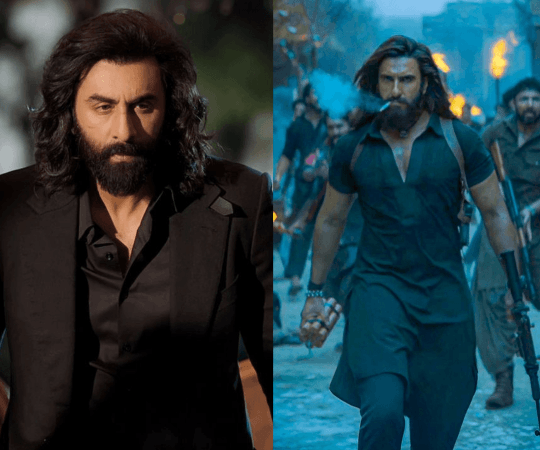
At the same time, Indian cinema is also seeing a strong surge in hyper-masculine narratives, with films like Animal and Dhurandhar achieving major box office success. This growing popularity raises an interesting question about whether this trend truly mirrors audience preferences today or if it points to a larger shift in what mainstream cinema is choosing to amplify and celebrate.
The film critic clearly states, "We need many, many more films to do a thousand crores. It's the fuel which will enable other careers, other writers, other directors, other actors. So, we need many more. We are in the era of the hyper-masculine hero."
She clearly mentions that these things are cyclical and talks about how previously we had the typical Raj and Rahuls who would perform 'karwa chauth' for their wives, but the narrative is now changing. Anupama cites the example of Saif Ali Khan portraying the roles of urban metrosexual men in films like 'Kal Ho Naa Ho' and 'Hum Tum.' She reiterates that these men are somehow lost from the Indian film narratives, and now we have only male characters who are hyper-masculine.
Chopra notes, "Maybe it's a time when there is great uncertainty. There is great anxiety. There is great doubt about what the future holds, right? In that time, what do we need? We need a male saviour. We need a saviour, and inevitably, the saviour is male."
Known for cutting through curated celebrity personas, Chopra's work has long documented the changing emotional and cultural landscape of Indian cinema. Her book 'Dining with Stars' brings together some of her most candid conversations, offering insight into fame, vulnerability, and the inner lives of the industry's biggest names.
When asked about whether, in the process of putting this book together, there was a moment of vulnerability from an actor that truly surprised or touched her, she had a very honest answer to it.
Without putting in much time to think, she answered, "You know, there are many times when they say something very revealing, and I think that's when you understand them as another human being. Actors are so larger than life in our country, so you always see them as these superstars."

Naming one particular star with whom she had a remarkable conversation, she said, "It has to be Diljit. He's one of my favourite people, and I interviewed him before Udta Punjab. So he was not at all in the conversation. He was a big Punjabi singer and actor, but not at all known in the Hindi world. I interviewed him because I loved his performance in 1984."
She went on to add how in the first interview, he was dressed in a simple white shirt, and the next time that she interviewed him, which was 2-3 years down the line, he was dressed head to toe in Gucci.
Anupama reminisces, "I laughed, and I said, where did this fashion sense come from? So he said, 'It was always there, but I didn't have the money'."
Chopra describes her book as "a great archive of Indian cinema at a certain period, which is 2014 to 2025."
Reflecting on the many conversations that make up Dining with Stars, Chopra also spoke about a shared anxiety that quietly runs through the lives of those in the spotlight. "So I think the fear is always because it's such, the sands are shifting so quickly. So it's always the fear of how long it lasts?" she said, pointing to the uncertainty that underpins even the most glittering careers. It's a fitting note to end on, one that strips fame of its permanence and reminds us that behind the spectacle, stardom is often held together by a fragile, fleeting sense of time.