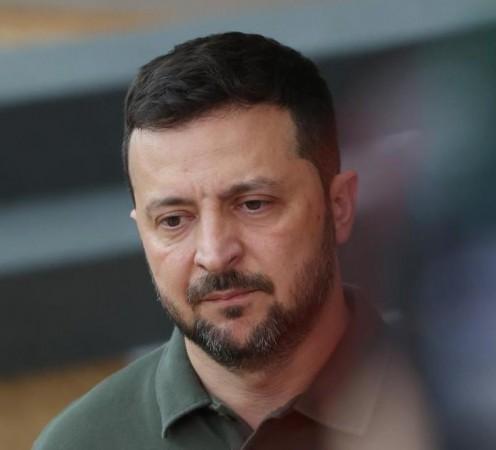
In a statement posted on X on the evening of April 10, 2026, Ukrainian President Volodymyr Zelensky outlined a contingency vision for European defense in the event of reduced or withdrawn U.S. commitment to NATO. Drawing from his interview on the UK podcast The Rest Is Politics, Zelensky argued that the European Union, in its current form, would be insufficient to guarantee continental security and proposed enlarging it to include the United Kingdom, Ukraine, Türkiye, and Norway. He highlighted the combined military strength of the UK, Ukraine, and Türkiye as superior to Russia's on paper and emphasized that security must take precedence over economic considerations.The proposal lands at a delicate juncture. Transatlantic relations are strained by the Trump administration's transactional stance toward NATO, while the Russia-Ukraine war grinds on in a costly stalemate. Zelensky's intervention merits serious examination not as visionary rhetoric or desperate plea, but as a calculated response to shifting power realities. What follows is a measured assessment of its timing, intent, feasibility, and broader implications.
The Strategic Timing of Zelensky's Intervention
Zelensky timed his remarks with precision. Released within hours of the podcast episode, they coincide with fresh signals from Washington about potential U.S. troop reductions in Europe and renewed criticism of NATO burden-sharing, exacerbated by European allies' restrained role in U.S. operations against Iran in the Strait of Hormuz. A short Orthodox Easter ceasefire, mutually observed for now, has created a momentary lull in Ukraine, yet it has not altered the underlying attrition. This window allows Zelensky to elevate the conversation on European self-reliance before any ceasefire momentum dissipates or U.S. policy hardens further. In doing so, he capitalizes on a period of heightened uncertainty without appearing to undermine ongoing diplomatic pauses.
Easter should be a time of security and peace. It would be right for a ceasefire to continue beyond the holiday. We have conveyed this proposal to Russia, and if Russia once more chooses war over peace, it will yet again show the world, and the United States in particular, who… pic.twitter.com/fRMgD0rVN9
— Volodymyr Zelenskyy / Володимир Зеленський (@ZelenskyyUa) April 11, 2026
Underlying Intent Behind the Proposal
At its core, the statement represents pragmatic Ukrainian statecraft. Zelensky is positioning Ukraine's long-term survival within European structures should NATO's security guarantee become unreliable. By framing the EU as needing expansion for credible deterrence, he shifts the burden of responsibility onto European capitals and underscores that Russia's documented military expansion to a target of 2.5 million troops by 2030 demands a collective response. The emphasis on defense ("not about offense") and the candid acknowledgment of Türkiye's agricultural challenges signal realism rather than idealism. Beyond Ukraine's interests, the proposal quietly tests political waters in the UK, normalizes Türkiye's role in European security, and offers Norway a pathway to deeper involvement without upending its EEA model. It is less a detailed blueprint than a prompt for Europe to confront its strategic vulnerabilities.
Current Standing and Formal Status
Currently, Zelensky's idea exists as a high-profile public suggestion rather than an active policy proposal. Ukraine holds EU candidate status, with negotiations formally opened in 2024 and technical screening largely finished, but accession remains a multi-year process requiring unanimous member-state approval and extensive reforms. Türkiye's candidacy, dating back to 1999, has long been stalled. The UK maintains no formal re-accession track following Brexit, while Norway has repeatedly declined full membership and thrives under EEA arrangements. EU defense efforts PESCO, the European Defence Fund, and joint procurement have gained traction since 2022 but remain confined to the existing 27 members. No EU institution has formally embraced the four-country enlargement concept, leaving the proposal in the realm of influential advocacy rather than negotiation.
Current Russia-Ukraine War Scenario
The battlefield reality is one of attritional deadlock with asymmetric edges. Russian forces have achieved modest net territorial advances of roughly 17 square miles in recent weeks, primarily in Donetsk, but at disproportionate cost and without decisive operational momentum. Ukrainian drone innovations, including resilient fiber-optic systems and high-volume strikes exceeding 11,000 missions daily, have significantly disrupted Russian logistics, command nodes, and energy infrastructure. Both sides continue long-range attacks on rear areas and civilian infrastructure. Russia's broader aims securing full control of Donbas, establishing buffer zones, and potentially reaching Odesa remain strategically aspirational given current force generation challenges. The temporary Easter ceasefire offers humanitarian relief but has not produced political breakthroughs. The conflict's trajectory suggests prolonged exhaustion on both sides, with technology providing Ukraine tactical resilience amid Russia's quantitative advantages in manpower and artillery.
Broader Global Strategic Context
Globally, the environment reflects eroding post-Cold War certainties. The United States is prioritizing an "America First" recalibration, treating alliances more transactionally and linking NATO commitments to tangible allied contributions elsewhere, notably in the Middle East. Europe is ramping up defense budgets but struggles with fragmentation in capabilities and supply chains. Russia sustains its war effort through sanctions evasion, resource exports to Asia, and domestic mobilization, even as its economy faces long-term distortions. China observes these dynamics closely, gauging implications for its own regional ambitions. Ongoing Middle East tensions further stretch U.S. attention, creating both risks and opportunities for European actors. This multipolar strain underscores the relevance of Zelensky's question: can Europe develop autonomous deterrent capacity without American primacy?
Military Realities and Practical Feasibility
Zelensky's manpower claims hold up on aggregate figures but face significant translation challenges. Russia's current active-duty strength is approximately 1.3 million, with official targets pushing toward 1.5 million or more in coming years though recruitment shortfalls and equipment maintenance issues temper ambitions for a full 2.5 million by 2030. Combining Ukraine's roughly 900,000 experienced personnel, Türkiye's 480,000, and the UK's 140,000 yields a numerical edge in conventional land forces. Complementary assets British naval and air power, Norwegian Arctic and maritime expertise, and Turkish Black Sea/Mediterranean positioning could enhance domain control. Yet effective integration would require unprecedented command harmonization, procurement alignment, logistics networks, and political trust. Nuclear capabilities remain a Russian monopoly, and interoperability gaps among the proposed grouping mirror longstanding NATO difficulties. Numerical superiority alone does not guarantee operational coherence or sustained deterrence.
Expected Reactions from Key International Players
Responses from key actors have been measured and predictable. In the UK, the proposal has fueled media debate on EU re-engagement, with the Starmer government open to enhanced security ties but cautious on full re-accession due to sovereignty sensitivities and domestic politics. Türkiye has engaged constructively on bilateral defense matters with Ukraine but shows little appetite for accelerating full EU membership, preferring upgrades to the customs union while protecting its leverage on issues like Cyprus and agriculture. Russia has condemned the idea as provocative encirclement, likely to intensify hybrid activities. The Trump administration may see it as validation of its burden-sharing critique, potentially hastening U.S. adjustments without immediate formal withdrawal. Within the EU, France may welcome the autonomy emphasis, Eastern members will prioritize Ukraine's inclusion, and fiscal hawks in Germany and elsewhere will scrutinize costs. Hungary's veto potential ensures deliberate pacing. Overall, expect discussion and incremental steps rather than swift structural change.
Historical Precedents, Alignments, and Inherent Mismatches
Historical context offers partial precedents but highlights mismatches. The UK's former EU membership, Ukraine's Euromaidan-driven European orientation, Türkiye's decades-long NATO and candidacy ties, and Norway's close EEA partnership provide geographic and institutional continuity. All four nations perceive Russian revisionism as a shared concern to varying degrees. However, Brexit entrenched British preferences for independent decision-making. Türkiye's accession has been frozen amid governance, democratic, and agricultural policy divergences. Norway's voters have twice rejected full membership, satisfied with existing access. Ukraine's wartime realities add layers of governance and economic reconstruction demands. The successful 2004 EU enlargement occurred in a vastly different post-Cold War climate of convergence; today's Europe is more prosperous yet more cautious, divided on identity, and wary of rapid expansion.
Major Challenges and Potential Risks
Substantial hurdles temper optimism. Achieving unanimous EU consent for enlargement is inherently slow. Integrating Türkiye's agricultural sector and Ukraine's reconstruction needs would pressure budgets and the Common Agricultural Policy. Rapid military coordination risks creating symbolic rather than substantive capabilities. Potential Russian escalation, accelerated U.S. disengagement, or internal EU divisions pose strategic risks. Sovereignty concerns in London and Oslo cannot be dismissed. Overstating numerical military advantages could foster complacency about the hard work of integration.
The Most Probable Emerging Scenario
Near-term developments will likely feature intensified EU defense debates, announcements of higher spending, and sustained bilateral support for Ukraine, without immediate enlargement moves. Over one to three years, assuming continued U.S. pressure, a hybrid architecture may emerge: enhanced associate defense mechanisms for the UK, Norway, and Türkiye; conditional acceleration of Ukraine's accession path with parallel security guarantees; and pragmatic economic deepening with Türkiye. A recalibrated NATO with a lighter but enduring U.S. presence remains the probable foundation, blending European initiative with transatlantic continuity.
Realistic Strategic Options Ahead
Several paths present themselves. Incremental NATO strengthening with greater European contributions and bilateral Ukrainian assurances offers continuity. Tiered security partnerships within or alongside the EU could grant defense roles without full membership. Ad-hoc coalitions risk limited durability. A minimally enforced ceasefire or frozen conflict carries the highest long-term instability risk. A pragmatic blend of enhanced partnerships and NATO adaptation appears most aligned with current political and military realities.
The Most Viable Path Forward Aligned with Current Realities
No perfect outcome exists, but the most viable approach balances deterrence, feasibility, and national interests. This would entail conditional acceleration of Ukraine's EU path paired with concrete multilateral European security commitments, such as joint training facilities and procurement programs. The UK and Norway could expand roles in EU defense structures like PESCO without full re-accession. Türkiye might advance through a modernized customs union with targeted agricultural transition mechanisms. NATO would evolve into a more balanced alliance with a reduced yet stabilizing U.S. footprint. Such a framework would counter Russia's military trajectory, distribute economic burdens across capable states, respect sovereignty preferences, and keep escalation pathways manageable. It demands sustained political will and compromise but reflects the messy realities of 2026 rather than any idealized vision.
Reflections on European Security Choices
Zelensky's intervention illuminates genuine gaps in European security thinking at a time when assumptions about American commitment are being tested. It does not offer an easy solution, but it forces a necessary reckoning with the continent's strategic dependencies and Russia's long-term ambitions. Whether European leaders respond with decisive coordination or familiar caution will shape the security landscape for decades. In an era of renewed great-power rivalry, deliberate realism not rhetorical momentum must guide the way forward.
[Major General Dr. Dilawar Singh, IAV, is a distinguished strategist having held senior positions in technology, defence, and corporate governance. He serves on global boards and advises on leadership, emerging technologies, and strategic affairs, with a focus on aligning India's interests in the evolving global technological order.]






![Lock Upp 2 drama: Harshad Chopda shows middle finger to Shreya Kalra; Ram Kapoor forcibly kisses Shreya [Watch]](https://data1.ibtimes.co.in/en/full/835004/lock-upp-2-drama-harshad-chopda-shows-middle-finger-shreya-kalra-ram-kapoor-forcibly-kisses.jpg?w=220&h=138)