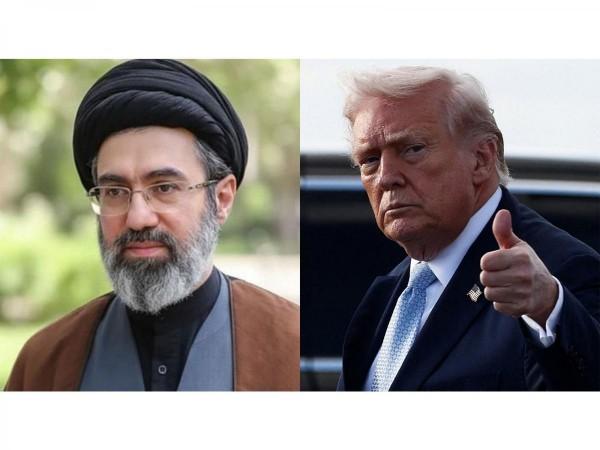
Iran has said it will end the ongoing war only if its conditions are met, firmly rejecting any attempt by US President Donald Trump to dictate the timeline for a ceasefire and describing the American proposal as "excessive" amid the West Asia conflict.
According to Press TV, which cited an official on Wednesday, Tehran has reviewed the US proposal to end the war but finds its terms unacceptable. A senior Iranian official also told Reuters that Iran's initial response to the proposal is "not positive", although it remains under review.
Tehran asserted that the decision on when to end the war rests solely with Iran. It said it "will not allow US President Donald Trump to dictate the timing of the end of the war" and would agree to halt hostilities only when its conditions are fully met.
Among its key demands, Iran has called for recognition of its sovereignty over the Strait of Hormuz, which it described as its "natural, legal right". It has also sought a clear determination of responsibility for war damage, along with guaranteed compensation.
Further, Iran has demanded concrete assurances to prevent any recurrence of war. It also said it wants an end not only to the war on Iran but also to hostilities involving other resistance groups in the region.
Tehran emphasised that its defensive operations will continue until all its conditions are fulfilled.
Reiterating its position, Iran said it will end the war strictly on its own terms and at a time of its choosing, maintaining that the current US proposal remains excessive.
Iran's remarks come after Pakistan formally conveyed a 15-point ceasefire proposal from the United States to Iran, marking a significant step in backchannel diplomacy as the Middle East conflict intensifies, Reuters reported, quoting sources.

The US proposal reportedly outlines a broad framework aimed at de-escalation. Key elements include partial sanctions relief for Iran, limits on its missile programme, and a rollback of its nuclear activities under strict monitoring by the International Atomic Energy Agency.
It also proposes civilian nuclear cooperation under international oversight and seeks to ensure secure shipping through the Strait of Hormuz, a critical global oil transit route. In exchange, Washington is said to be pushing for a temporary ceasefire of around a month to create space for formal negotiations.
Meanwhile, at least 1,000 troops from the 82nd Airborne Division will be sent to the Middle East in the coming days, three people familiar with the plans told The Associated Press.
The paratroopers are trained to operate in hostile or contested areas to secure key territory and airfields. The Pentagon is also in the process of deploying about 5,000 more Marines, trained in amphibious assaults, along with thousands of sailors to the region.