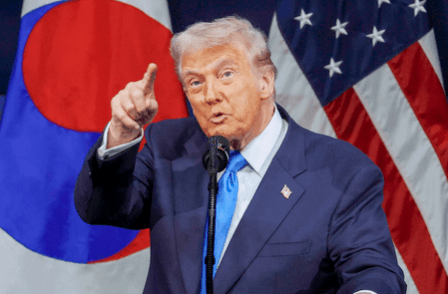
Donald Trump has once again warned that the United States could target key civilian infrastructure in Iran, including desalination plants, power grids and oil facilities—moves that could severely impact water and electricity supplies for millions. In a recent social media post, Trump claimed that Washington is making "serious" progress in talks with what he described as a more cooperative leadership in Iran, but cautioned that military action remains on the table if an agreement is not reached and the Strait of Hormuz is not reopened.
His remarks have sparked strong criticism from legal experts and human rights organisations, who argue that targeting civilian infrastructure would violate international humanitarian law. Referencing the Fourth Geneva Convention, analysts said such actions could amount to collective punishment, which is explicitly prohibited. Experts warned that striking essential services like water and electricity systems would endanger civilians and disrupt critical services such as healthcare and communication.
The White House defended the administration's position, stating that any actions taken by US forces would remain within legal limits, while also highlighting the country's military capabilities. At the same time, advocacy groups have described the threats as alarming, arguing they could have devastating humanitarian consequences.
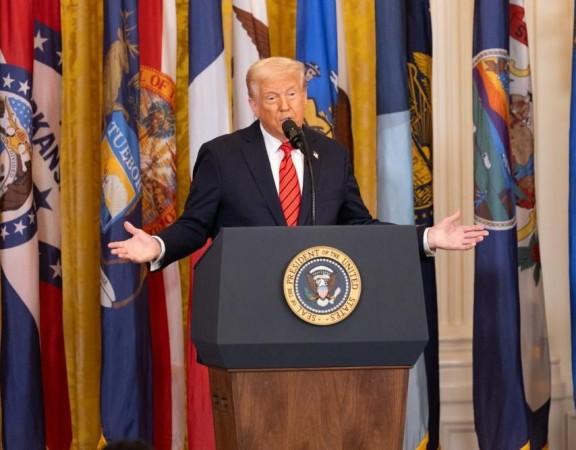
Despite claims of progress in negotiations, there is no clear evidence of a political transition in Iran. Ali Khamenei has reportedly been replaced by his son, Mojtaba Khamenei, though the situation remains unclear. Meanwhile, the conflict has entered its fifth week, with both Washington and Tehran claiming momentum. Iran continues missile and drone operations and has restricted movement through the Strait of Hormuz, contributing to rising global energy prices.
So far, Trump's warnings have not altered Iran's military posture. Tensions remain high across the region, with both sides accusing each other of targeting infrastructure, including water facilities. Experts caution that any escalation involving civilian systems could have widespread humanitarian consequences, affecting access to clean water, electricity, healthcare and communication for large populations.