
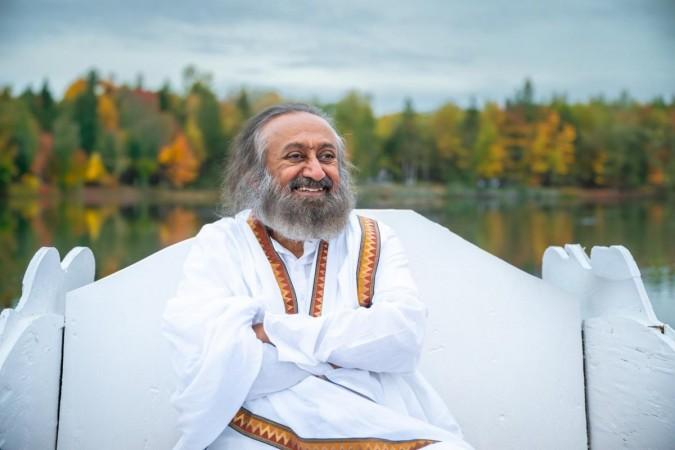
"Loneliness is not only for some people. Even those who have riches, those who have good family connections, still feel lonely." Gurudev Sri Sri Ravi Shankar, a globally renowned humanitarian, said this in a conversation with Dr Vivek Murthy, former Surgeon General of the United States, at George Washington University, with young people filling the audience. Their exchange is worth revisiting on World Mental Health Day, when loneliness remains one of the least visible yet most consequential struggles of our time.
Dr Murthy began his first term in 2015 by travelling across the country with one question: "How can I help?" He then sat back and listened to people's stories.
"Many young people on college campuses said that although hundreds or thousands of classmates surrounded them, they felt invisible as they moved through the world," he recalled. "They felt that if they disappeared tomorrow, it wouldn't matter."
Others surprised him even more. "I met many people who were CEOs, members of Congress, parents, and people living very busy lives. They were surrounded by others, yet they felt profoundly disconnected and alone."
He found more adults struggling with loneliness than living with diabetes. Research cited at the session highlighted the serious consequences that a lack of social connection can have for health and longevity.
A UCLA study offers a compelling insight into how this disconnection might be addressed, particularly among young people who have experienced adversity.
Published in August 2026, the study followed 174 teenage girls across two Southern California high schools who participated in SKY Schools, a programme combining social-emotional learning with SKY Breathing, or Sudarshan Kriya, cognised by Gurudev. Among girls who had experienced four or more adverse childhood experiences, those who underwent the programme reported a 7% increase in social connectedness, a significantly greater improvement than among the comparison groups. The findings suggest that helping young people regulate stress through breathwork, alongside social-emotional learning, may also help strengthen their sense of belonging.
Murthy recognised this loneliness from his own childhood.
"I was very shy as a child, and I wanted to hang out with other kids and make friends and play, but I just felt inhibited about doing so," he said. "That was actually why I felt scared to go to school every day. It wasn't because I was worried about exams or scared about my teachers. I was worried about walking into the cafeteria at noon and being scared that there'd be nobody to sit next to."
Gurudev traced loneliness to a place we rarely think to look — our relationship with ourselves.
"We have not learned how to be with ourselves, how to be at peace with ourselves," he said. "Neither at home nor in school are we taught how to handle our emotions. It's normal to feel left out. It's normal to feel lonely at some time."
"No child cries for no reason," Gurudev said. "Either they're scared, they're hungry, or they want to sleep." In adults, too, it is important to look beneath the surface. "You'll find isolation, fear, lack of sense of belonging, and a sense of rejection."

These are not merely passing emotional experiences that can be brushed under the carpet. Gurudev has spoken with much pain about students in India's reputed institutions who have lost their lives to despair. Loneliness deserves to be taken seriously, not dismissed as a failure to make friends or fit in.
From school children and youth grappling with stress to veterans coping with trauma and prisoners navigating difficult emotions, Gurudev has developed targeted programmes that use breathwork, meditation and practical tools for emotional regulation to address mental distress. Rooted in his approach to the interconnectedness of body, mind and spirit, these interventions aim to help people manage stress, strengthen emotional resilience and restore a sense of well-being.
"We teach kids dental hygiene. Now we need to teach them mental hygiene," he said.
Ten to fifteen minutes of breathing each morning, he explained, can help lift the state of mind.
"We seem to forget there is a delete button in our computer. We don't use that at all, so we keep overwriting things."
"Rather than you feeling like a victim of our own mind, we can be masters of our own mind," Gurudev said. "When we are relaxed, what comes out of us is perfection. When we are natural, what comes out of us is compassion."
Both Gurudev and Dr Murthy also see giving as a source of worth and joy.
"Our worth as human beings is not extrinsic," Murthy said. "It's based on our ability to give and receive love freely."
Gurudev draws a distinction between the joy of receiving, which he likens to an infant's joy, and the deeper fulfilment of contribution.
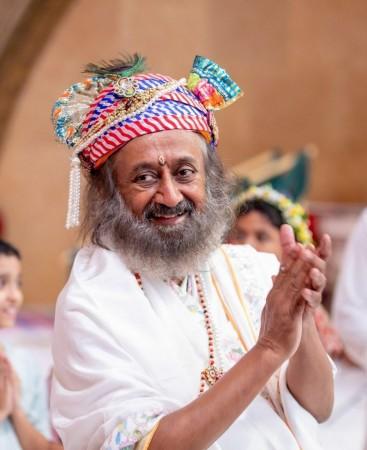
"There is a joy in giving, in contribution, which is mature and which is ten times greater than the joy that you have from getting something."
Murthy described the purpose of these practices as a return to where we belong.
"I look at this as our journey to come back home," he said.
And Gurudev offers the starting point: "If we can learn to be with ourselves, there will be joy for everyone around us."