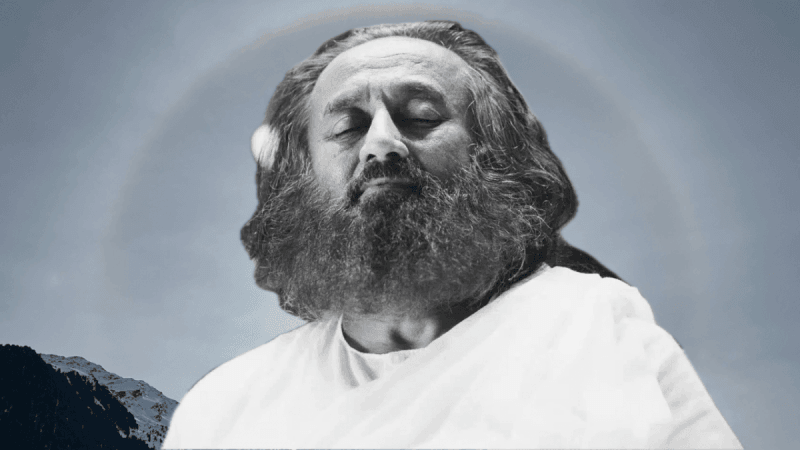
Meditation is the art of doing nothing and resting in the very core of your being. In life, we are always doing something. We are planning, thinking, worrying, trying to achieve, or trying to solve. Even when the body is still, the mind continues to run. When you wake up, you get into activity, and then, tired from work, you go to sleep. But beyond the waking, sleeping, and dreaming states, there is a fourth state where you are alert yet rested. And you can experience that state in meditation. It is a few moments where you are not a student, a parent, a professional, or a role that the world has given you. You simply are.
Wakefulness and sleep are like sunrise and darkness. Dream is like the twilight in between. And meditation is like the flight into outer space, where there is no sunset, no sunrise, nothing!
Many people ask me, "What exactly happens in meditation?" If you try to understand meditation only through the intellect, it remains a concept. Meditation is a direct experience, like tasting honey. You may hear many descriptions, but unless you sit and allow yourself to sink into silence, the real sweetness does not reveal itself.
When you meditate, the senses begin withdrawing from the outer world, and the mind begins to settle, the breath becomes slow, and the mind that is scattered in many directions begins to come together and gets more consolidated. Slowly, you start feeling a sense of expansion.
People sometimes feel that meditation is meant only for some people. This is not true.
Meditation is for everyone. It is as essential as food and rest.
Today, the world is realizing the importance of this practice in our day-to-day lives and for our overall mental health. In a much-awaited recognition, last year, the United Nations announced 21 December as World Meditation Day.
In fact, the more active your life is, the more responsibilities you have, and the more you need meditation. A few minutes of deep silence can give you enormous energy, clarity, and lightness. It makes you efficient, creative, and intuitive.
Meditation is also essential because it brings you in touch with the source of joy within you. Usually, we look for happiness outside.
We think, "If I achieve this, then I will be happy." But the nature of desire is such that the moment one desire is fulfilled, another rises. This keeps the mind restless.
A mind without agitation is meditation. Mind in the present moment is meditation. A mind that has no hesitation or anticipation is meditation. Mind that has come back home, to the source, is meditation. Mind that becomes 'no mind' is meditation.
Meditation is not concentration. It is deconcentration, and concentration is simply the benefit of it. Before going to sleep, if you simply let go of everything, only then will you be able to rest. Similarly, when you want to sit for meditation, let go of everything; feel the world disappearing or dissolving. Being fulfilled in the moment, being centered, and remaining in that space of peace is focus.
Meditation is letting go of all planning for the future. Planning can hold you back from diving deep into yourself. Desires come up. Instead of holding on to them or daydreaming, just offer the desires. Meditation is accepting this moment and living every moment totally with depth. Just this understanding, and a few days of continuous practice of meditation, can change the quality of your life.
Actually, meditation is not an act; it is the art of doing nothing! The rest in meditation is deeper than the deepest sleep, because in meditation, you transcend all desires. This brings such coolness to the mind—it is like servicing or overhauling the entire body-mind complex.
Why is letting go so important in having a good meditation? Real freedom is freedom from the future and freedom from the past. When you are not happy in the present moment, then you desire a bright future. Desire simply means that the present moment is not all right. This causes tension in the mind; every desire causes feverishness. In this state, meditation is far away from happening. You may sit with your eyes closed, but the desires keep arising, thoughts keep arising; you fool yourself into thinking that you are meditating, but actually you are daydreaming! As long as some desires linger in your mind, you cannot be at total rest. Lord Krishna says in the Bhagavad Gita, 'You cannot get into Yoga (union with the self) unless you drop the desires or hankerings in you'. Every desire or ambition is like a sand particle in the eye! You cannot shut your eyes nor keep them open with a sand particle inside—it is uncomfortable either way.
Dispassion is removing this sand particle so you can open and shut your eyes freely! The other way is to extend your desire, or make it so big—then also it will not bother you. It is a tiny sand particle that irritates your eyes—a big rock can never get into your eyes! With dispassion, you can enjoy the world freely and relax. Dispassion can bring so much joy in your life. Do not think that dispassion is a state of apathy. Dispassion is full of enthusiasm—it brings all joy to your life and allows you to rest so well. When you are meditating, have a little dispassion. Tell yourself that for the next 20 minutes, I don't want anything. Then, when you come out of deep meditation, you become very dynamic and are able to act better.
The deeper you are able to rest, the more dynamic you will be in your activity. Even though 'deep rest' and 'dynamic activity' are opposite values, they are complementary.
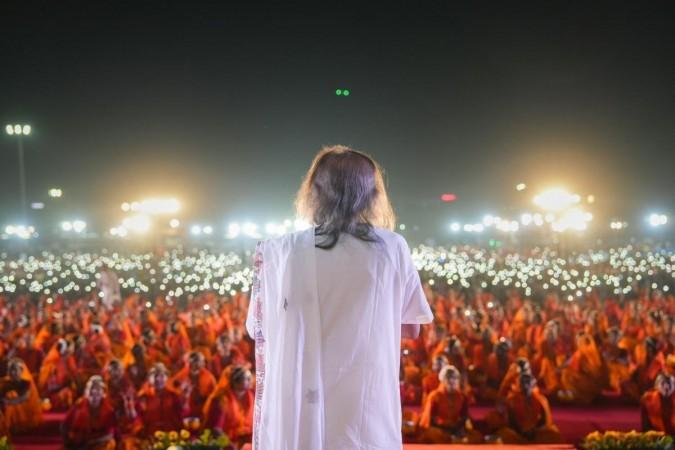
This World Meditation Day, on 21 December, join the world's largest meditation event with the global humanitarian and spiritual master, Gurudev Sri Sri Ravi Shankar, on Gurudev's Official YouTube Channel.
[Gurudev Sri Sri Ravi Shankar is a globally revered spiritual leader and humanitarian. He is the founder of the Art of Living Foundation, one of the world's largest volunteer-driven NGOs, working to uplift communities through stress relief, social transformation, and spiritual wisdom. Recognized for his efforts in peacebuilding, mental health awareness, and interfaith dialogue, Gurudev's initiatives have touched over 500 million lives across 180 countries. His mission blends ancient yogic practices with contemporary relevance, empowering individuals to live with clarity, compassion, and confidence.]