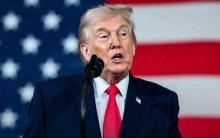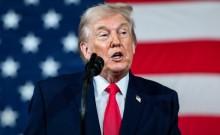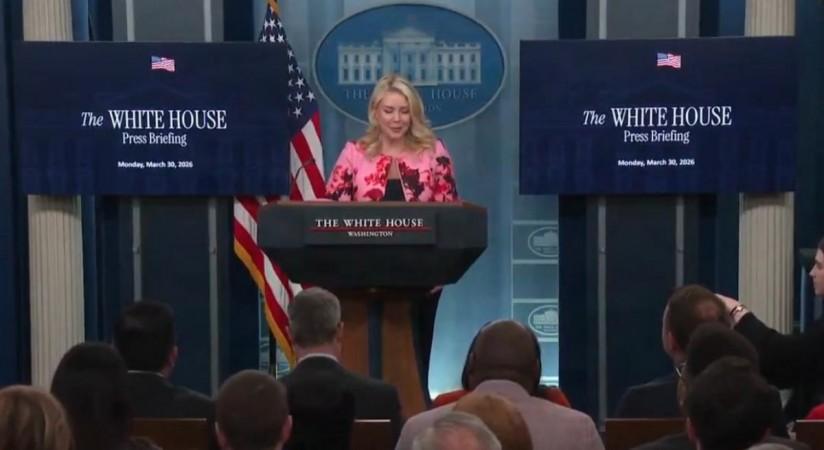
The administration of Donald Trump on Monday signalled that Arab nations could be asked to help share the financial burden of the ongoing military campaign against Iran, even as US forces continue large-scale operations in the region.
White House Press Secretary Karoline Leavitt said the idea of Gulf partners contributing to war costs was under consideration, echoing similar arrangements during earlier US-led conflicts in the Middle East.
"I think it's something the President would be quite interested in calling them to do," she said, referring to countries such as Saudi Arabia, Kuwait, and the United Arab Emirates. "I won't get ahead of him on that, but certainly it's an idea that I know that he has."
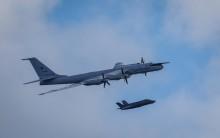
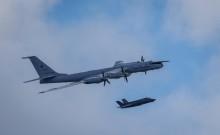
The comments come as the United States presses ahead with its military campaign, which the White House claims has significantly weakened Tehran's military capabilities. According to Leavitt, more than 11,000 targets have been struck, while Iran's missile and drone attacks have dropped by roughly 90 per cent. She added that over 150 Iranian naval vessels have been destroyed, leaving the navy "combat ineffective," and nearly 70 per cent of its missile, drone, and naval production infrastructure has been damaged or eliminated.
At the same time, Washington is continuing diplomatic efforts with Tehran, describing the current moment as a "once-in-a-generation opportunity" for Iran to abandon its nuclear ambitions. Leavitt said that while public rhetoric remains tense, private discussions appear more constructive. "What is said publicly is much different than what's being communicated to us privately," she noted.
The White House also indicated that oil traffic through the Strait of Hormuz—a critical global energy route—could increase in the coming days, with around 20 tankers expected to pass through. However, it made clear that the US does not support any move by Iran to impose tolls or restrictions on ships using the strait.
Officials stressed that while back-channel communications are ongoing, the US will ultimately judge Iran by its actions, not its private assurances. As part of a diplomatic opening, President Trump has ordered a 10-day pause on strikes targeting Iranian energy infrastructure.
The question of financing comes amid rising costs tied to sustained military operations and increased troop deployments. During the Gulf War, a significant portion of US military expenses was offset by financial contributions from regional allies such as Saudi Arabia and Kuwait—an approach the administration now appears to be considering once again.
(With inputs from IANS)