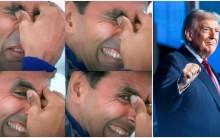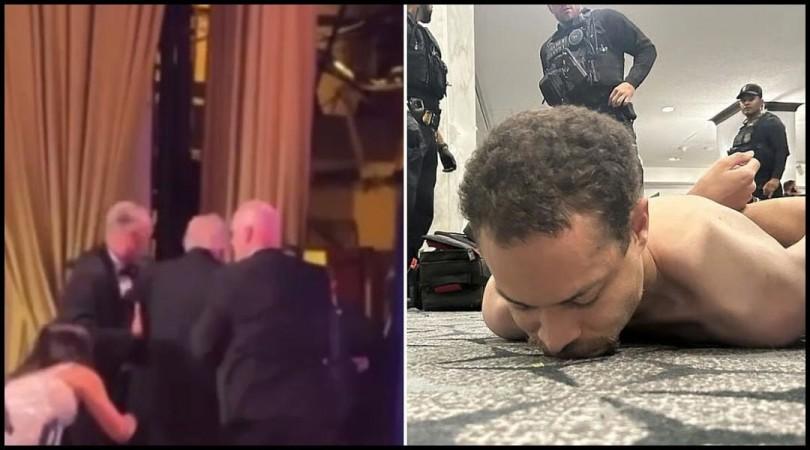
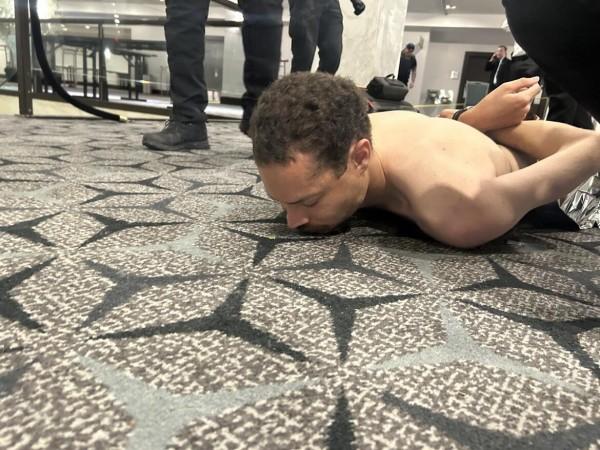
The shooting that unfolded during the White House Correspondents' Dinner at the Washington Hilton on April 25 sent shockwaves through the leadership of the United States and ordinary citizens alike. A 31-year-old suspect, identified as Cole Tomas Allen of Torrance, California, has been taken into custody. Videos of the shocking incident have gone viral on the internet.
Although no one was seriously injured and everyone was safely evacuated from the venue by Secret Service agents and other security personnel, the incident has drawn attention to one of the most important protocols in the US government, the designated survivor protocol.
This is the moment we realized what was happening and got down on the stage. Seconds before, all we could see was a throng of law enforcement barreling toward us from the doors at the back of the room.
— Jacqui Heinrich (@JacquiHeinrich) April 26, 2026
Secret agents swept VP Vance, who was seated next to me, into the back. I… pic.twitter.com/ZaxFeZu5p0
In the United States, a "designated survivor" is a Cabinet member in the presidential line of succession who is chosen to skip a function that brings together the federal government in one place, such as the State of the Union, inaugurations, or a president's joint address to Congress. However, this protocol does not apply in the same formal way to events like the White House Correspondents' Dinner.
? JUST IN: New video shows Secret Service JUMPING on President Trump following shots fired at the White House Correspondents Dinner
— Nick Sortor (@nicksortor) April 26, 2026
They then huddled 47 and got him out safely. pic.twitter.com/5ock4kigdq
The idea is simple. If a catastrophic attack were to eliminate the President and others in the line of succession, this individual could step in to ensure continuity of government. The designated survivor is kept in a secure, undisclosed location away from the event so that the entire government is not wiped out.
According to Time Magazine, the US Constitution does not require a designated survivor or explicitly mention the process, but the practice is believed to have begun during the Cold War, when fears of a nuclear attack by the Soviet Union prompted the government to adopt precautionary measures.
There is no fixed rule governing how the designated survivor is chosen. Typically, the President of the United States or the President's Chief of Staff makes the selection. One key requirement is that the individual must be eligible under the US Constitution to serve as President, meaning they must be a natural-born American citizen and at least 35 years of age.


![Apple Watch Series 12, Ultra 4 launched in India: Price starts at Rs 56,900 [Details]](https://data1.ibtimes.co.in/en/full/837338/apple-watch-series-12-ultra-4-launched-india-price-starts-rs-56900-details.jpg?w=220&h=138)