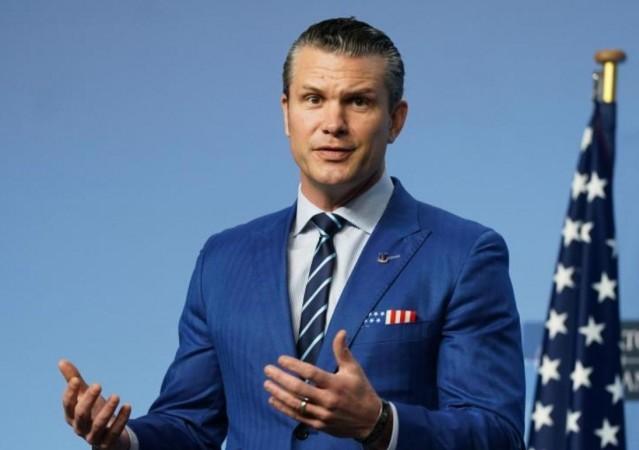
US Secretary of War Pete Hegseth issued a stark warning to Iran on Wednesday, saying Washington is prepared to continue military strikes until Tehran agrees to President Donald Trump's nuclear terms.
Speaking at US Central Command (CENTCOM) headquarters in Florida, Hegseth said Iran still has an opportunity to reach a diplomatic agreement but warned that military action would intensify if negotiations remain stalled.
"President Trump is a deal maker, but if we need to negotiate with bombs, we'll negotiate with bombs. And we're very good at it. Nobody is better in the world," Hegseth said.
The Pentagon chief accused Iran of repeatedly delaying talks despite what he described as a fully developed diplomatic path offered by the Trump administration. He insisted that the ongoing military pressure campaign is intended to strengthen Washington's negotiating position rather than replace diplomacy.
Hegseth also unveiled new details of what he called "Project Freedom," a largely undisclosed operation aimed at safeguarding commercial shipping through the Strait of Hormuz amid rising tensions in the Gulf.
According to Hegseth, more than 100 million barrels of oil have been transported through the strategic waterway under US protection in recent weeks. He claimed the operation has ensured uninterrupted maritime traffic despite Iranian threats and attempts to disrupt shipping.
"Ultimately, we've been protecting commercial shipping going through the Strait of Hormuz. More than 100 million barrels have moved through under American protection in a way that Iran can't stop," he said.
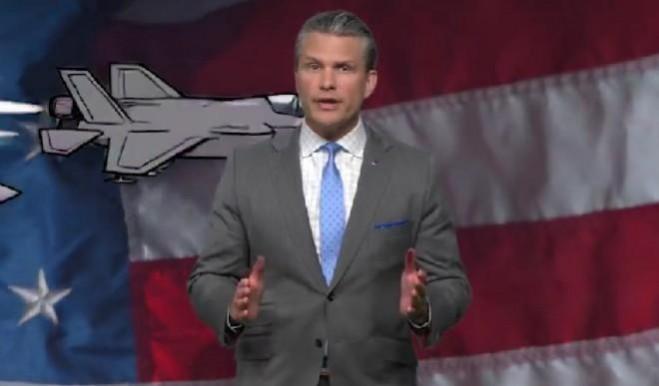
The secretary further argued that US military operations and maritime enforcement measures have significantly weakened Iran's military capabilities, including its navy, air force, air defences and regional power projection.
CENTCOM separately confirmed that US forces recently disabled another tanker allegedly involved in transporting Iranian oil after its crew failed to comply with instructions while transiting the Gulf of Oman. According to the US military, eight non-compliant vessels have been disabled and more than 130 ships redirected since the maritime blockade began in April.
Highlighting Washington's dominance in the region, Hegseth claimed that the United States now effectively controls the Strait of Hormuz.
"If our blockade is ironclad, and we are able to move commercial shipping in and out of the Strait of Hormuz, who controls the Strait of Hormuz? The United States of America controls the Strait of Hormuz," he said.
The Trump administration has made preventing Iran from obtaining a nuclear weapon a central objective of its Middle East strategy. While Washington and Tehran have held intermittent negotiations for months, talks have repeatedly stalled over Iran's nuclear programme and the issue of sanctions relief.
Hegseth signalled that further military operations could be imminent, while reiterating that Iran still has a chance to avoid escalation by reaching an agreement with the United States.