President Donald Trump on Monday said negotiations with Iran could lead to long-term stability in the Middle East, a region vital to global energy supplies and home to millions of expatriates.
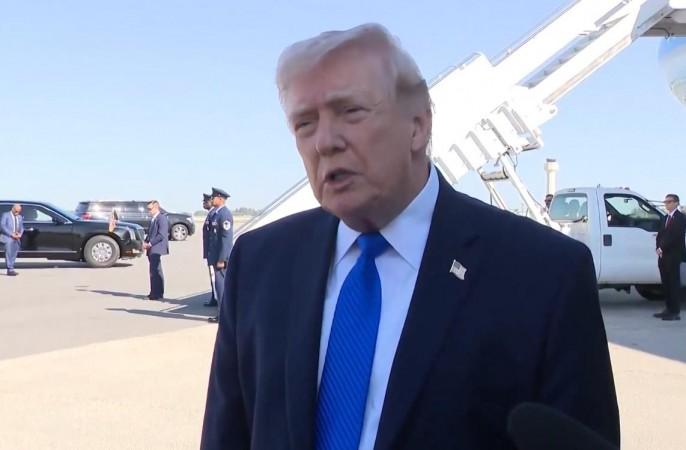
Speaking to reporters during a tarmac exchange in Miami, Florida, Trump said the United States and Iran have held "very, very strong talks" and are close to a possible agreement. He noted that discussions have covered "almost all points of agreement" and could soon move toward a deal.
"They very much want to make a deal. We'd like to make a deal too," Trump said, adding that both sides are working within a "five-day period" to assess progress.
At the same time, he warned that failure could lead to continued military action. "If it goes well, we're going to end up settling this. Otherwise, we'll just keep bombing our little hearts out," he told reporters.
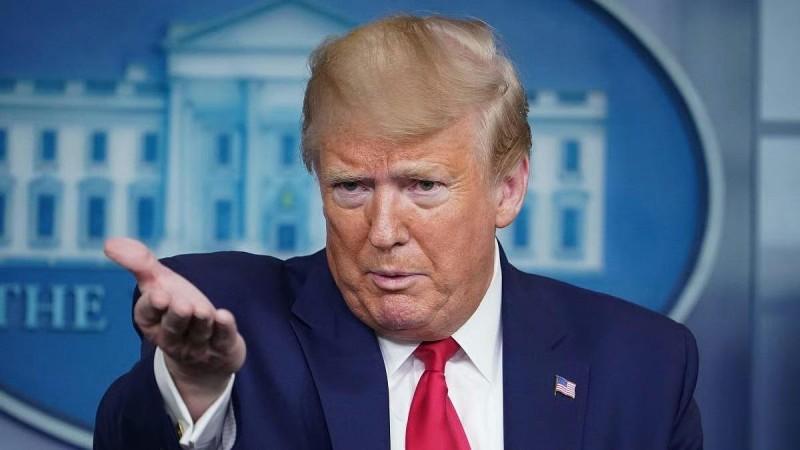
In an exchange with journalists travelling with him, Trump reiterated that Iran "will never have a nuclear weapon." He also stressed a "no enrichment" stance and broader regional peace goals. "We want to see peace in the Middle East," he said, adding that a deal would be "great for Israel" and beneficial for countries such as Saudi Arabia, the United Arab Emirates, Qatar, Kuwait and Bahrain.
He suggested that Iran had initiated the latest round of engagement. "They called. I didn't call. They want to make a deal," Trump said, referring to a planned strike on Iranian infrastructure that was not carried out. "Why would they want that?" he added.
Trump also indicated that the United States could take control of Iran's enriched uranium under any agreement. "If we have a deal with them, we're going down, and we'll take it ourselves," he said.
Describing the situation inside Iran, Trump said multiple leadership groups had been eliminated in earlier phases of the conflict. "We have numerous leadership groups. They've all been killed," he said, adding that the remaining figures are "very representative of the country."
He acknowledged uncertainty around the outcome. "I'm guaranteeing nothing," Trump said. "All I'm saying is we are in the throes of a real possibility of making the deal."
On oil markets, Trump said a deal could have an immediate global impact. "The price of oil will drop like a rock as soon as a deal is done," he said.
Trump also addressed domestic issues, including the deployment of Immigration and Customs Enforcement (ICE) agents at U.S. airports. He said he had asked agents not to wear masks in that setting. "I didn't think it was an appropriate look for an airport," he said, while defending ICE's broader enforcement role.
He blamed Democrats for the ongoing federal shutdown and immigration policies. "This is all caused by the Democrats," he said, while praising ICE as "a very high-level group of people" doing "a good job."
On the military front, Trump defended earlier strikes on Iran's nuclear facilities, saying they had significantly set back its programme. "If we didn't hit them... they would have had a nuclear weapon within two weeks to a month," he said.
For countries like India, developments in the Gulf carry direct implications for energy security and the safety of large expatriate populations, making the outcome of the talks closely watched.
Separately, Iran has refuted claims about Tehran receiving $2 million from vessels transiting the Strait of Hormuz, terming such reports "unfounded."
In a post on X, the Iran Embassy in India said: "In response to certain claims regarding the alleged receipt of a sum of 2 million dollars by the Islamic Republic of Iran from vessels transiting the Strait of Hormuz, it is emphasised that such claims are unfounded. These statements merely reflect personal views and do not represent the official position of the Islamic Republic of Iran."
In another development, Donald Trump said on Truth Social that he has instructed the Department of War to postpone any and all military strikes against Iranian power plants and energy infrastructure for a period of five days, subject to the success of ongoing meetings and discussions.
Meanwhile, the United Arab Emirates said its air defence systems successfully intercepted seven ballistic missiles and 16 drones launched by Iran, according to the defence ministry.
The UAE added that since the start of the US-Israel campaign against Iran on February 28, it has faced 352 ballistic missiles, 15 cruise missiles, and 1,789 drones, noting that the frequency of daily attacks is gradually declining.