
Middle East, is in turmoil, raising alarm bells for investors in India. The United States and Israel have jointly conducted strikes on Iran, resulting in the death of Iran's Supreme Leader Ayatollah Ali Khamenei, who had ruled the country for more than three decades.
In retaliation, Iran launched missiles targeting Israel and several Gulf nations, including Saudi Arabia, Bahrain, Qatar, Kuwait, and the United Arab Emirates, which host U.S. military bases, according to media reports.
The escalating conflict has sparked concerns that the US-Israel offensive could develop into a broader regional war. Heightening fears is news that the Strait of Hormuz, a critical maritime chokepoint for global oil supply, may have been closed.
Oil markets reacted sharply to the crisis. Brent Crude and WTI Crude rose roughly 3%, trading near $73 and $67 per barrel, respectively. Experts warn that if the conflict continues, crude oil prices could soar past $100 a barrel—a severe risk for import-dependent economies like India.
"Escalating tensions in the Middle East pose material risks to global energy stability," said Sugandha Sachdeva, founder of SS Wealth. "Any disruption of the Strait of Hormuz, through which nearly 20% of global oil supply passes, could sharply spike crude prices, increase freight costs, and reignite inflation globally."
On Sunday, Brent crude surged 10% to nearly $80 per barrel over-the-counter, while analysts predict that prices could reach $100 if the US-Israel strikes on Iran intensify. Futures trading was closed over the weekend.
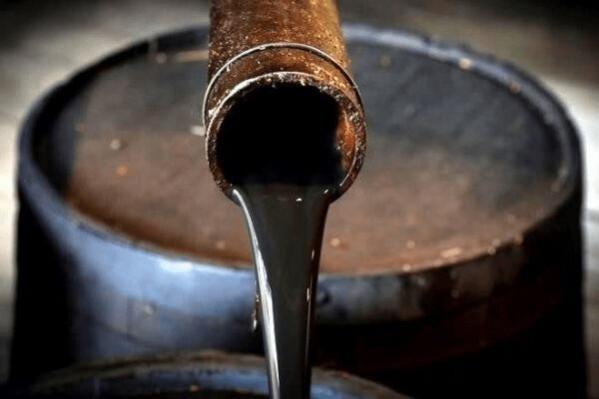
Ajay Parmar, director of energy and refining at ICIS, noted, "While military attacks push oil prices higher, the key factor is the closure of the Strait of Hormuz." Trade sources reported that tanker operators, oil majors, and trading houses have suspended crude, fuel, and LNG shipments via the strait after Tehran warned vessels to avoid the waterway.
Sachdeva added that such disruptions would complicate central bank policy, forcing a difficult balance between controlling inflation and supporting growth amid global trade uncertainty.
Implications for the Indian Economy
India is the world's third-largest oil importer and consumer, sourcing around 85–90% of its crude from abroad. According to the Petroleum Planning and Analysis Cell (PPAC), India's crude oil imports were valued at ₹11,60,618 crore in FY25, and totaled ₹8,80,149 crore by January FY26.
Economists estimate that every $10-per-barrel rise in crude prices could increase India's import bill by roughly ₹10,000–15,000 crore annually. Prolonged elevated prices can widen the current account deficit, strain fiscal targets, weaken the rupee, raise inflation, and trigger foreign capital outflows.
India imports nearly half of its oil from Gulf nations, making it highly vulnerable. The closure of the Strait of Hormuz, responsible for 20% of global oil shipments, could create catastrophic supply disruptions. Fuel prices, as well as the cost of goods reliant on crude—ranging from plastics, polyester, syringes, and cosmetics to asphalt—could rise sharply.
Amid geopolitical uncertainty, investors are shifting from equities to gold and silver, seen as traditional safe-haven assets. Analysts predict that gold could rise 5% and silver 7–8% on MCX trading Monday, driven by the US-Iran-Israel tensions. As stock markets wobble, these metals provide stability when war erodes confidence in paper assets.