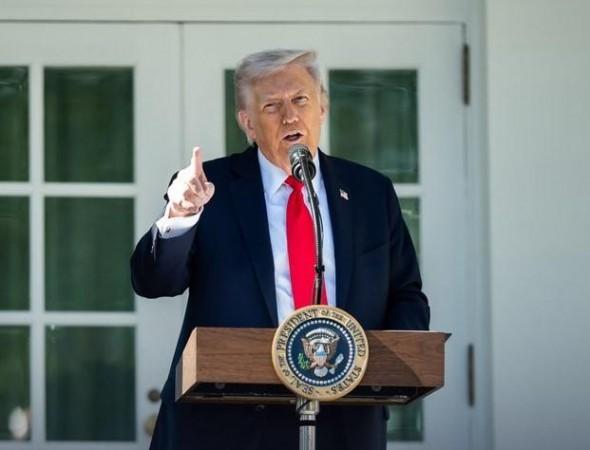
The Trump administration on Wednesday announced two new trade investigations targeting excess industrial capacity in 16 major trading partners and the use of forced labor. The move aims to rebuild tariff pressure after the U.S. Supreme Court struck down much of Trump's global tariff program last month.
U.S. Trade Representative Jamieson Greer said the Section 301 unfair trade practices investigation could result in new tariffs against China, the European Union, India, Japan, South Korea, and Mexico by this summer.
Other countries under the excess capacity probe include Taiwan, Vietnam, Thailand, Malaysia, Cambodia, Singapore, Indonesia, Bangladesh, Switzerland, and Norway. Canada, the second-largest U.S. trading partner, was not included.
"These investigations will focus on economies showing structural excess capacity in various manufacturing sectors, indicated by persistent trade surpluses or underutilized production capacity," Greer said. The probe cites the automotive sector in China and Japan, noting that many companies are unprofitable or struggling to meet operational interest payments. Despite China's electric vehicle production exceeding national demand, its top EV maker, BYD, is expanding overseas with factories in Uzbekistan, Thailand, Brazil, Hungary, and Turkey, and plans to grow in Europe, where existing plants are operating at only 55% capacity.
The probe also cites EU countries such as Germany and Ireland for large U.S. trade surpluses. Singapore shows excess global capacity in semiconductors despite a trade deficit with the U.S., and Norway shows excess capacity in fuels and seafood exports.
Greer announced that a second Section 301 probe would begin Thursday to ban U.S. imports of goods produced with forced labor, covering more than 60 countries. The U.S. has already restricted solar panels and other goods from China's Xinjiang region under the Uyghur Forced Labor Protection Act, and this investigation could expand such actions globally.
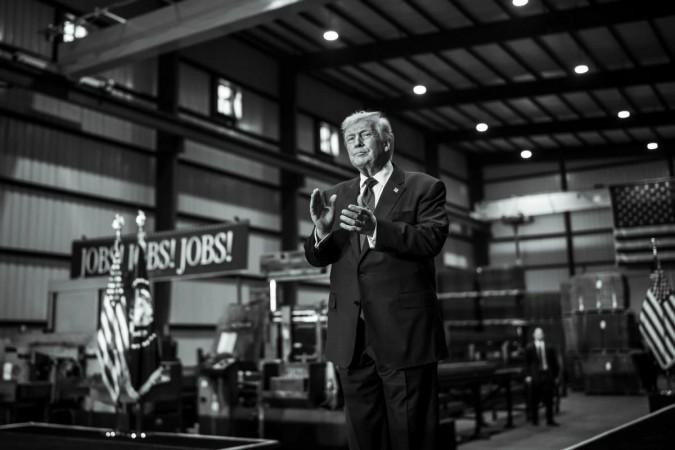
The administration hopes to conclude the Section 301 investigations, including proposed remedies, before temporary tariffs imposed in late February expire in July. Following the Supreme Court ruling, Trump had implemented a 10% tariff for 150 days under Section 122 of the Trade Act of 1974.
Public comments for the excess capacity probe will be accepted through April 15, with a public hearing scheduled for around May 5.
Greer emphasized that the probes allow the administration to restore a credible tariff threat to encourage trading partners to comply with agreements and implement trade deals reduced under the International Emergency Economic Powers Act.
"These investigations should not surprise our trading partners," Greer said. "Trump is determined to pursue tariffs, address unfair trading practices, reduce the trade deficit, and protect U.S. manufacturing. We have the tools to do it."
The probes coincide with meetings this week in Paris between U.S. officials, led by Treasury Secretary Scott Bessent, and Chinese counterparts, preparing the stage for Trump to meet Chinese President Xi Jinping in Beijing at the end of March.
Trump's previous tariffs on Chinese goods were reduced by 10 percentage points following the Supreme Court decision and subsequent temporary tariffs, limiting U.S. leverage on China trade and export controls. During his first term, Trump successfully used Section 301 to justify tariffs on about 25% of Chinese imports, a law widely regarded as legally robust.
The excess capacity probe targets concerns raised by multiple U.S. administrations, including state-supported manufacturing that floods global markets with cheap goods. Greer said the investigation will examine factors such as large current account surpluses, government subsidies, suppressed wages, state-owned enterprise activity, lax environmental and labor standards, subsidized lending, and currency practices.