


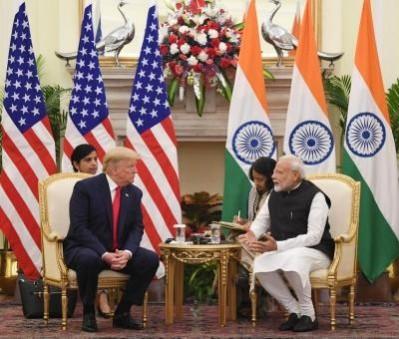
In a significant move amid the ongoing Iran-Israel conflict, the Trump administration has authorised a 30-day waiver allowing India to import Russian crude oil.
"President Trump's energy agenda has led to oil and gas production reaching record levels. To keep oil flowing into the global market, the Treasury Department is issuing a temporary 30-day waiver to allow Indian refiners to purchase Russian oil," said US Treasury Secretary Scott Bessent.
He added that the measure is deliberately short-term and will not provide significant financial benefit to the Russian government, as it only authorises transactions involving oil already stranded at sea. "India is an essential partner of the United States, and we fully anticipate that New Delhi will ramp up purchases of US oil. This stop-gap measure will alleviate pressure caused by Iran's attempts to take global energy hostage," he said.
The waiver permits transactions tied to Russian crude or petroleum products that were already loaded onto vessels before early March. The shipments must be delivered to Indian ports and purchased by companies incorporated under Indian law. Under the licence issued by the Treasury Department's Office of Foreign Assets Control (OFAC) and signed on March 5, transactions necessary for the sale, delivery, or offloading of Russian crude loaded before March 5 are authorised until April 4.
The licence allows activities required to complete these shipments, including services linked to docking and anchoring, crew safety, emergency repairs, vessel management, crewing, bunkering, piloting, insurance, and other operational support. Officials emphasised that the licence is narrow, temporary, and does not represent a broader easing of sanctions on Russia. It also does not permit dealings involving Iran or Iranian-origin goods, which remain prohibited under existing US regulations.

The US and its Western allies imposed sweeping sanctions on Russia following Moscow's invasion of Ukraine in 2022, targeting major sectors of the Russian economy, including finance, defence, and energy.
The announcement had an immediate effect on global oil markets. After surging over 15 per cent since last week due to the US-Israel and Iran conflict, oil prices dropped early Friday following the waiver news. The April contract for Brent crude on the Intercontinental Exchange was trading at $84.21 per barrel, down 1.52 per cent from its previous close, while West Texas Intermediate fell 2.10 per cent to $79.31 per barrel.
The 30-day waiver eases tensions in the global oil supply chain amid disruptions around the Strait of Hormuz. It provides Indian refiners additional flexibility to source stranded Russian crude. The US had also indicated it could deploy naval escorts for oil tankers in the Strait of Hormuz if needed, as the conflict with Iran raised concerns about global energy supplies and shipping security in this critical maritime corridor.
India imports nearly 90 per cent of its oil requirement. According to global ship tracking firm Kpler, in February, Russia supplied an average of 1.04 million barrels per day (bpd) to India, followed by 1 million bpd from Saudi Arabia and 980,000 bpd from Iraq. India consumes about 5.5 million barrels of crude daily, of which 1.5–2 million barrels pass through the Strait of Hormuz.
(With inputs from IANS)

![Angry Jaya Bachchan pushes journalist's mic away during INDIA bloc protest [watch]](https://data1.ibtimes.co.in/en/full/839178/angry-jaya-bachchan-pushes-journalists-mic-away-during-india-bloc-protest-watch.jpg?w=220&h=135&l=50&t=40 "Angry Jaya Bachchan pushes journalist's mic away during INDIA bloc protest [watch]")








![Angry Jaya Bachchan pushes journalist's mic away during INDIA bloc protest [watch]](https://data1.ibtimes.co.in/en/full/839178/angry-jaya-bachchan-pushes-journalists-mic-away-during-india-bloc-protest-watch.jpg?w=220&h=138)



![Angry Jaya Bachchan pushes journalist's mic away during INDIA bloc protest [watch]](https://data1.ibtimes.co.in/en/full/839178/angry-jaya-bachchan-pushes-journalists-mic-away-during-india-bloc-protest-watch.jpg?w=220&h=135)