The resolution of the legal matters involving the Adani Group has removed a major overhang on the expanding India-US economic partnership, with industry leaders and American lawmakers describing the developments as a boost for bilateral investment ties.
The US-India Strategic Partnership Forum (USISPF) on Monday said the closure of investigations involving Gautam Adani and Adani Enterprises could pave the way for fresh Indian investments in the United States.
"The US Department of Justice's resolution in the case involving Adani Enterprise brings closure to the ongoing legal matter, which has been a distraction to the otherwise strong US-India economic partnership," said Dr Mukesh Aghi, President and CEO of USISPF.
His remarks came after the US Department of the Treasury's Office of Foreign Assets Control (OFAC) announced a $275 million settlement with Adani Enterprises over alleged violations linked to Iran sanctions.
Aghi said Adani Group's proposed $10 billion investment in the United States reflected growing confidence among Indian companies in the American economy. He also referred to recent remarks by US Ambassador Sergio Gor that Indian firms are planning investments worth more than $20.5 billion across multiple sectors in the US.
"At USISPF, we firmly believe these investments underpin Indian companies' desire to be strong partners in the United States," Aghi said, adding that such investments would strengthen infrastructure, create jobs and deepen long-term economic cooperation between the two countries.
In another major development, the US Department of Justice permanently dropped all criminal charges against Gautam Adani and his nephew Sagar Adani in an alleged securities and wire fraud case. In a filing before the Eastern District of New York, the DOJ said it had decided not to devote further prosecutorial resources to the matter, following which the court dismissed the indictment "with prejudice".
Lawyers representing Gautam and Sagar Adani argued there was no credible evidence supporting the alleged bribery scheme and contended that the US Securities and Exchange Commission lacked jurisdiction in the case. The Adani Group had consistently denied all allegations and maintained that none of its executives or entities had been charged under the US Foreign Corrupt Practices Act.
The US SEC had earlier settled civil allegations against the group, while OFAC separately announced that Adani Enterprises agreed to pay $275 million to settle potential civil liability related to "apparent violations" of Iran sanctions involving LPG imports between 2023 and 2025.
According to OFAC, the company purchased LPG shipments through a Dubai-based trader that allegedly sourced the fuel from Iran while presenting it as Omani or Iraqi gas. The agency said Adani Enterprises caused US financial institutions to process 32 dollar-denominated transactions worth around $192 million connected to the shipments.
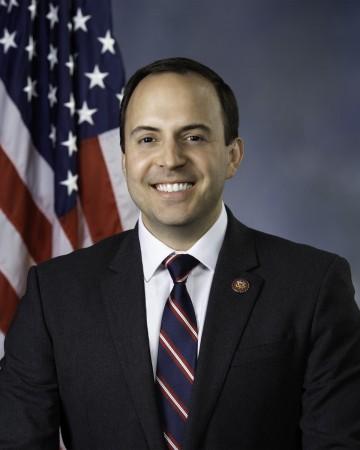
Reacting to the settlement, Republican Congressman Lance Gooden called the outcome "a very positive step" for India-US relations and criticised the previous administration of former President Joe Biden for what he described as a politically motivated prosecution.
"We're very pleased with the outcome. It was unfortunate that Mr Adani had to go through this at all," Gooden said in an interview with IANS.
Gooden said he had earlier raised concerns about the prosecution with both the Biden Justice Department and Attorney General Pamela Bondi after being approached by Indian-American businessman Arun Agarwal, Chair of the Texas Economic Development Corporation board.
The Texas congressman argued the case risked discouraging Indian investment in the United States and said the Adani Group's future investments could particularly benefit Texas across energy and infrastructure sectors.
"I believed from the beginning that the right thing was to encourage Mr Adani to invest in America and continue with the good work his company and his family have been doing across India," Gooden said.
Calling India one of America's most reliable partners in the Asia-Pacific region, Gooden stressed that stronger economic cooperation between the two democracies would benefit both countries in the long run.