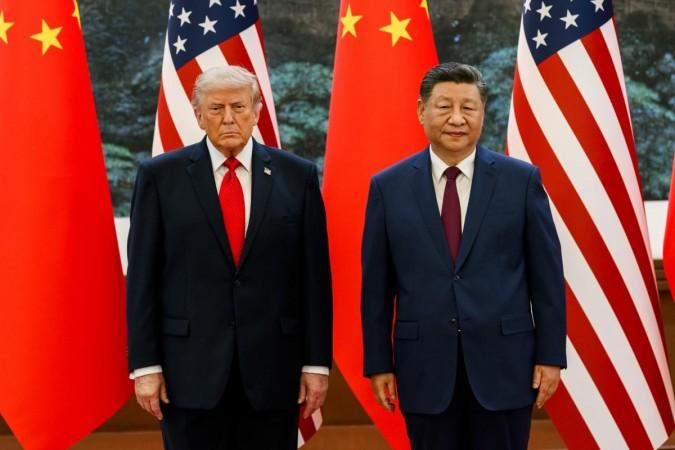
The United States and China on Thursday agreed that Iran can never possess a nuclear weapon and that the crucial Strait of Hormuz must remain open, a White House official said after US President Donald Trump and Chinese President Xi Jinping held a high-stakes summit in Beijing.
The two leaders met at the Great Hall of the People, where they discussed several key global issues, including trade, the ongoing US-Israel conflict with Iran, Taiwan and maritime security in the Gulf region.
The meeting came amid stalled peace negotiations between Washington and Tehran aimed at ending the months-long conflict and restoring safe passage through the Strait of Hormuz, one of the world's most important shipping routes for oil, LNG, fertilisers and other commodities.
According to a White House official, both countries agreed that the Strait of Hormuz must remain open to ensure the free flow of energy supplies.
"President Xi also made clear China's opposition to the militarisation of the strait and any effort to charge a toll for its use," the official said, describing the Trump-Xi talks as "good."
The official further stated that both sides agreed Iran should never be allowed to develop nuclear weapons. Xi also reportedly expressed interest in purchasing more American oil in the future to reduce China's dependence on the Strait of Hormuz.
The Middle East conflict remained a major focus of the summit as Trump seeks to end the war and stabilise navigation routes ahead of the upcoming US midterm elections.
China has also been closely monitoring the crisis, as any disruption in the Strait of Hormuz could severely impact its energy supplies and economy. While Beijing has built large oil reserves and expanded alternative energy sources, continued instability in the region poses long-term economic risks.
Apart from geopolitical issues, the two sides also discussed strengthening economic cooperation, including expanding market access for American businesses in China and increasing Chinese investment in US industries.
The leaders also discussed efforts to curb the flow of fentanyl precursors into the United States and increasing Chinese purchases of American agricultural products.
During the summit, both Trump and Xi signalled their intent to maintain stable bilateral relations, although Xi reiterated China's strong position on Taiwan.
"It's an honour to be with you. It's an honour to be your friend, and the relationship between China and the USA is going to be better than ever before," Trump said during his opening remarks.
Xi, meanwhile, stressed that a stable US-China relationship was important for global stability.
"China and the United States both stand to gain from cooperation and lose from confrontation," Xi said.
He added, "We should be partners, not rivals. We should help each other succeed and prosper together."
Xi also warned that mishandling the Taiwan issue could lead to clashes or even conflict between the two nations.
Before the summit talks, Trump received a ceremonial welcome in Beijing featuring military honours, national anthems and greetings from children waving American and Chinese flags.
Following the discussions, the leaders visited the Temple of Heaven and later attended a state banquet, where Trump invited Xi and Chinese First Lady Peng Liyuan to visit the White House in September.
Trump described the talks as "positive and productive," while Xi said the goals of "making America great again" and the "great rejuvenation" of China could coexist peacefully.
The summit was attended by several top American business leaders, including Elon Musk, Jensen Huang, Tim Cook and Goldman Sachs CEO David Solomon.
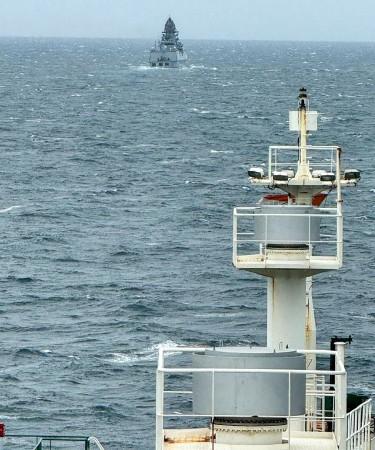
Meanwhile, amid the ongoing tensions involving Iran and the US, two India-bound LPG vessels carrying cooking fuel from the Persian Gulf successfully transited the Strait of Hormuz.
According to reports, the LPG carrier Symi emerged in the Gulf of Oman on Thursday after temporarily switching off its transponder during transit. Another vessel, NV Sunshine, also reportedly went dark shortly after crossing the strategic waterway.
The development signals the gradual resumption of energy shipments through one of the world's most sensitive maritime routes.
NV Sunshine, carrying LPG from the UAE's Ruwais refinery, was last tracked heading towards Mangalore in India. Symi, meanwhile, was transporting fuel cargo from Qatar's Ras Laffan port to Kandla in Gujarat.
Earlier this month, Trump had said ceasefire efforts with Iran were "on life support" and described Tehran's response to a US-backed peace proposal as "totally unacceptable."
Iran reportedly conveyed its response to the latest American peace initiative through Pakistan, which has been acting as a mediator between Tehran and Washington.
The Strait of Hormuz remains one of the world's most critical energy chokepoints, handling a major share of global crude oil, LNG and fuel shipments, including supplies destined for India.