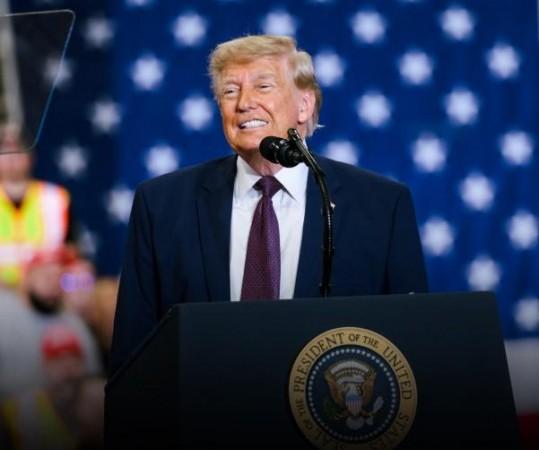
In a significant relief for Indian professionals and US employers, a federal appeals court has refused to revive the Trump administration's controversial $100,000 fee on new H-1B visas, allowing a lower court's order striking down the policy to remain in effect while the legal battle continues.
The decision came from the 1st US Circuit Court of Appeals in Boston, which ruled that the Trump administration had failed to show it was likely to succeed in overturning the earlier judgment. In June, US District Judge Leo Sorokin held that the fee amounted to an unlawful tax that only Congress—not the President—has the authority to impose.
The $100,000 fee was introduced through a presidential proclamation in September 2025. It applied to first-time H-1B applicants outside the United States, dramatically increasing the cost of sponsoring skilled foreign workers. Before the policy, employers typically paid between $2,000 and $5,000 in visa-related fees. The administration argued that the steep increase would discourage companies from replacing American workers with lower-paid foreign talent.
The H-1B programme is widely used by technology companies, universities, hospitals and research institutions to hire highly skilled foreign professionals. Indians account for more than 70 per cent of approved H-1B petitions each year, making the court's ruling particularly significant for Indian workers and IT firms.
Legal experts say the ruling removes a major financial hurdle for employers looking to recruit talent from overseas. However, uncertainty remains as the Trump administration continues to challenge the decision, meaning the issue could eventually reach a higher court.
While the judgment is expected to ease concerns over the cost of hiring foreign professionals, immigration experts note that H-1B applicants still face broader challenges, including stricter immigration policies, longer processing times and a competitive job market. Even though the fee has been blocked, many companies had already become more cautious about international hiring after the policy was announced.