
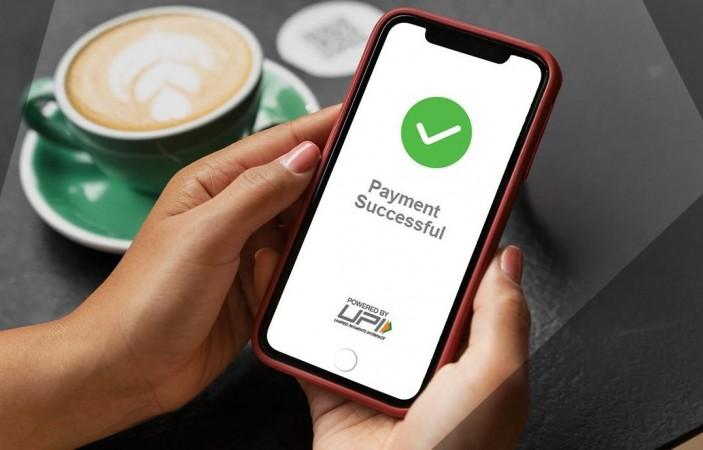
The numbers tell a story that would have seemed fantastical a decade ago. In July 2026 alone, India's Unified Payments Interface processed 2,366 crore transactions worth 29.87 lakh crore rupees roughly 358 billion dollars marking the highest monthly figures in the platform's ten-year history. Annual transaction volume has surged from 1.78 crore in FY2016-17 to 24,162 crore in FY2025-26, a 13,000-fold increase that has no parallel in global fintech. Now, with Uzbekistan becoming the eleventh country to accept UPI payments, the question that policymakers and industry executives must confront is whether India's domestic payments miracle can be replicated abroad, and what strategic advantages this expansion confers on New Delhi.
The international footprint, while impressive in its pace, remains modest in absolute terms. UPI is currently operational in eleven countries: Bhutan, Nepal, Singapore, the United Arab Emirates, France, Sri Lanka, Mauritius, Qatar, Cambodia, Greece, and the Maldives, with Uzbekistan joining the list on August 30. Cross-border UPI transactions reached approximately 14.86 lakh in FY2026, double the 7.55 lakh recorded in FY2025, a 97 percent year-on-year increase that sounds substantial until one considers that it represents less than 0.01 percent of UPI's total transaction volume. The Ministry of External Affairs has indicated that UPI rollout in Uzbekistan is expected within a year, though no specific launch date has been announced. For Indian fintech firms like Paytm, which already support international UPI transactions in other markets, Uzbekistan represents a first-mover opportunity in a largely untapped payments landscape, provided they can navigate local regulatory requirements and compete with entrenched Chinese alternatives like Alipay and WeChat Pay.
The adoption pattern across existing international markets reveals a clear hierarchy of success. Bhutan and Nepal, India's immediate neighbours with deep economic integration and significant cross-border labor flows, account for the bulk of international UPI usage. Singapore and the UAE, both home to large Indian diaspora populations and sophisticated financial infrastructure, have seen steady merchant acceptance growth, particularly in areas frequented by Indian tourists and business travelers. France represents a different model a strategic partnership focused on enabling UPI payments for Indian tourists at select merchants, more a diplomatic signal than a commercial play. Sri Lanka, Mauritius, and Qatar fall somewhere in between, with adoption driven by diaspora remittances and tourism rather than deep merchant integration.
The transaction value and volume data, while not broken out by country in official statistics, can be inferred from NPCI's broader reporting. Domestic UPI transactions in July 2026 averaged approximately 127 rupees per transaction, a figure that likely holds for international merchant payments in markets like Singapore and the UAE where use cases mirror domestic behavior small-value retail, food delivery, and transportation. Cross-border remittance corridors, such as the Greece-India link enabled via Eurobank in June 2026, operate on a different scale, with average transaction values likely in the thousands of rupees rather than hundreds. The 20 percent year-on-year growth in cross-border transaction value, compared to 22 percent growth in volume, suggests that international UPI is maturing along similar lines to its domestic counterpart: more transactions, slightly higher average values, and expanding use cases beyond person-to-person transfers into merchant payments and bill settlements.
What makes the Uzbekistan deal strategically significant is not the immediate transaction volume which will be negligible for the first year but the precedent it sets for UPI expansion into Central Asia, a region where China's Alipay and WeChat Pay have enjoyed near-monopoly status for over a decade. The commercial agreement between NPCI International Payments Limited and Uzbekistan's National Interbank Processing Centre enables Indian tourists, business travelers, and students to make merchant payments by scanning Uzbekistan's national interoperable QR code, UZQR. This is the same model deployed in Singapore, the UAE, and France, where local QR standards were integrated with UPI rather than requiring merchants to adopt India's proprietary QR codes. The technical elegance of this approach, interoperability without displacement, is also its strategic limitation. UPI becomes one payment option among many, dependent on merchant willingness to enable it and consumer awareness that it exists.
How can India outdo Chinese and other digital payment systems in this global race? The answer lies not in competing head-to-head with Alipay+ and WeChat Pay on their terms, but in leveraging UPI's distinctive architectural advantages. China's systems are closed-loop platforms controlled by Ant Financial and Tencent respectively, requiring merchants to integrate separately with each system and consumers to use specific apps. UPI, by contrast, is an open, interoperable network where any UPI-enabled app can scan any merchant QR code, a design that has driven 84 percent market share of India's digital payments and enabled 741 banks to participate on equal terms. This openness is UPI's competitive moat: it lowers barriers to entry for merchants, reduces dependency on any single provider, and creates network effects that closed systems cannot match. Where Alipay+ covers 50-plus countries and WeChat Pay operates in 60-plus, UPI's eleven-country footprint is smaller but growing faster in percentage terms, with cross-border transactions doubling year-on-year.
The strategic advantage India holds is that UPI is being exported not as a proprietary platform but as public digital infrastructure, a design choice that aligns with the preferences of developing nations wary of Chinese technological dominance. India has shared its UPI-based digital public infrastructure with 24 countries at no charge, turning a payments system into a tool of foreign policy. The returns are threefold: remittances flowing through Indian rails, trade facilitated by reduced payment friction, and strategic gains from command over digital architecture that becomes the basis for each new system being built. This is why command over such digital architecture becomes an instrument of strategic power in the long run a compounding advantage that grows as more countries adopt Indian designs.
The growth trajectory of UPI internationally will be determined by three factors that have received insufficient attention in the celebratory coverage of the Uzbekistan deal. First, the diaspora factor: NPCI has explicitly stated its strategy of targeting 15 to 20 markets over the next decade, with Japan, Malaysia, and Bahrain in talks. The logic is straightforward follow the 35-million-strong Indian diaspora, enable them to use familiar payment tools, and let merchant adoption follow consumer demand. This is the model that worked in Singapore and the UAE, where Indian tourists and expatriates created initial demand that merchants then responded to. Second, the regulatory alignment factor: UPI's expansion requires not just technical integration but regulatory approval from host country central banks, anti-money laundering compliance, and data localization arrangements that satisfy both Indian and foreign authorities. The Greece-India remittance corridor, for instance, required Eurobank to establish specific compliance frameworks that took months to negotiate. Third, the competitive factor: in markets where Alipay, WeChat Pay, or established card networks dominate, UPI must offer a compelling value proposition typically zero or near-zero merchant discount rates, instant settlement, and seamless integration with existing point-of-sale infrastructure.
Here lies the opportunity that Paytm represents an opportunity that, if seized with government backing, could advance Indian national interests, influence, and image far more effectively than any number of diplomatic communiqués. Paytm, through its parent One97 Communications, is already one of the largest UPI third-party app providers in India, with approximately 47 percent market share alongside PhonePe and Google Pay. The company has expressed interest in international expansion, and its experience in building India's largest payments ecosystem positions it uniquely to lead UPI's global rollout. If the Indian government were to provide strategic support through export credit guarantees, diplomatic backing in regulatory negotiations, and coordination with NPCI International Paytm could become the vehicle through which UPI achieves meaningful scale in priority markets.
The strategic logic is compelling. Paytm's brand recognition among the Indian diaspora is substantial; its technology stack is proven at scale; and its incentive to expand internationally aligns with India's foreign policy objectives. A government-backed Paytm international expansion push could target the 15 to 20 markets NPCI has identified, focusing initially on high-diaspora, high-remittance corridors like Saudi Arabia, Malaysia, and the United Kingdom. In each market, Paytm would work with local banks and payment processors to enable UPI interoperability, onboard merchants, and educate consumers the same playbook that made UPI dominant in India. The difference would be the scale of government support: diplomatic engagement to fast-track regulatory approvals, export credit agency backing to reduce financial risk, and coordination with Indian embassies to promote UPI adoption among the diaspora.
The returns on such an investment would be measured not just in transaction volumes but in strategic influence. Every merchant that accepts UPI via Paytm becomes a node in India's digital infrastructure network. Every remittance sent through UPI rails reinforces India's position as a payments innovator. Every country that adopts UPI standards becomes more deeply integrated with India's economic ecosystem, creating dependencies and relationships that endure beyond electoral cycles. This is digital infrastructure diplomacy in its most potent form: not the export of an app, but the export of an entire model of digital economic organization that positions India as a standard-setter rather than a standard-taker.
The advantage India holds in this expansion is not technological superiority QR-based payments are hardly proprietary but the scale of the domestic market that underpins the platform. With 741 banks live on UPI, 55.49 crore users onboarded, and 66 crore daily transactions, India has created a payments infrastructure that operates at a scale no other country has achieved. This scale confers two strategic advantages. First, it allows NPCI International to absorb the upfront costs of international expansion without immediate profitability pressure, a luxury that private payment networks cannot afford. Second, it creates a network effect: as more countries adopt UPI, the value proposition for additional countries increases, particularly for nations with significant tourism, trade, or diaspora links to existing UPI markets.
The Uzbekistan deal, viewed through this lens, is less about the immediate transaction volume and more about establishing a foothold in a region where India has historically had minimal financial infrastructure presence. The five Central Asian republics collectively account for under three billion dollars in annual trade with India, compared to China's seventy-billion-plus footprint. UPI cannot change this imbalance overnight, but it can create the digital rails upon which future trade and investment flows can be built. When an Indian pharmaceutical distributor in Tashkent can pay a supplier in Mumbai via UPI, when a tourist from Delhi can book a hotel in Samarkand without carrying cash or relying on credit cards, when a student from Uzbekistan can pay tuition fees to an Indian university instantly, the friction that has historically constrained India-Central Asia economic engagement begins to diminish.
What else can be done to accelerate this advantage? Three strategic priorities stand out. First, NPCI International should prioritize remittance corridors over merchant payments in the initial phase of expansion. The data shows that cross-border remittances are already the fastest-growing segment of international UPI usage, doubling year-on-year. Markets like the UAE, Qatar, and Saudi Arabia where millions of Indian workers send billions of dollars home annually represent far larger immediate opportunities than tourist-focused merchant payments. The UAE alone accounts for over 15 billion dollars in annual remittances to India; capturing even 10 percent of this flow through UPI would dwarf the transaction volumes from merchant payments in Uzbekistan. Second, the government should leverage UPI expansion as part of broader trade negotiations. When India negotiates preferential trade agreements or investment treaties, UPI interoperability should be included as a standard component, creating a linkage between trade policy and payments infrastructure. Third, NPCI should explore partnerships with existing regional payment networks rather than going it alone. The Association of Southeast Asian Nations' cross-border payment linkage initiative, for instance, offers a ready-made framework for UPI integration across six countries simultaneously, rather than the country-by-country approach that has characterized expansion thus far.
The ultimate test of UPI's international expansion will not be the number of countries on board eleven is already impressive but whether the platform can achieve meaningful transaction volumes that justify the investment. A presence in eleven countries that collectively account for less than 0.01 percent of UPI's total transactions is a diplomatic achievement, not a commercial one. The next phase must shift from signing agreements to driving adoption, from announcing partnerships to measuring transaction growth, from celebrating the eleventh country to asking why the first ten have not yet delivered transformative cross-border payment flows. The technology works. The regulatory frameworks are in place. The diaspora demand exists. What remains is the harder work of merchant onboarding, consumer education, and competitive positioning that will determine whether UPI becomes a genuine global payments platform or remains a domestic success story with international outposts. And at the center of this effort must be a recognition that companies like Paytm, backed by strategic government support, are not merely commercial entities but instruments of national power vehicles through which India's digital infrastructure diplomacy can achieve the scale and impact necessary to reshape the global payments landscape in India's favor.
[Major General Dr. Dilawar Singh, IAV, is a distinguished strategist having held senior positions in technology, defence, and corporate governance. He serves on global boards and advises on leadership, emerging technologies, and strategic affairs, with a focus on aligning India's interests in the evolving global technological order.]