The 81st United Nations General Assembly, meeting in New York from 22 to 28 September 2026 under the theme "Restoring trust, managing transformation: A United Nations that delivers for all", has produced something more consequential than another annual parade of presidential speeches. It has exposed, with unusual clarity, the widening gap between the world we have inherited and the institutions created to govern it.
Nearly 130 heads of state and government have gathered, but the dominant impression is not one of a world moving towards consensus. It is of a world becoming simultaneously more multipolar, more transactional, more technologically disruptive and more impatient with institutions that cannot convert declarations into outcomes.
The President of the General Assembly, Khalilur Rahman, put the central question with remarkable bluntness: "Outside these walls, people are not asking whether the United Nations still exists. They are asking whether it works." That may be the most important sentence of UNGA 81.
The speeches reveal a world in strategic transition
The Chinese Vice President Han Zheng offered perhaps the clearest articulation of Beijing's emerging global-governance proposition. China called for preservation of the post-1945 international order, respect for the UN Charter and international law, opposition to unilateral military action, greater representation for developing countries and stronger multilateral institutions. He explicitly linked the UN debate to President Xi Jinping's four initiatives: the Global Development Initiative, Global Security Initiative, Global Civilization Initiative and Global Governance Initiative.
The Global Governance Initiative is built around five principles presented by China: sovereign equality, international rule of law, multilateralism, a people-centred approach and action-oriented implementation. China says the initiative has received support from nearly 160 countries and international organisations. That claim is China's own assessment and should therefore be distinguished from independent measurement of its influence.
The significant point is not merely the rhetoric. China is attempting to move the vocabulary of global governance from a predominantly Western-designed institutional framework towards one in which the Global South has greater representation and decision-making weight. It is simultaneously defending the UN while seeking to reshape the distribution of power within it. That is strategically important. It also explains why the Chinese formulation repeatedly combines international law with sovereign equality, development with security, and multilateralism with multipolarity.
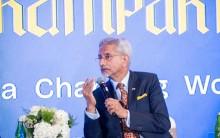
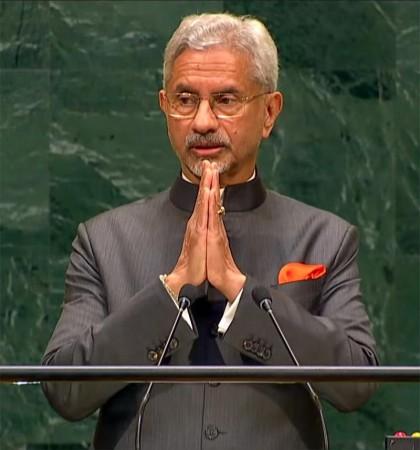
India's message was different in emphasis but convergent on one fundamental diagnosis. External Affairs Minister S. Jaishankar argued that countries far from battlefields are increasingly paying the economic and security costs of wars they did not initiate. He highlighted the weaponisation of finance, market access, supply chains and technology and warned that hyper-competition was producing a broader "4F" vulnerability involving food, fuel, fertilisers and finance. India also stressed terrorism, maritime security, energy flows and a move from an "endless war" towards "ending the war" in Ukraine.
India's larger proposition was unmistakable: the international system of 1945 cannot remain frozen while the distribution of economic and political power has changed dramatically.
Everything is being weaponized: Jaishankar
Pakistan used the same UN platform very differently. Prime Minister Shehbaz Sharif placed Kashmir and the Indus waters at the centre of his address, warning that any attempt to stop, impede or divert Pakistan's share of Indus waters would be treated as an act of war. He also presented Pakistan as a diplomatic intermediary in the US-Iran confrontation and strongly praised China's Global Development, Security, Civilization and Governance Initiatives.
India subsequently used its right of reply to reject Pakistan's presentation and Jaishankar described Pakistan, without naming it, as a "serial practitioner of terrorism".
The India-Pakistan exchange illustrates one of UNGA's oldest functions: the Assembly is simultaneously a diplomatic institution and a global public-record mechanism. It rarely resolves bilateral disputes in the hall. It does, however, place competing narratives before 193 states and the international public.
America: power first, multilateralism second
President Donald Trump's speech represented perhaps the sharpest contrast with the multilateral vocabulary used by China, India, Canada and many European states.
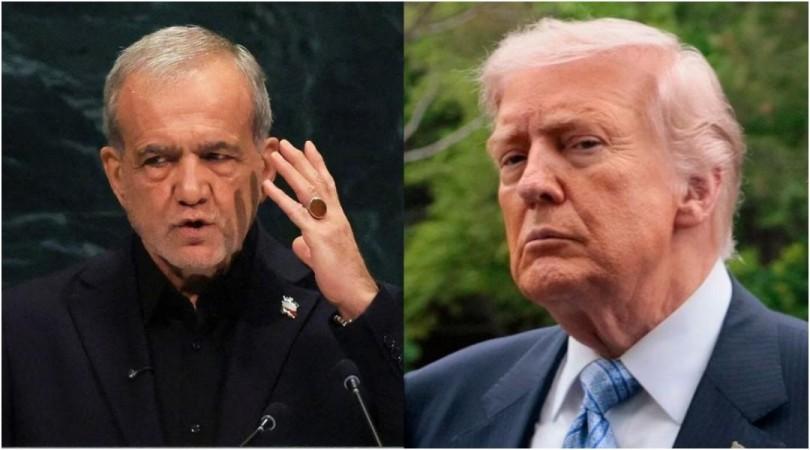
Trump defended US military action against Iran, warned that Iran could face annihilation without a peace agreement, asserted American technological superiority, attacked the International Criminal Court, defended aggressive action against cartels and Venezuela, and criticised what he described as an unelected "globalist" bureaucracy within the UN. He also presented himself as a broker of multiple conflicts, including the India-Pakistan confrontation and Russia-Ukraine war.
His approach is not isolationism in the classical sense. It is closer to transactional primacy: the United States remains deeply engaged globally, but increasingly on terms defined through national power, bilateral leverage, military capability and economic pressure rather than institutional restraint. That creates a fundamental contradiction. The United States remains indispensable to the international system, yet its current posture simultaneously challenges some of the institutions through which that system operates.
This is precisely why the UN's credibility crisis is not simply a "UN problem". It is a great-power governance problem.
China and America are offering competing answers to the same structural question
China says the answer is stronger multilateralism, sovereign equality, greater Global South representation and a more equitable distribution of governance. The United States under Trump emphasises sovereignty, national interest, military strength, economic leverage and reduced dependence on international institutions. Neither approach by itself resolves the fundamental dilemma.
The world needs institutions strong enough to restrain arbitrary power, yet legitimate enough to command the participation of powerful states. It needs international law, but also credible enforcement. It needs sovereignty, but also collective action on problems that no sovereign state can solve alone.
Neither Climate change nor AI, cybercrime, pandemics, financial contagion or terrorism, organised crime, disinformation, maritime disruption, supply-chain shocks or nuclear proliferation respect borders. The paradox of the 21st century is that sovereignty is becoming more important precisely when sovereignty alone is becoming less sufficient.
Canada: a middle-power response to a fractured order
Canada's Prime Minister Mark Carney described the international order as facing a "rupture" and argued for new partnerships, deeper connections and stronger multilateral cooperation. Canada joined Australia, Barbados, Brazil, the European Union, India and Kenya in launching a Partners for Multilateralism coalition focused on multilateralism, international law, peace and prosperity.
Foreign Minister Anita Anand went further, explicitly linking maritime security, international law, AI governance, human rights and the International Criminal Court. Canada also announced sanctions against Iran and reaffirmed its commitment to the UN Charter.
Canada's message is significant because it represents a broader phenomenon: middle powers are beginning to see themselves not merely as followers of great powers, but as coalition-builders in a fragmented international system.
Europe: defending law while recognising that law alone is insufficient
French President Emmanuel Macron warned against the return of imperialism, force without restraint and concentration of power. He argued that international law exists precisely to prevent force from becoming the final arbiter of international disputes. France also reiterated its support for international humanitarian law and a rules-based order.
Germany's Foreign Minister Johann Wadephul framed the emerging technological challenge through an unusually powerful analogy: imagine nuclear weapons controlled by private corporations, stored on corporate premises, with launch codes in a CEO's safe. He then asked the equivalent question about AI: who controls it, who writes the rules and who is accountable?
Germany simultaneously called for Security Council reform, stronger UN conflict-resolution capacity and continued support for Ukraine.
Europe's message therefore contains an important tension: Europe wants a rules-based order, but increasingly recognises that rules without capability are vulnerable.
Russia: multipolarity as a counter-order
Russian Foreign Minister Sergey Lavrov presented perhaps the most direct alternative to Western interpretations of the international system. He accused Western states of double standards and argued for a new Eurasian security architecture. Russia called for permanent Security Council membership for Brazil and India and greater African representation, while opposing new permanent seats for Germany and Japan.
Moscow's argument is strategically consistent: the world is becoming multipolar and Western predominance should give way to multiple sovereign centres of power.
But Russia's position also illustrates the central weakness of today's international system: different powers invoke the same principles of sovereignty, international law and multipolarity to justify mutually incompatible interpretations of their conduct.
The problem is therefore not merely the absence of rules. It is the absence of sufficiently trusted mechanisms for determining whose interpretation of the rules prevails and what happens when a powerful state rejects the consequences.
The Middle East: where the credibility test becomes existential
Iran's President Masoud Pezeshkian used the UN to reject coercion, defend Iran's right to peaceful nuclear technology and challenge the legitimacy of military pressure. The UN summary records his position that Iran would not accept restrictions on peaceful nuclear technology.
Saudi Arabia's Foreign Minister Prince Faisal bin Farhan, by contrast, warned that threats to Gulf security threaten international peace, energy security and global trade, and accused Iran of attacks against Saudi territory and infrastructure.
Thus the Gulf debate has moved beyond regional rivalry. Hormuz, Bab el-Mandeb, energy infrastructure, shipping, food and fertiliser prices have transformed regional conflict into a global economic-security problem.
That is why India's emphasis on commercial shipping and energy flows, Canada's emphasis on maritime law, China's warning about uninterrupted supply chains and Saudi Arabia's emphasis on Gulf security are not separate themes. They are different expressions of the same systemic vulnerability.
And then came Netanyahu's nearly empty hall
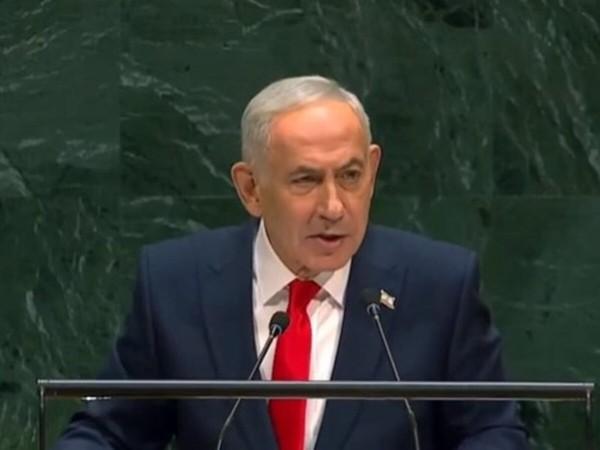
Benjamin Netanyahu's appearance produced the most visually powerful moment of UNGA 81. Dozens of delegates walked out as he began speaking. Reuters recorded the departure, while Netanyahu responded by calling those who left "moral cowards".
The symbolism is powerful, but it must not be confused with legal or diplomatic decision-making.
A walkout is political signalling. A UN resolution is collective diplomacy. A Security Council decision can carry legal consequences. An International Court of Justice judgment is a judicial instrument. An empty hall, therefore, cannot itself change policy. But it can reveal something important about political legitimacy and diplomatic isolation.
Netanyahu's speech was intended to defend Israel's military actions and challenge international criticism. The visible response demonstrated how deeply divided the international community has become over Israel's conduct in Gaza and the wider Middle East.
The deeper danger is not that one leader faced an empty hall. It is that the UN is increasingly becoming the theatre in which states demonstrate disagreement rather than the institution through which disagreement is resolved.
Are UNGA speeches actually taken seriously?
Yes, but not in the simplistic sense that a speech automatically produces action. This distinction is essential. The General Debate has no direct institutional mechanism through which a leader's speech becomes binding policy. Academic research finds that UNGA speeches nevertheless contain meaningful information about states' foreign-policy preferences, are used as strategic signals and provide a "barometer of international opinion". Research also finds that positions expressed at the General Debate can subsequently appear in negotiations at institutions such as the IMF and World Bank. The history is therefore mixed.
The General Assembly helped create and consolidate powerful international norms. Resolution 1514 on decolonisation, for example, contributed to the delegitimisation of colonial rule. Academic scholarship notes that although General Assembly resolutions are generally not legally binding in the manner of treaties or Security Council decisions under Chapter VII, they can express and reinforce emerging international norms.
The Assembly has also demonstrated that it can act when the Security Council is paralysed. Resolution 377, "Uniting for Peace," established a mechanism for the Assembly to consider emergency situations when the Security Council is unable to act because of permanent-member disagreement.
Yet the limitations are equally obvious. The Palestinian question has remained unresolved for generations despite repeated resolutions. The Security Council remains constrained by the veto. The Ukraine war continues. Gaza continues to demonstrate the gap between international legal principles and enforcement. Climate commitments routinely outpace implementation. The SDGs remain seriously underfinanced and the institutional architecture remains substantially rooted in 1945.
The UN itself now acknowledges that its mandate system contains roughly 4,000 active mandates, while its resource base is projected to shrink by about 25 percent between 2024 and 2026 so the correct conclusion is neither that UNGA is irrelevant nor that it is powerful enough. UNGA is powerful at norm formation, coalition formation, agenda setting, signalling and diplomatic legitimacy. It is considerably weaker at enforcement when great-power interests collide. That distinction explains almost everything happening at UNGA 81.
The larger trend: from unipolarity to contested multipolarity
Across the speeches, five unmistakable trends emerge:
First, unipolarity is giving way to contested multipolarity. China, India, Russia, Brazil, South Africa, Saudi Arabia and other states are demanding greater agency. Africa's under-representation on the Security Council has become increasingly difficult to defend. Even Germany now explicitly supports stronger African representation.
Second, international law is simultaneously becoming more important and more contested. Almost every major camp invokes the Charter, sovereignty and international law, yet major powers frequently interpret those principles differently.
Third, security is expanding beyond military security. Food, energy, fertiliser, finance, shipping, cyber infrastructure, AI, data and supply chains are now national-security issues.
Fourth, technology has become a new arena of geopolitical power. AI is rapidly moving from an economic subject to a governance, security and sovereignty question. The UN is already attempting to build a global AI-governance architecture, while China, Europe, the United States and others pursue markedly different regulatory philosophies.
Fifth, legitimacy itself has become strategic capital.
A government may possess military power without possessing diplomatic legitimacy, an institution may possess legal authority without possessing enforcement capacity, a country may possess economic power without possessing global trust. The next international order will be shaped by the interaction of all three.
What should the UN become?
The answer cannot be another declaration.
The UN needs a governance architecture for the 21st century. Security Council reform must move from endless discussion towards a realistic negotiating framework incorporating Africa, India, Brazil and other under-represented regions. The precise composition will require political negotiation, but the principle is increasingly difficult to dispute: legitimacy requires representation.
Second, the General Assembly should become more operational when the Security Council is paralysed. The existing Uniting for Peace mechanism provides a foundation, but its political authority should be strengthened through better early-warning systems, independent fact-finding and standing mechanisms for humanitarian protection.
Third, international law needs stronger implementation mechanisms. Rules without credible consequences gradually become recommendations.
Fourth, the UN should create a permanent Global Technology Governance Architecture, bringing together governments, scientists, technology companies, civil society and academia. The question cannot merely be whether AI is safe. It must address compute concentration, data, autonomous weapons, deepfakes, cyber operations, algorithmic accountability, critical infrastructure and equitable access.
Fifth, the world needs an early-warning and prevention system that integrates geopolitical, economic, climate, food, energy, migration, cyber and technological indicators. The UN possesses enormous data and analytical resources but remains institutionally fragmented.
Sixth, global financial governance must become more representative. If the political voice of developing countries remains disconnected from their economic weight, dissatisfaction with the international order will continue to grow.
Seventh, the UN must adopt a radically stronger delivery culture. Every major resolution should have measurable objectives, responsible institutions, financing requirements, implementation milestones and periodic public reporting.
In short, the UN must move from resolution-centric multilateralism to results-centric multilateralism.
The UN's real future test
The most important message of UNGA 81 is not what China said, or America said, or India said, or Russia, France, Germany, Saudi Arabia, Iran, Brazil, South Africa or Canada said.
It is that almost everyone recognises that the existing system is under strain, but they disagree profoundly about what should replace or reform it. That disagreement is not necessarily the beginning of institutional collapse. It can be the beginning of institutional renewal.
The UN was born from an earlier moment when the international system had failed catastrophically. Its founders understood that sovereignty without restraint could produce catastrophe, while cooperation without institutions could not survive great-power rivalry. The world has now entered another such transition.
The central questions of the next decade will not be confined to war and peace. They will include who governs artificial intelligence, who controls critical technologies, who determines access to data and compute, who controls strategic supply chains, how climate losses are financed, how oceans and space are governed, how cyber conflict is restrained, how global finance is made representative, how migration is managed and how humanity prevents technological power from becoming concentrated beyond democratic accountability.
The UN therefore faces a choice. It can remain primarily a magnificent diplomatic auditorium in which governments explain their positions once a year or it can become something more ambitious: the operating system of a genuinely interdependent world.
The speeches at UNGA 81 have already sounded the warning:
China is demanding a more representative global governance system. India is warning against the weaponisation of interdependence. Europe is defending law against force. Canada is building middle-power coalitions. Russia is pressing for a multipolar security architecture. The United States is asserting national power and challenging elements of institutional multilateralism. Saudi Arabia is linking Gulf security to global economic stability. Iran is challenging coercive diplomacy. Brazil is defending sovereignty and multilateralism. South Africa is demanding a more inclusive global order. These are not isolated speeches. They are fragments of the emerging architecture of the next international order and the ultimate question is no longer whether the world has changed.
The question is whether the institutions of 1945 can be transformed quickly enough to govern the world of 2035, 2050 and beyond. The President of the General Assembly has already framed the challenge correctly: trust is not given; it is earned.
The next phase of multilateralism must therefore be judged not by the eloquence of its communiqués, the length of its resolutions or the applause inside the General Assembly Hall, but by something much harder: whether international institutions can actually prevent wars, enforce rules, protect civilians, govern transformative technologies, finance development, manage planetary risks and deliver tangible results for ordinary human beings. That is the standard by which the United Nations will ultimately be judged and, increasingly, that is the standard by which the entire international order will be judged.
[Major General Dr. Dilawar Singh, IAV, is a distinguished strategist having held senior positions in technology, defence, and corporate governance. He serves on global boards and advises on leadership, emerging technologies, and strategic affairs, with a focus on aligning India's interests in the evolving global technological order.]