The United Arab Emirates (UAE) said on Sunday that the country's air force and air defence forces have successfully intercepted and destroyed 137 ballistic missiles and 209 drones launched by Iran.
In a statement, the Ministry of Defence said 132 of the 137 missiles were destroyed, while five fell into the sea. Of the 209 drones detected, 195 were intercepted, and 14 landed within the country's territory and waters, causing limited collateral damage.
Some debris fell in scattered areas, resulting in minor material damage to civilian facilities, the ministry said, adding that authorities had taken necessary measures to ensure public safety and secure affected sites, reports Xinhua news agency.
"The authorities in Abu Dhabi are dealing with an incident resulting from the interception of a drone that targeted Zayed International Airport, where the interception operation led to the fall of shrapnel, resulting in one death of Asian nationality and 7 injuries," Abu Dhabi Airports said in an official statement.
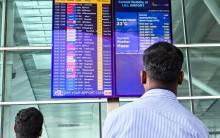
The General Civil Aviation Authority (GCAA) said it had activated contingency plans to manage the impact of the attack and ensure the aviation sector continued operation.
About 20,200 travellers have been impacted by the flight rescheduling, with temporary lodging, meals and rebooking arrangements provided, the GCAA said.
Dubai, a city that built itself into the connective tissue of global travel, went dark on Saturday. At 8:35 am local time, Dubai Airports issued a brief statement: flight operations at Dubai International and Dubai World Central–Al Maktoum International had been "suspended until further notice."
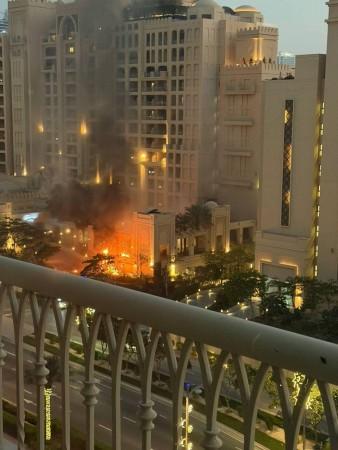
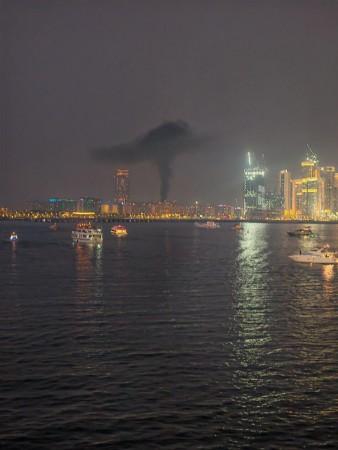
By afternoon, a hotel on Palm Jumeirah was on fire. By evening, the city had largely shut down: a concourse at Dubai International had been damaged by an Iranian drone, Jebel Ali port was ablaze, the Burj Khalifa was evacuated, and residents were warned to stay away from windows. In less than twelve hours, Iran had achieved what no adversary had managed in Dubai's modern history — making the city feel unsafe.
The UAE Ministry of Defence confirmed that 137 Iranian ballistic missiles were detected, of which 132 were destroyed and five fell into the sea. Of the 209 Iranian drones tracked, 195 were intercepted, while 14 caused minor damage within the country's territory and waters.
? Just IN ?
— Megh Updates ?™ (@MeghUpdates) March 1, 2026
A major EXPLOSION has been reported at Dubai International Airport after an Iranian strike. pic.twitter.com/HE63UJ2cPS
Attacks came in waves. Loud booms were heard across Abu Dhabi and Dubai throughout the day, according to witnesses, including Reuters correspondents. Debris from an intercepted drone sparked fires at Jebel Ali port and at the base of the Burj Al Arab. Videos claiming an attack on the Burj Khalifa were confirmed as fake.
⚡️ Attack on Dubai: Explosions near Burj Khalifa
— NEXTA (@nexta_tv) February 28, 2026
An Iranian missile landed in a prestigious area on the artificial Palm Jumeirah island.
The area is home to luxurious hotels popular with Russian tourists. One of them caught fire. pic.twitter.com/GPEGtiUE2O
Dubai Airports reported minor damage to a concourse at Dubai International, which was quickly contained, and emergency teams were deployed as operations awaited resumption. In Abu Dhabi, a Pakistani resident was killed when shrapnel struck a residential area.
Authorities emphasized that some fires, such as at Jebel Ali port and Burj Al Arab, resulted from debris caused by interception operations, not direct hits, and were brought under control without major injuries. The public was urged not to circulate outdated video clips from prior incidents.
Because of the ongoing fasting month of Ramzan and the weekend, residents were kept awake by intermittent sirens and alerts. Local media reported attacks on Abu Dhabi's Zayed International Airport, allegedly causing one death and seven injuries, though this has not been officially confirmed.
Schools in Dubai and Abu Dhabi have been instructed to move to distance learning until Thursday. The UAE Ministry of Defence highlighted the readiness and effectiveness of its air defence systems in intercepting multiple threats, underscoring the country's capability to respond to large-scale attacks.