Health authorities in the United Kingdom and global agencies are closely monitoring a limited hantavirus outbreak linked to the cruise ship MV Hondius, while emphasising that the risk to the wider public remains low and there is no indication of a pandemic-scale threat.
The UK Health Security Agency on Friday confirmed that two British nationals contracted hantavirus, while a third case remains under investigation, following exposure linked to the South Atlantic island of Tristan da Cunha. None of the British passengers or crew currently aboard the MV Hondius is reporting symptoms, though all are being monitored as a precaution.
British passengers and crew returning to the United Kingdom will be asked to isolate for 45 days after the vessel docks in Tenerife, Spain, on Sunday. Government officials will assist British nationals disembarking from the ship.
The agency said seven British nationals had earlier disembarked at St Helena island on April 24. Two have since returned to the United Kingdom and are isolating at home without symptoms, while four remain in St Helena and one individual has been traced outside Britain.
The World Health Organization said five of the eight reported cases aboard the MV Hondius have been confirmed as hantavirus infections, while three remain suspected cases. The organisation stressed that the outbreak is not comparable to the COVID-19 pandemic and said the overall public health risk remains low.
The United States Centers for Disease Control and Prevention has classified the situation as a Level 3 emergency, its lowest alert category, indicating active monitoring but limited public health concern.
According to a report by Elara Capital, hantavirus has a very low rate of person-to-person transmission, making widespread outbreaks unlikely. Analysts said infections can be severe in individual cases, but outbreaks are generally localised and self-limiting.
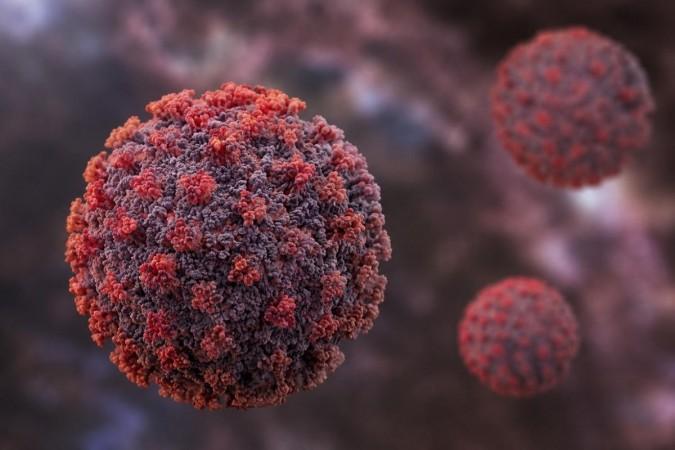
Hantaviruses are rodent-borne RNA viruses that spread primarily through inhalation of particles from infected rodent urine, saliva or droppings. Only certain strains, including the Andes strain linked to the recent cluster, have shown rare human-to-human transmission.
Experts noted that hantavirus differs significantly from SARS-CoV-2, the virus responsible for COVID-19, because of its limited transmissibility.
Globally, two major forms of the disease have been identified. Hantavirus Pulmonary Syndrome, found mainly in the Americas, can cause severe respiratory illness with mortality rates between 40 and 50 per cent. Hemorrhagic Fever with Renal Syndrome, more common in Europe and Asia, affects the kidneys and blood vessels and can have mortality rates of up to 15 per cent in severe cases.
The recent cluster aboard the MV Hondius has reportedly resulted in a small number of infections and three deaths, drawing international attention while remaining contained.
Health experts also highlighted that hantavirus infections remain rare worldwide. China reported around 210,000 Hemorrhagic Fever with Renal Syndrome cases and nearly 1,855 deaths between 2004 and 2019. In the United States, 864 hantavirus infections and approximately 302 deaths were recorded between 1993 and 2022.
Authorities and health agencies continue to monitor the situation closely while reiterating that current evidence does not point to a large-scale global health emergency.
(With inputs from IANS)