There is fresh trouble brewing for Pakistan as the Tehreek-e-Taliban Pakistan (TTP) has decided to expand the outfit to resemble a military unit. The expansion, which has already been set in motion, is a cause of concern for Pakistan as terror attacks are bound to increase in the coming year.
Intelligence Bureau officials say that the TTP has inflicted massive damage on the Pakistan Army, and in the coming year, the hostilities are likely to double. Pakistan is already struggling to contain the TTP, and the challenges are expected to intensify in the coming year.
In the run-up to these expansion plans, the TTP has strengthened its propaganda wing. The outfit is using a lot of the online space to spruce up its propaganda against the Pakistan army. In November 2022, the TTP ended the ceasefire with Pakistan, following which attacks have gone up multi-fold in Balochistan and Khyber Pakhtunkhwa (KP).
The TTP has targeted both the army and law enforcement personnel in large numbers since the ceasefire ended in 2022. The TTP has added new provinces to its administrative control, which include Gilgit-Baltistan. Changes have been made to the military leadership with the appointment of Ehsanullah Ipi, the great-grandson of Faqir Ipi, as the head of the Southern Military Zone.
Further, the appointment of Hilal Ghazi as the head of the Central Military Zone is also another major change that the TTP has effected. The political commission would now be headed by Azmatullah Mehsud, while Maulvi Faqir would remain as a member of the commission.
Officials say that the TTP is also planning its own Air Force. The plan is under discussion, but is likely to get operational only by the end of 2026. Earlier this month, a roadside bomb killed three Pakistani police officials near the Afghan border. The incident occurred in the northwest region of KP. Pakistan was quick to blame the TTP for the attack.
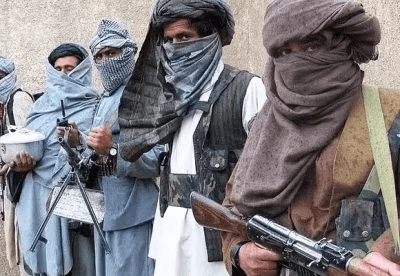
Officials say that the TTP headache for Pakistan shows no signs of ending anytime soon. The TTP has big plans and is hell-bent on beating down the Pakistan establishment. Courtesy the TTP, ties between the Afghan Taliban and Pakistan have soured considerably. Pakistan has, without proof, blamed the Afghan Taliban for backing the TTP and also letting them use their soil to launch attacks on Pakistan.
Pakistan army chief, Field Marshal Asim Munir, has told the Afghan Taliban to choose between the TTP and Pakistan. The Taliban has, however, said that the TTP is Pakistan's problem, and it is Islamabad that should be dealing with the outfit.
Pakistan, on its part, has tried forging alliances between the Islamic State Khorasan Province (ISKP) and the Lashkar-e-Taiba to fight against the TTP. Pakistan had hoped that this alliance would largely contain the TTP, but the outfit has no signs of slowing down. The ISKP had readily agreed to this alliance as it needed Pakistan's help to fight against the Afghan Taliban in Afghanistan.
The ISKP has been looking to dislodge the Taliban and seize control over Afghanistan, but its efforts have largely failed. While the ISKP had agreed to this alliance, many within the Lashkar-e-Taiba were unhappy with this decision.
Many within the Hafiz Saeed-founded outfit think that it would be unfair to fight against the TTP or Afghan Taliban. This explains the reason why this alliance has been a slow starter, an official said.
Pakistan watchers say that the TTP is gaining strength, much to the concern of the Pakistani army. It is a group that would be difficult for Pakistan to contain, and in the coming year, the TTP would prove to be much more lethal than what one got to witness this year.
(With inputs from IANS)