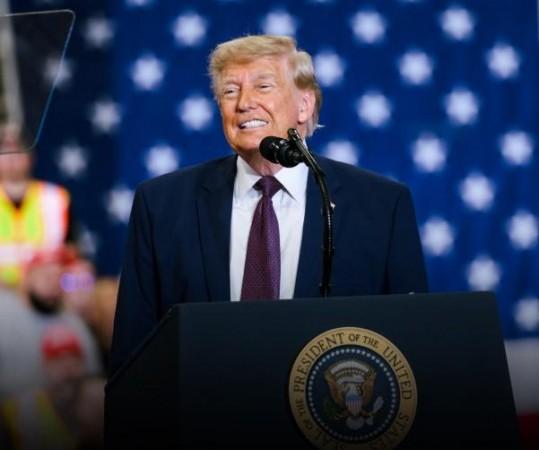
Twenty-five Democratic-led US states sued the Trump administration on Monday in the US Court of International Trade, seeking to block new Section 301 tariffs of 10 to 12.5 percent on imports from 60 trading partners, including India. The duties took effect on July 24 and target countries the White House says have failed to ban or enforce prohibitions on goods made with forced labor. India received the lower 10 percent rate after adopting related measures. The states call the action a pretext for replacing tariffs already struck down by the Supreme Court and the Court of International Trade earlier this year.
This is the latest version of a presidential tariff strategy that has adapted after repeated legal setbacks. US Trade Representative Jamieson Greer has been direct: "The United States has had a forced labor import ban for nearly a century, and rigorously enforces it; it's well past time for our trading partners to do the same." He noted that most countries lack such laws, and those that have them rarely enforce them properly. The measures cover roughly 99 percent of US imports and were finalised after public hearings and consultations with more than 45 governments.
For India the numbers are concrete and immediate. Textile and apparel exports to the United States, worth nearly $11 billion a year, now face a competitive disadvantage against Asian rivals. CITI Chairman Ashwin Chandran warned that "the differential treatment risks diverting sourcing orders for textile and apparel items away from India." Ajay Srivastava of the Global Trade Research Initiative estimates that about 70 percent of Indian exports to the US, including garments, machinery, chemicals, plastics, leather, gems and jewellery, and furniture, will face regular duties plus the new levy. India's Commerce Ministry reports that 45 percent of exports escape the 10 percent surcharge through product exemptions for generics, smartphones, certain metals and auto parts. The remaining volume sits heavily in labour-intensive sectors that support millions of jobs across Tirupur, Surat, Ludhiana and other manufacturing clusters.
The wider evidence is clear. Research from the Federal Reserve Bank of New York and others shows American importers and consumers absorb about 90 percent of tariff costs. Peterson Institute analysis concludes these forced-labor duties are unlikely to survive a full court challenge because Congress never granted the executive such broad tariff power. Tianchen Xu of the Economist Intelligence Unit notes that Asia benefits from carve-outs for electronics and chips, which softens the macroeconomic impact for larger economies. That offers limited relief to Indian MSMEs in textiles and gems. Andrew Wilson, deputy secretary general of the International Chamber of Commerce, has cautioned that "there will be deep concerns in the international business community that the US forced labor law could become a global template," with anyone able to make a claim that forces companies to prove clean supply chains.
India's path under the second Trump term has been marked by sharp swings. Reciprocal tariffs once climbed to 50 percent in 2025. A February 2026 interim deal brought the headline rate down to 18 percent, removed secondary penalties linked to Russian oil purchases, and required Indian concessions on market access for US industrial and agricultural goods, including dried distillers' grains, tree nuts, fruits, soybean oil and spirits. That understanding was barely six months old when the Section 301 duties arrived on July 24. Temporary relief has repeatedly given way to fresh unilateral pressure, creating uncertainty for exporters who had begun adjusting pricing and supply chains after the February agreement.
Five issues now stand out for New Delhi
Export concentration remains the first vulnerability. The United States is still India's largest goods market for several labour-intensive categories. Successive tariff rounds have already squeezed volumes in textiles, yarn, fabric and jewellery. Diversifying into the EU, UK, ASEAN, Africa and the Gulf is no longer a preference. It is a necessity if India is to reduce exposure to repeated American policy shifts.
Domestic competitiveness is the second. Higher costs in the US market punish inefficient logistics, fragmented supply chains and compliance gaps. Stronger production-linked incentives, lower logistics costs through dedicated freight corridors, and faster scaling in high-value manufacturing are the only lasting answers. Without these, Indian products will continue to lose ground even when tariff rates are relatively moderate.
The ESG and forced-labour agenda itself is the third. Global buyers are tightening standards on supply-chain ethics. India's recent legislative steps secured the lower 10 percent rate instead of the originally proposed 12.5 percent. That creates room to move. Faster progress on traceability systems, stronger enforcement and credible third-party certification can turn a defensive requirement into a trusted-supplier advantage that benefits exporters over the longer term.
Macroeconomic buffering comes fourth. Any lasting export pressure must be met with solid domestic demand, targeted fiscal support for affected clusters, and monetary policy that does not amplify external shocks. India's growth foundations remain firm, supported by strong consumption and infrastructure investment. Policy must keep them that way so that a 10 percent duty does not translate into broader damage to employment or growth momentum.
Strategic insulation is the fifth. Trade disputes cannot be allowed to weaken the wider partnership built around the Quad, technology cooperation, defence ties and shared concerns about Chinese assertiveness. Regular high-level trade dialogues with early-warning systems are needed to stop short-term shocks from turning into longer-term distrust between New Delhi and Washington.
The lawsuit may limit these particular tariffs, yet past court remedies have often been narrow and open to appeal. Even if this instrument is constrained, the broader move toward managed trade and industrial policy in Washington looks durable across party lines. India should prepare for a higher and more unpredictable barrier environment rather than wait for judicial or political reversals.
The states' case is an American argument about the limits of executive power. Its practical costs fall on Indian factories, ports and workers. New Delhi's reply needs to be equally practical: speed up market diversification, turn ESG requirements into competitive strength, push domestic reform harder, and protect the strategic relationship from repeated tariff disruptions. Anything less leaves India permanently adjusting to the next unilateral measure from Washington. In a period of intense great-power competition, that is a position India cannot sustain.
[Major General Dr. Dilawar Singh, IAV, is a distinguished strategist having held senior positions in technology, defence, and corporate governance. He serves on global boards and advises on leadership, emerging technologies, and strategic affairs, with a focus on aligning India's interests in the evolving global technological order.]