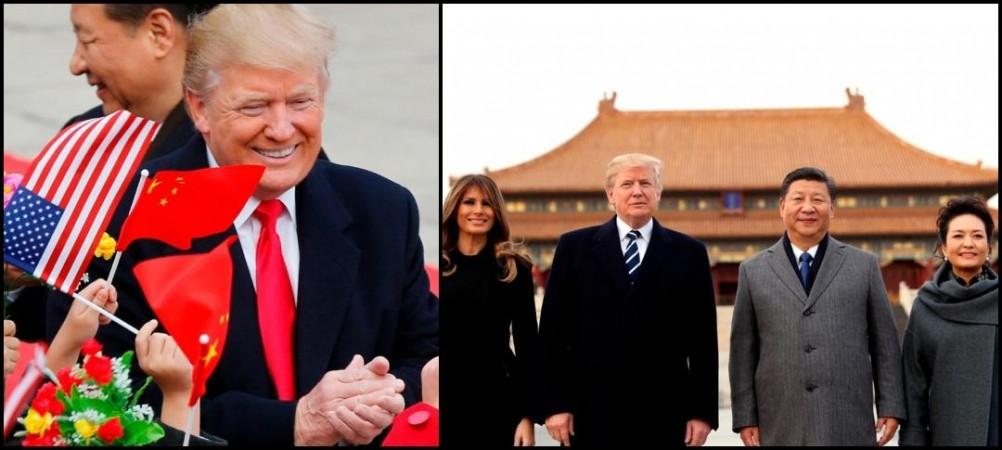
As President Donald Trump arrived in Beijing for the May 13-15, 2026 state visit, the choreography of ceremony recalled his 2017 encounter with Xi Jinping: elaborate banquets, cultural gestures at the Forbidden City, and carefully staged affirmations of personal rapport. Yet the strategic landscape has transformed dramatically. This summit occurs against the backdrop of an active conflict in the Strait of Hormuz, surging global energy prices, mounting domestic economic strains in the United States, looming November midterms, and Washington's sweeping withdrawal from more than thirty United Nations entities and dozens of other international organizations. What transpires in closed sessions will likely yield limited tactical understandings rather than any fundamental realignment. The true measure of success will emerge not from joint statements but from subsequent implementation amid profound structural mistrust.
This analysis draws upon declassified intelligence assessments, high-level think tank evaluations from the Center for Strategic and International Studies, Brookings Institution, Council on Foreign Relations, and insights from seasoned experts on both sides of the Pacific. It examines the interplay of immediate pressures and long-term power dynamics, revealing a summit defined by pragmatic management of competition rather than resolution. Neither leader enters as a free agent; both operate within domestic constraints, alliance considerations, and the inescapable logic of great-power transition.
The Public Agenda: Economics, Regional Crises, and Core Interests
The formal agenda rests on three interlocking pillars.
In trade and economics, the United States seeks concrete Chinese purchase commitments for American agricultural goods, energy resources, and commercial aircraft, alongside the establishment of bilateral boards for trade and investment oversight. These mechanisms aim to provide structured monitoring of non-strategic exchanges and deliver visible deliverables for American constituencies. For Beijing, the priority lies in securing tariff predictability and breathing room for an economy grappling with demographic headwinds, property sector vulnerabilities, and industrial overcapacity.
The second pillar centers on the Iran-Hormuz crisis. Washington desires Chinese diplomatic influence to encourage de-escalation, facilitate reopening of the critical maritime chokepoint, and stabilize energy markets. China, as a major purchaser of Iranian oil, must balance its energy security and mediation ambitions against the risks of deeper entanglement in a conflict that disrupts its own economic recovery.
The third and most sensitive element involves Taiwan and broader Indo-Pacific security. Beijing will press for restraint on the stalled multibillion-dollar U.S. arms package and adjustments in American rhetorical positioning regarding cross-strait relations. Washington will emphasize the need for stability while safeguarding its strategic interests in semiconductor supply chains and regional deterrence architecture.
Announcements on purchase targets, forum creations, rare earths access, and symbolic gestures toward Iran are probable. Such outcomes would allow both leaders to project competence domestically. Yet the historical record, from the expansive but unevenly fulfilled 2017 memoranda of understanding to the Phase One trade agreement, underscores a persistent gap between declaration and delivery. Enforcement mechanisms remain fragile in the absence of credible verification and sustained leverage.
Intelligence Assessments and Expert Consensus: Tempered Expectations
United States intelligence community evaluations provide a grounded foundation. The 2026 Annual Threat Assessment indicates that China continues to prioritize peaceful unification with Taiwan where feasible, maintains no fixed invasion timetable for the near term, and fully appreciates the prohibitive costs and uncertainties of large-scale military action, particularly in the face of potential American intervention. This assessment tempers alarmist scenarios while highlighting ongoing People's Liberation Army modernization, gray-zone coercion, and steady capability enhancements.
Leading think tanks reinforce this nuanced view. Analyses from the Center for Strategic and International Studies frame American objectives around securing economic deliverables and marginal Chinese cooperation on Iran, while recognizing Beijing's determination to advance its core interests on Taiwan. Taiwanese officials and analysts express quiet concern over any perceived preconditioning of arms sales or subtle shifts in language that might dilute long-standing American commitments, including the spirit of the Reagan-era Six Assurances. Council on Foreign Relations assessments note that China may perceive tactical advantage from American preoccupation in the Middle East, using the moment to probe for incremental gains without triggering outright confrontation.
Structurally, imbalances endure. China's state-centric economic model sustains subsidies, market distortions, and intellectual property frictions that no summit can erase. The United States retains advantages in technological innovation, alliance depth, and financial centrality, though these are not immune to erosion. Mutual dependencies in markets, critical minerals, and global supply chains deter outright rupture but also fuel ongoing friction. The summit thus represents an exercise in competitive coexistence rather than strategic convergence.
The Trump Factor: Unpredictability, Unilateralism, and Domestic Imperatives
President Trump's distinctive approach introduces significant variability. His transactional style, emphasis on personal chemistry, and willingness to improvise create both opportunities and risks. Public confirmation that he will address Taiwan arms sales directly with Xi signals openness to negotiation, consistent with his long-standing preference for leverage-based dealmaking. The broad American withdrawal from international institutions further amplifies a unilateral, bilateral-first orientation that diminishes multilateral constraints and potentially heightens reliance on direct leader-level bargaining.
Domestic pressures sharpen these tendencies. Elevated energy costs stemming from Hormuz disruptions, persistent inflation concerns, and electoral vulnerabilities ahead of the midterms incentivize the pursuit of swift, demonstrable victories. Agricultural exporters and manufacturing sectors require tangible market access, while broader voter sentiment demands relief from higher prices. These compulsions may encourage tactical flexibility on secondary issues, such as implementation timelines for arms packages or selective easing of restrictions, in pursuit of immediate economic and political gains.
Countervailing guardrails persist. Bipartisan congressional backing for Taiwan policy, anchored in the Taiwan Relations Act, combined with input from key administration figures and allied capitals, limits the scope for dramatic departures. A wholesale abandonment of deterrence commitments would jeopardize American credibility, alienate influential domestic constituencies, and expose critical supply chain vulnerabilities, particularly in advanced semiconductors. Trump's first-term record demonstrates a pattern of initial engagement followed by assertive pressure when expectations went unmet. Inconsistency, in this context, functions as both a negotiating asset and a source of strategic ambiguity that allies and adversaries alike must continually reassess.
Behind Closed Doors: Tacit Understandings and Deniable Linkages
Private discussions will almost certainly explore pragmatic quid pro quos designed for deniability and domestic manageability. On Taiwan, possibilities include phased or deliberately slowed implementation of existing arms notifications, paired with reciprocal Chinese restraint on provocative military activities such as large-scale air and naval operations near Taiwan. Subtle adjustments in private language regarding strategic ambiguity or cross-strait policy may also feature, allowing each side interpretive flexibility.
Regarding Iran, Chinese officials may offer calibrated diplomatic encouragement toward de-escalation, adjustments in oil procurement patterns, or restraint on dual-use transfers, exchanged for American tolerance on select sanctions enforcement matters tied to Chinese energy needs. These gestures would fall short of decisive influence, given Beijing's strategic equities in the Middle East.
In the economic domain, negotiators may establish confidential timelines and metrics for purchase commitments, supported by the new bilateral boards as face-saving oversight tools. Limited accommodations on technology export controls for non-critical items, alongside assurances on rare earths stability, could emerge through channels involving the high-profile American CEO delegation. Broader topics might encompass expanded crisis communication hotlines, exploratory discussions on North Korea, and scheduling of future high-level visits to institutionalize dialogue and reduce escalation risks.
Such understandings will remain inherently reversible and lightly verified, reflecting deep-seated skepticism. They represent classic great-power diplomacy: managing tensions without resolving underlying contradictions.
Critical Evaluation: Strengths, Vulnerabilities, and Enduring Realities
From the American perspective, the summit offers an avenue for pragmatic short-term relief and demonstration of executive agility. Proponents view it as sophisticated leverage deployment in the tradition of deal-oriented statecraft. Skeptics, including strategic realists, caution that excessive emphasis on personal rapport and immediate optics may inadvertently erode deterrence credibility and signal transactional weakness at a moment when consistent signaling is paramount.
Chinese leadership perceives value in temporary stabilization that permits focus on internal challenges while reinforcing narratives of parity and global centrality. Yet Beijing must navigate its own nationalist constituencies wary of perceived concessions.
A holistic critique reveals the limitations of transactionalism in addressing systemic rivalry. Linkages across issues such as Taiwan, Iran, and trade carry inherent risks of misperception and unintended escalation. Power transition theory illuminates the deeper dynamic: a rising power confronts an established order amid divergent governance models, ideological orientations, and visions of regional order. Demographic and economic trajectories may favor the United States over the longer horizon, provided Washington sustains domestic investment, technological edge, and alliance cohesion. China's strengths in scale, manufacturing centrality, and strategic patience are counterbalanced by structural inefficiencies and the challenges of authoritarian consolidation.
The American retreat from multilateral institutions, while consistent with an "America First" orientation, cedes normative terrain that China actively seeks to shape. Midterm political calculations further tilt toward short-term deliverables, potentially at the expense of sustained strategic discipline.
Strategic Implications: Managed Competition and Global Ripples
In the aftermath, incremental de-risking of supply chains will continue unevenly, with allies calibrating their postures according to demonstrated American reliability. Global South nations will interpret the summit through the lens of multipolar signaling, while developments in artificial intelligence governance and strategic stability may yield modest guardrails if mutual interest aligns.
Risks remain salient. Ambiguous understandings on Taiwan could embolden gray-zone activities. Suboptimal outcomes on Iran may prolong economic pain. Unfulfilled commitments would deepen cynicism and complicate future negotiations. President Trump's unpredictability complicates long-term planning for allies and adversaries alike.
Realism Over Illusion in Great-Power Relations
The Beijing summit, like its 2017 predecessor, will generate tactical relief through targeted understandings and public symbolism. Modest progress on trade stabilization, Iranian diplomacy, and controlled management of Taiwan tensions appears attainable, shaped by domestic imperatives and leader personalities. Yet these maneuvers defer rather than transcend the fundamental competitive logic of the relationship.
Advantage will ultimately accrue to the actor that best integrates innovation, societal resilience, alliance stewardship, and coherent grand strategy. Personalized diplomacy retains utility for crisis management and opportunity seizure, but its limits are evident in the face of entrenched national interests and systemic divergences.
Disciplined realism, rather than euphoria or fatalism, should guide expectations. The United States and China will continue to compete intensely across domains while cooperating selectively where interests converge. This summit exemplifies the persistent tension between immediate pragmatism and long-term strategic imperatives. In the contest that will define the twenty-first century, sustained execution and internal vitality will prove more decisive than any single encounter, however elaborately staged.
[Major General Dr. Dilawar Singh, IAV, is a distinguished strategist having held senior positions in technology, defence, and corporate governance. He serves on global boards and advises on leadership, emerging technologies, and strategic affairs, with a focus on aligning India's interests in the evolving global technological order.]