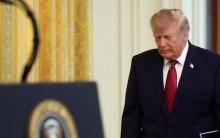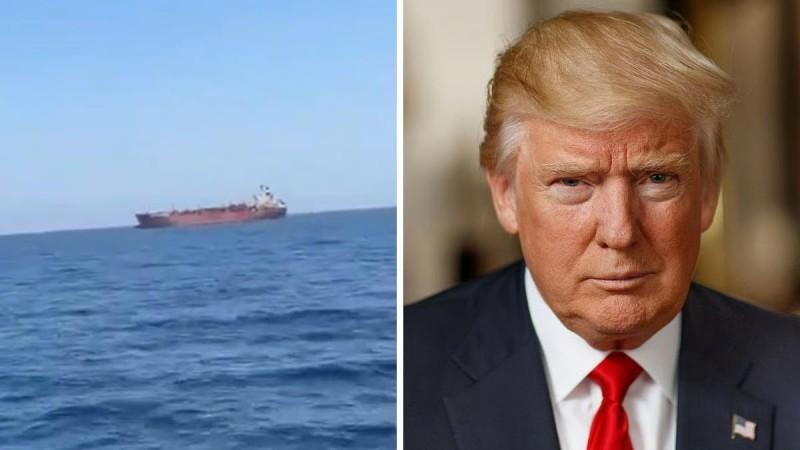
U.S. President Donald Trump has urged countries dependent on Middle Eastern oil to join a coalition to reopen and secure the strategic Strait of Hormuz, which has been effectively blocked to oil tankers amid the widening conflict with Iran.
Speaking to reporters aboard Air Force One on Sunday, Trump said he had contacted several countries to help patrol the waterway and escort ships through the vital energy corridor. "I really am demanding that these countries come in and protect their own territory. It's the place from which they get their energy, and they should come and help us protect it," he said.
Trump noted that Washington had already begun gauging governments' willingness to contribute naval assets. "They were contacted today and last night, and we've had some positive responses. A few would rather not get involved," he added. According to Trump, he had approached "about seven" countries heavily reliant on Middle Eastern oil to join the coalition, reported by AP.
The Strait of Hormuz is one of the world's most important energy choke points, handling roughly one-fifth of global oil supplies. Trump highlighted that several countries possess capabilities to assist, including minesweepers and specialized boats suitable for patrolling the strait.
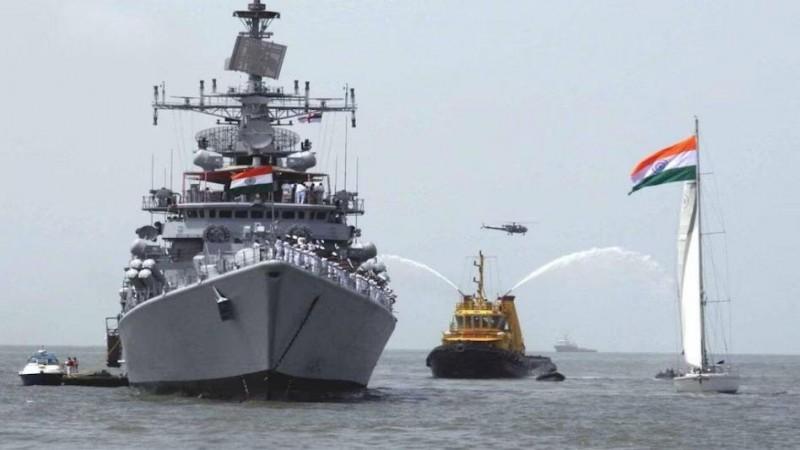
Earlier, Trump called on China, France, Japan, South Korea, the United Kingdom, and others to send ships to escort oil tankers. He specifically pointed to China's heavy reliance on Gulf energy, saying, "China is very reliant on oil transiting through the Strait of Hormuz and should come in and help secure the corridor." In an interview with the Financial Times, Trump suggested he might postpone a planned summit with Chinese President Xi Jinping if Beijing does not assist in reopening the strait. "Two weeks is a long time. We may delay," he said.
Trump also issued a sharp warning to European allies, emphasizing that NATO's future could be at risk if member states do not help secure the strait. "It's only appropriate that people who are the beneficiaries of the strait help ensure nothing bad happens there," he said, adding that European countries should reciprocate for U.S. support in Ukraine.
Criticizing the United Kingdom, Trump said the British government had been slow to offer support for the U.S.-Israeli campaign against Iran. "The UK might be considered the No. 1 ally... and when I asked for them to come, they didn't want to," he said. "We need these ships before we win, not after we win."
Trump outlined that the coalition could include minesweepers and forces capable of addressing threats along Iran's coastline, including units deploying drones and naval mines. "Whatever it takes," he said.
However, several countries have responded cautiously. Australia, for instance, ruled out sending a ship. Transport Minister Catherine King said Canberra's current contribution involves aircraft stationed in the United Arab Emirates rather than naval deployments.
The diplomatic push comes as the closure of the strait has rattled global energy markets. Oil prices surged, with West Texas Intermediate rising 2.5% to $100.22 a barrel and Brent crude climbing 2.9% to $106.11, reflecting concerns over prolonged supply disruptions.
The strait remains a focal point in the broader Middle East conflict, with escalating tensions threatening global energy supplies and increasing pressure on major powers to intervene and keep the shipping lane open.